

Welsh manufacturers are quietly rewriting their sheet metal supply chain thinking. Over the past three years, the assumption that overseas suppliers offered the best combination of price, quality and reliability has come under sustained pressure. Supply chain disruption, quality inconsistency, extended lead times, currency volatility and the practical difficulty of managing suppliers eight time zones away have shifted the commercial calculation materially.
The result is that as many as 7 in 10 Welsh manufacturers are now actively reviewing their sheet metal supply arrangements, and a substantial proportion are moving work back to UK and specifically Welsh fabricators. The reshoring trend has been building across UK manufacturing broadly, but Welsh manufacturers have been among the earliest to act on it, partly because the Welsh sheet metal fabrication base has the capacity and capability to absorb the returning work.
The commercial reality behind the trend is worth understanding, whether you’re a Welsh manufacturer reviewing your own supply chain, a UK business considering Welsh fabricators for the first time, or a Welsh fabrication supplier trying to make sense of the current market.
What has actually changed
The Welsh manufacturer sheet metal supply picture five years ago looked genuinely different. Overseas suppliers, particularly in China, Turkey and Eastern Europe, offered unit prices that Welsh fabricators struggled to match on straightforward high-volume work. UK manufacturers responded by moving substantial sheet metal supply work overseas, and Welsh fabricators lost meaningful market share as a result.
Three specific shifts have pulled the calculation back the other way.
- Supply chain reliability has become a genuine commercial issue. The 2020 to 2023 supply chain disruption exposed the fragility of long-distance manufacturing supply arrangements. Welsh manufacturers dependent on overseas sheet metal suppliers faced delivery delays that ran into months, container shipping costs that spiked unpredictably, and quality issues that were expensive to resolve at distance. UK-based supply, even at slightly higher unit cost, delivers materially better reliability, and reliability has become worth paying for.
- Currency volatility has narrowed the price advantage. Sterling volatility against the dollar and euro over the past three years has repeatedly eroded the unit price advantage that overseas suppliers previously offered. Welsh manufacturers hedging currency exposure across long overseas supply chains have found the underlying commercial case less clear-cut than it looked when the initial overseas supply arrangements were established.
- Quality consistency has become more important than headline unit price. Modern manufacturing produces tighter tolerances, more complex fabrication requirements, and higher expectations around finish quality. Overseas suppliers vary materially in their ability to hold consistent quality across long production runs, and quality inconsistency creates cost that doesn’t show up on the initial purchase order. Welsh fabricators working directly with the manufacturers, able to iterate on prototypes and hold consistent quality across production runs, deliver material value that overseas alternatives frequently can’t match.
The combined effect is that Welsh manufacturers approaching their sheet metal supply chain in 2026 are asking questions they weren’t asking three years ago. The reshoring trend isn’t ideological. It’s commercial.
What the Welsh fabrication sector actually offers
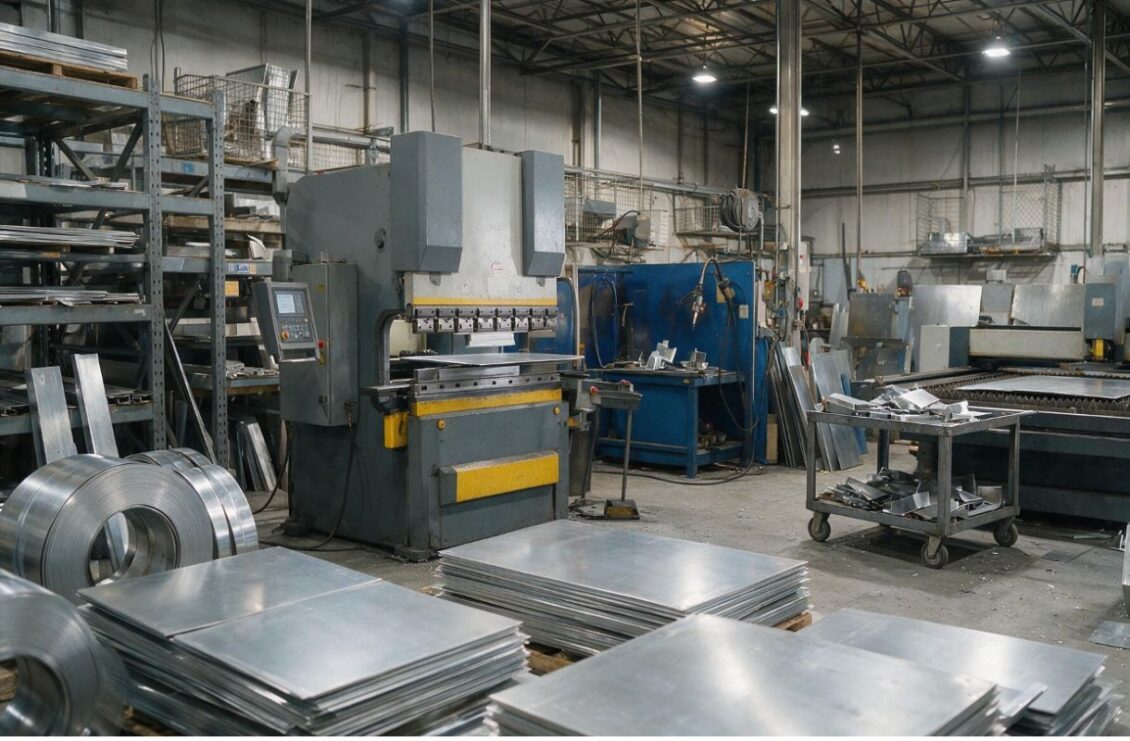
The Welsh sheet metal fabrication sector has developed capability that reflects the current market pressure. Welsh fabricators offering the full production process, from cutting through folding, welding and finishing (powder coating, zinc plating and adjacent), give Welsh manufacturers a single-supplier arrangement that materially simplifies the supply relationship.
The specific advantages Welsh fabricators offer break down across identifiable categories.
Lead time. Welsh fabricators typically deliver on lead times measured in days or weeks rather than the months that overseas suppliers require. For Welsh manufacturers managing tight production schedules, the lead time difference is genuinely material.
Prototype iteration. Sheet metal projects that require design iteration between prototype and production benefit substantially from local supplier relationships where the manufacturer and fabricator can work through design changes directly. Overseas iteration cycles run in months. Local iteration runs in days.
Quality inspection and correction. Where quality issues emerge, local supplier arrangements allow direct inspection, discussion and correction. Overseas quality issues typically require return shipping, replacement production and extended delay.
Sustainability credentials. Welsh manufacturers increasingly need to document supply chain sustainability across procurement decisions. Welsh fabrication supply, with materially lower transport-related carbon impact than overseas alternatives, supports the sustainability documentation that customers and investors increasingly require.
Investment in capability. UK fabrication sector investment has continued through 2024 and into 2026. Welsh fabricators investing in modern laser cutting equipment, CNC folding infrastructure, robotic welding and adjacent capability are matching and often exceeding the capability of overseas alternatives. Alternative Precision, one of the South Wales sheet metal fabricators serving the wider UK manufacturing market, is investing in a new Mazak laser cutting machine that will expand its cutting capability and reduce production turnaround, reflecting the wider investment pattern across the Welsh fabrication sector.
The specific investment matters. Welsh fabricators updating their capability to handle thicker materials, tighter tolerances and more complex fabrication work are the ones positioned to absorb the reshoring work that Welsh manufacturers are actively bringing back.
What Welsh manufacturers should actually be doing
Five practical points shape the Welsh manufacturer sheet metal supply chain decision.
- Review the true cost of current overseas supply. The headline unit price rarely captures the full commercial picture. Shipping costs, currency exposure, quality inconsistency costs, lead time cost, supply chain risk management overhead and adjacent supplier management cost all contribute to the true total cost of overseas supply. Welsh manufacturers running the analysis properly frequently find the total cost gap between overseas and UK supply is much smaller than the unit price comparison suggests.
- Understand Welsh fabrication capability. The Welsh sheet metal fabrication sector has capability that many Welsh manufacturers assumed had been lost. Welsh fabricators serving the wider UK market handle work across broad complexity and scale, and the specific capability available locally is worth understanding before assuming overseas supply is the only option.
- Consider hybrid supply arrangements. Welsh manufacturers don’t have to move all sheet metal supply back at once. Hybrid arrangements, with high-value, quality-critical or time-sensitive work moved to Welsh fabricators and lower-value straightforward work retained overseas, produce material benefits without requiring wholesale supply chain change.
- Engage with Welsh fabricators on capability development. Welsh fabricators investing in new capability are actively seeking manufacturer partners to develop production arrangements. Welsh manufacturers engaging with fabricators on capability development, prototype iteration and long-term supply relationships often secure supply arrangements that overseas suppliers structurally cannot match.
- Factor sustainability into the decision. UK manufacturer sustainability reporting requirements continue to expand. Welsh fabrication supply, with materially lower transport-related carbon impact, supports sustainability documentation that overseas alternatives cannot.
The wider Welsh manufacturing picture
The Welsh manufacturer sheet metal supply chain shift reflects a broader UK manufacturing pattern. Reshoring is a real trend, and it’s driven by commercial rationality rather than ideology. The businesses moving supply chains back to the UK are doing so because the commercial numbers support the decision, not because of political preference.
Welsh manufacturers approaching supply chain decisions in 2026 sit within a specific context. Welsh Government business support programmes actively encourage domestic supply chain development. The wider Welsh manufacturing economy benefits materially from keeping fabrication work in Wales. The commercial case for Welsh sheet metal supply is stronger than it has been in a decade.
The 7 in 10 Welsh manufacturers currently reviewing their sheet metal supply arrangements represent a genuine market shift. The fabricators absorbing the returning work are seeing sustained order volume growth, and the manufacturers making the switch consistently report better commercial outcomes than the ones defending existing overseas arrangements.
What comes next
The reshoring trend in Welsh sheet metal supply is not a passing 2026 moment. The specific factors driving the trend, including supply chain reliability pressure, quality expectations, sustainability requirements and the continued investment in Welsh fabrication capability, all continue through 2026 and beyond. Welsh manufacturers engaging with the trend at the current stage are producing materially better commercial outcomes than those waiting for the calculation to shift further.
The Welsh sheet metal fabrication sector is genuinely well-positioned to serve the wider UK manufacturing market at scale. The businesses investing in modern laser cutting, folding, welding and finishing capability are matching overseas alternatives on capability while offering the reliability, quality consistency and supply relationship advantages that overseas suppliers structurally cannot match.
Welsh manufacturers approaching their sheet metal supply chain review with fresh commercial thinking, rather than defending arrangements set up five years ago under different conditions, are producing materially better outcomes than the manufacturers assuming the current arrangements are still the right ones. The 7 in 10 pattern reflects Welsh manufacturers currently in the review process. The manufacturers who have already made the switch are quietly gaining the commercial advantage the reshoring trend produces.
The Welsh sheet metal fabrication sector is having its moment. Welsh manufacturers who engage with the sector properly are the ones capturing the commercial upside that the current market shift is genuinely producing.
