

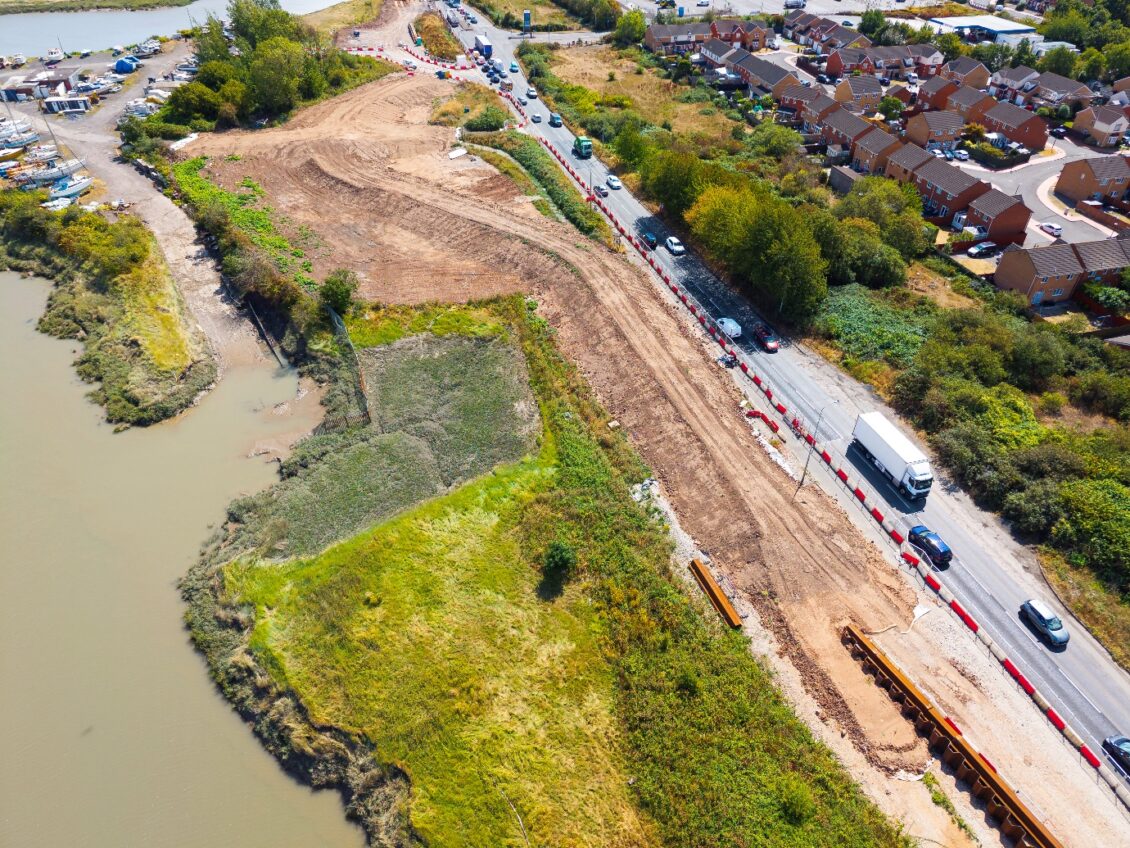
Cardiff Council has issued an explanation of the ongoing roadworks on Lamby Way after frustrated motorists take to social media to complain about extensive delays and traffic building up along the busy commuter route.
The works have caused disruption for drivers travelling through the area, including those heading towards the docks and Cardiff Bay, with concerns raised about the impact on daily journeys.
However, the council has stressed that the work is not simply a road improvement project, but part of one of the largest climate adaptation schemes Cardiff has undertaken.
The Cardiff Coastal Protection Scheme is designed to protect more than 1,100 homes, dozens of businesses and key infrastructure from coastal flooding and erosion over the next 100 years.
According to the council, approximately 80% of construction work has already been completed, with the current phase on Lamby Way representing the final major stage expected to affect road users.
Why are the roadworks taking place?
The works form part of the wider Cardiff Coastal Protection Scheme, which aims to reduce the risk of flooding and coastal erosion along the River Rhymney and Cardiff’s coastline.
The council says rising sea levels and increasingly severe weather events are placing greater pressure on coastal infrastructure.
Without intervention, erosion could eventually wash away the land supporting Lamby Way, making the road unusable.
The scheme is intended to prevent this from happening while protecting nearby communities and businesses.
Once completed, the flood defences will provide long-term protection for 1,116 homes and 72 businesses.
The Rover Way Travellers Site, transport routes, utilities and other strategically important infrastructure will also benefit from the improvements.
Cardiff Council says protecting these areas will help safeguard jobs, maintain business operations and ensure the surrounding area remains accessible in the future.
Why hasn’t the road been closed completely?
One of the key points addressed by the council is why the roadworks are being carried out while traffic continues to use Lamby Way.
According to the council, the original engineering proposal involved closing the road completely while construction took place.
However, following discussions with businesses, freight operators and other stakeholders, alternative methods were explored to avoid a full closure.
The council ultimately decided on a revised construction approach that would allow traffic to continue travelling in both directions.
This has required changes to the construction methodology and the use of specialist equipment.
A vibration-free piling machine has been brought in to allow work to progress while keeping the road open.
Temporary traffic signals are being used to manage vehicles travelling in both directions, while a dedicated traffic management contractor is monitoring conditions and adjusting signal timings to help keep traffic moving.
The council acknowledges that keeping the road open is neither the cheapest nor the simplest engineering option, but says it avoids the potentially greater disruption that a complete closure would cause.
Why can’t the work be carried out from the water?
The council has also addressed suggestions that construction could take place from the water rather than affecting the road.
It says this option was investigated but could not be pursued because of environmental restrictions.
These include requirements from Natural Resources Wales, protected habitats and the proximity of nature reserves.
According to the council, the current construction method represents the most practical balance between completing the flood defences, protecting the environment and maintaining access for road users.
How much work has been completed?
Cardiff Council says approximately 80% of the construction work associated with the coastal protection scheme has now been completed.
Significant progress has already been made on several major elements, including the installation of rock armour defences along the River Rhymney, extensive sheet piling, improvements to sea defences and coastal embankment works.
The current work on Lamby Way is described as the final significant construction phase expected to have a major impact on the road network.
Once this stage is completed, the council expects the remaining work to have minimal impact on traffic.
When will the Lamby Way roadworks finish?
The council has confirmed that the main traffic disruption is expected to continue until late February 2027.
The current programme includes the following dates:
- 30 September 2026: Piling works began.
- 11 December 2026: Piling works scheduled to finish.
- January to February 2027: Finishing works and pile cap installation.
- 26 February 2027: Traffic management scheduled to be removed and site demobilisation completed.
- August 2027: The wider Cardiff Coastal Protection Scheme is scheduled for completion.
This means drivers using Lamby Way could continue to experience disruption for several more months, although the council says the current phase is the last major stage expected to affect traffic.
Protecting Cardiff for the next 100 years
While the immediate impact of the roadworks has prompted complaints from motorists, Cardiff Council says the longer-term benefits of the scheme are significant.
The project is designed to strengthen Cardiff’s defences against coastal flooding and erosion, protecting residential communities, employment sites and important transport infrastructure.
The council says the work will help reduce the risk of flooding for the next century, while ensuring roads such as Lamby Way remain usable as the effects of climate change become more pronounced.
With the majority of construction already completed, the council says the project is now entering its final stages, although road users will need to allow additional time for journeys until the temporary traffic management arrangements are removed in February.
