

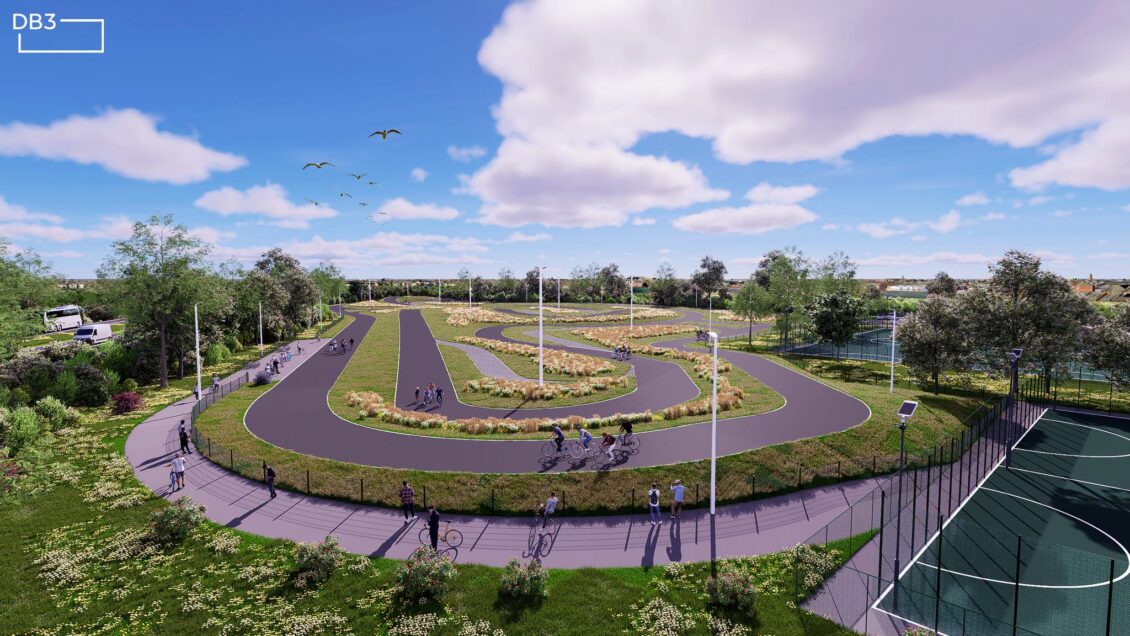
A 1.5km traffic-free cycle circuit has been proposed for Cardiff as a lasting legacy of the Tour de France coming to the city.
Stage 3 of the race will finish outside Cardiff Castle in July 2027. The national-standard, closed-road circuit has been put forward as a way of using the excitement generated by the race to encourage more people to get active.
A report due to be discussed by Cardiff Council’s Cabinet on 15 October recommends approval of an Outline Business Case to allow further work on the project to progress. The report will first be scrutinised by the Economy & Culture Scrutiny Committee on 13 October.
Delivery of the facility is estimated to cost around £4 million. The council said this capital funding would not be provided by Cardiff Council, and that the facility is subject to external capital funding being secured through the Tour de France legacy programme, planning permission and approval of a future Full Business Case by the council.
Council-owned land in Leckwith, close to existing sport and education facilities, has been identified as a potential location. There are currently no urban closed-road circuits in South Wales, and demand modelling carried out as part of the Outline Business Case indicates strong potential usage, according to the council.
The proposal is supported as a shared priority by the national governing bodies for cycling, triathlon, athletics and community sport.
Cabinet Member for Culture, Leisure and Tourism, Cllr Jennifer Burke, said: “The Tour de France coming to Cardiff will be a historic moment for the city, but we want its impact to last far beyond the race itself.
“This proposed circuit would be nationally significant community cycling and endurance sports hub, helping turn the enthusiasm and inspiration the event creates into opportunities for local people. Beyond competitive cycling, it could provide a safe and welcoming place for children to learn to ride, for schools and community groups to be active, and for runners and triathletes to train and compete.
“The ambition is to create a true community legacy from one of the world’s greatest sporting events and help even more people discover the benefits and enjoyment of being active.”
According to the report, the preferred approach would be for the facility to be operated by a third party working alongside the council and national governing bodies, with a focus on a financially sustainable operating model and protecting affordable community access.
Subject to Cabinet approval, the council’s role would be to provide land for the project, subject to planning approval, funding and a future Full Business Case; to support the administration and governance of securing capital funding, planning and procurement; and to oversee delivery of the project.
The circuit forms part of a UK-wide National Facilities Strategy developed by Beicio Cymru, British Cycling and Scottish Cycling.
