

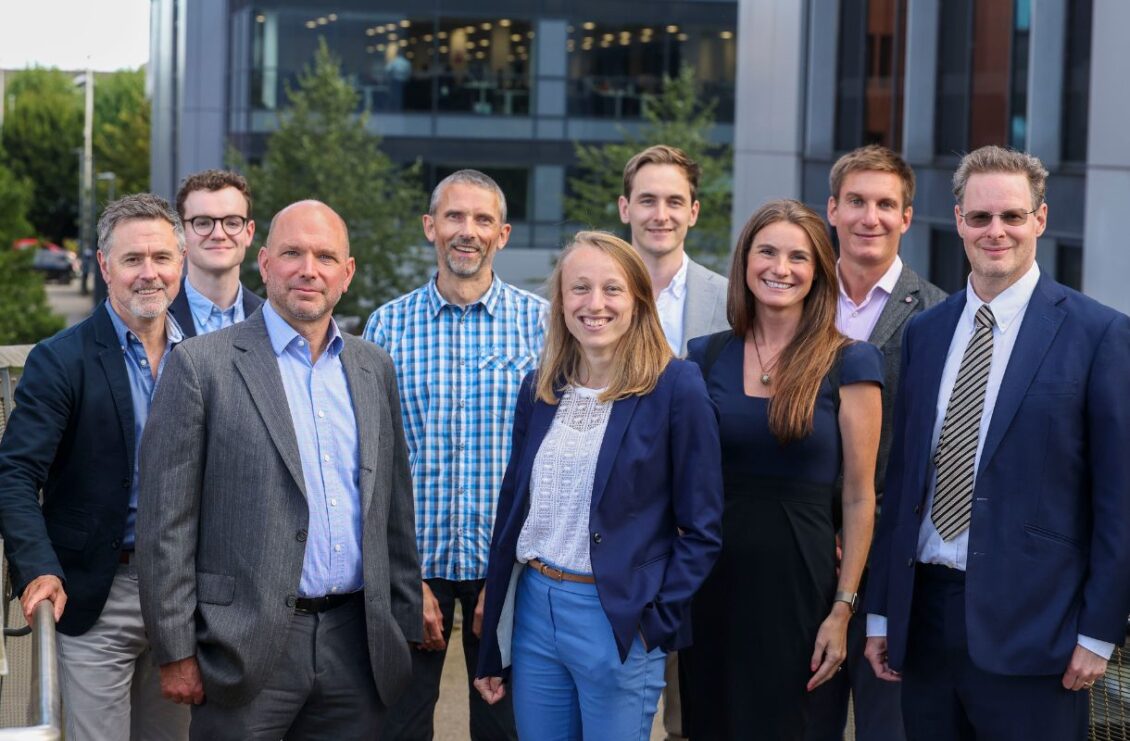
Reclinker has secured £10 million in an oversubscribed Series A funding round to scale its low-carbon cement technology from industrial trials with 7 Steel UK in Cardiff to commercial production.
Based in Cardiff, the company turns demolition waste into new cement and will use the investment to grow production in South Wales and create skilled green jobs in the region.
The round is co-led by Clean Growth Fund and AP Ventures, with further participation from the Development Bank of Wales and existing investors including Zero Carbon Capital, Kibo Invest and Cambridge Enterprise.
Reclinker’s technology, developed at the University of Cambridge and described in Nature, recovers cement paste from construction demolition and turns it back into clinker inside electric arc furnaces used to recycle steel. The process has been demonstrated through multiple industrial-scale trials at 7 Steel UK’s Cardiff site. Reclinker has already made its first commercial sales.
Cement is responsible for approximately 7% of global CO₂ emissions. Around 53% of clinker emissions come from calcination of limestone and a further 35% from fossil fuels burned in kilns. Reclinker’s electrically driven process requires no kiln, no quarried limestone and no fossil-fuel-driven heat. Its cementitious slag is sold in blended cement products, expected to deliver an immediate 50% reduction in emissions at cost parity with conventional cement, with further reductions as the technology scales.
The new funding will support production in Cardiff towards 120,000 tonnes per year and help replicate the model at other electric arc furnace facilities in Europe and the US. The market opportunity has been validated through the Innovate UK Advance Market Commitment.
Bill Yost, CEO of Reclinker, said: “We are thrilled to have received backing from both our existing and incoming investors. This oversubscribed round sends a strong signal that UK investors are serious about decarbonisation. We are particularly glad this investment will support the growth of green industries in Wales.”
Stephen Price, Investment Partner at Clean Growth Fund, said:
“Cement is one of the most challenging sectors to decarbonise, with emissions deeply embedded in both process chemistry and energy use. Reclinker’s approach is a compelling example of how industrial symbiosis can unlock meaningful emissions reductions by leveraging existing infrastructure. By integrating cement production into steel recycling, the company offers a scalable and economically attractive pathway to reducing the carbon intensity of one of the world’s most widely used materials. Clean Growth Fund is delighted to support Reclinker as it advances production scale-up and commercial deployment.”
Andrew Hinkly, AP Ventures Managing Partner, said: “Portland cement clinker is essential to infrastructure development, yet remains one of the hardest industrial emissions sources to abate. Reclinker has developed a unique, scalable, and cost-competitive route to low-carbon clinker production that can be deployed using existing steel industry capital equipment. Its ability to reduce cement emissions while consuming one of the world’s largest industrial waste streams made Reclinker a natural investment for AP Ventures in the cement sector.”
Gareth Mayhead of the Development Bank of Wales said: “This investment demonstrates the power of co-investment in bringing innovative, high-growth businesses to Wales. By investing alongside specialist climate technology investors, we’re helping Reclinker establish and grow its presence here, building on the successful industrial trials already undertaken in Cardiff.”
Gabriella Nizam, Head of Sustainability and Public Affairs at 7 Steel UK, said: “We have been pleased to contribute to the development of this world-first technology at our Cardiff site operations. We have been a hub for industrial innovation, leading low carbon electric arc furnace steel production for decades, and we are pleased to support projects addressing some of the world most pressing issues.”
