

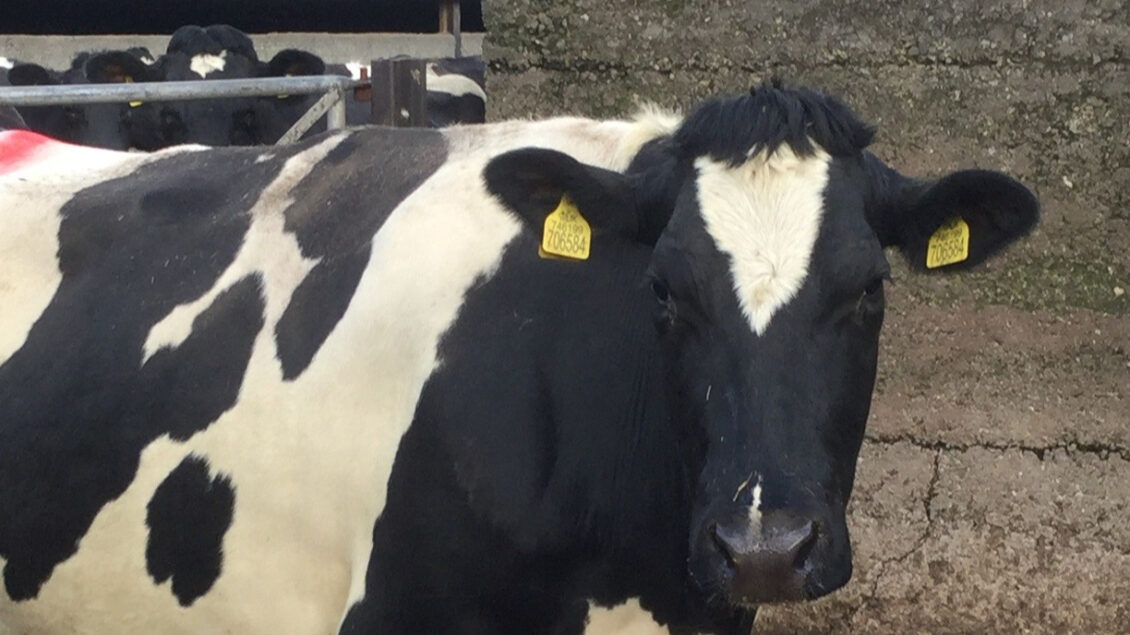
Three members of a Pembrokeshire farming family have been sentenced for deliberately swapping cattle ear tags; actions that saw animals with Bovine Tuberculosis (TB) reactors remain on the farm.
Bovine Tuberculosis is a zoonotic infection that can infect many species, including humans and wildlife, though transmission to humans in the UK is very rare as a result of control measures in place across the agricultural and food industries.
The actions of Edward, Charles and Henry Hartt displayed widespread illegality and created an unacceptable and serious risk to animal health.
The Hartts operate a large scale dairy and beef farming enterprise – Messrs EW Hartt & Sons – at Longford Farm, Clynderwen, comprising about 2800 cattle.
The three men were sentenced at Swansea Crown Court on Monday, March 4th for offences committed under the Cattle Identification (Wales) Regulations 2007; legislation which underpins cattle management, disease control and traceability systems put in place to ensure the safety of the entire farming industry.
All three defendants had previously pleaded guilty to 12 counts on March 25th, 2022.
The court heard that where higher value cattle had tested positive for TB and would be valued for compensation, poorer quality animals would then be sent for slaughter in its place.
This meant that infected animals were kept on the farm with a significant risk of spreading the disease to other animals and jeopardising the success of the TB eradication programme.
Their retention would undoubtedly allow the disease to persist on farm, slowing the progress of eradication within the herd and the general cattle population and increasing costs to the Welsh Government and taxpayer.
The practice would also have resulted in the slaughter of healthy animals not actually infected with TB.
It was also determined that a portion of farm’s milk would have come from TB reactors that should have been removed, which under food safety legislation was banned from entering the food chain.
Where poorer cattle tested positive, evidence showed that they were substituted at valuation for higher value animals, attracting a higher level of compensation – but with the more valuable animals subsequently retained and the lower value TB reactors sent for slaughter.
Each defendant was fined a total of £24,000 – £2,000 for each count on the indictment.
The sentencing reflected the heightened TB risk of reactors remaining on farm, TB lesions present in cattle and a clear risk that misidentified animals could have entered the food chain.
As well as the significant fine, associated action had been taken against the defendants under the Proceeds of Crime Act 2002 (POCA).
This legislation was introduced with the aim of recovering assets, including money, acquired through criminal activity.
The use of POCA is particularly pertinent when it is so manifestly in the public interest to ensure criminal activity is not rewarded.
The criminal benefit arising in connection with the offending would have been derived through a mix of pathways.
This included TB compensation payments, sale of illegal stock, sale of milk from illegally retained stock, as well as the wider benefits gained by the farming enterprise.
The Hartts’ actions enabled a steady and continual expansion of the business, on a stronger financial footing, to the detriment of other farms in a competitive market.
This resulted in confiscation orders of £217,906 against each defendant jointly and severally to reflect the ‘criminal benefit’ associated with the offending.
The court also awarded the Council costs of £94,569.
The case brought by Pembrokeshire County Council followed an in-depth investigation by officers from the Council’s Public Protection Animal Health and Welfare Team, working in conjunction with the Animal and Plant Health Agency veterinary officers and other regulatory partners.
The investigation was triggered following the identification of anomalies at the farm in June 2019.
The subsequent investigations were complex and protracted over the remainder of the year, involving a number of inspections and visits, DNA sampling of milking cows, detailed audit and cross-referencing of farm records, ear tag and freeze brand (markings on the animal) checks, post-mortems and blood samples.
In one instance remarked upon by the Judge, the freeze brand of a milking cow was altered.
It was later discovered that her ear tags had been changed twice. DNA testing later proved that the animal should have previously left the farm.
Of 828 animals checked as part of the investigation, 123 had discrepancies in relation to their origin and identity, equivalent to 15% of the stock.
The extent and nature of the tagging issues and deliberate changes in identity dwarfed anything previously encountered by officers, and highly unlikely to be by error or mistake.
It was subsequently discovered that the farming operation had received TB compensation payments at a level far above most other farms.
The farm was one of only two in Wales to have had TB present for over 20 years. Since 2009 the farm had received more than £3 million in compensation payments, more than any other farm in Wales.
The prosecution maintained that the large scale illegality underpinned the foundations of the entire farming enterprise over a considerable period of time.
In December 2019, Food Standards Agency veterinary officers placed a stop on 19 carcases and associated offal/edible co-products from two lots of cattle sent for slaughter by the farm, that were destined for the human food chain.
This was due to irregularities concerning the identification and origin of certain animals and potential food chain implications.
Following the conclusion of the court case, Cllr Michelle Bateman, Cabinet Member for Housing Operations and Regulatory Services, welcomed the level of sentence.
She said: “This case will have resulted in unnecessary cost and a drain on resources for those involved in the TB eradication programme, including the major use of public money by Welsh Government who fund the implementation of the compensation scheme.
“It also greatly risks the health of neighbouring herds through unnecessary contamination of the environment as well as damaging the farming industry and public confidence in the safety of milk and meat.
“I congratulate our Council officers and all agencies in bringing this case successfully to court. I hope that this action and sentence will send a message that this sort of illegal behaviour will not be tolerated.”
