

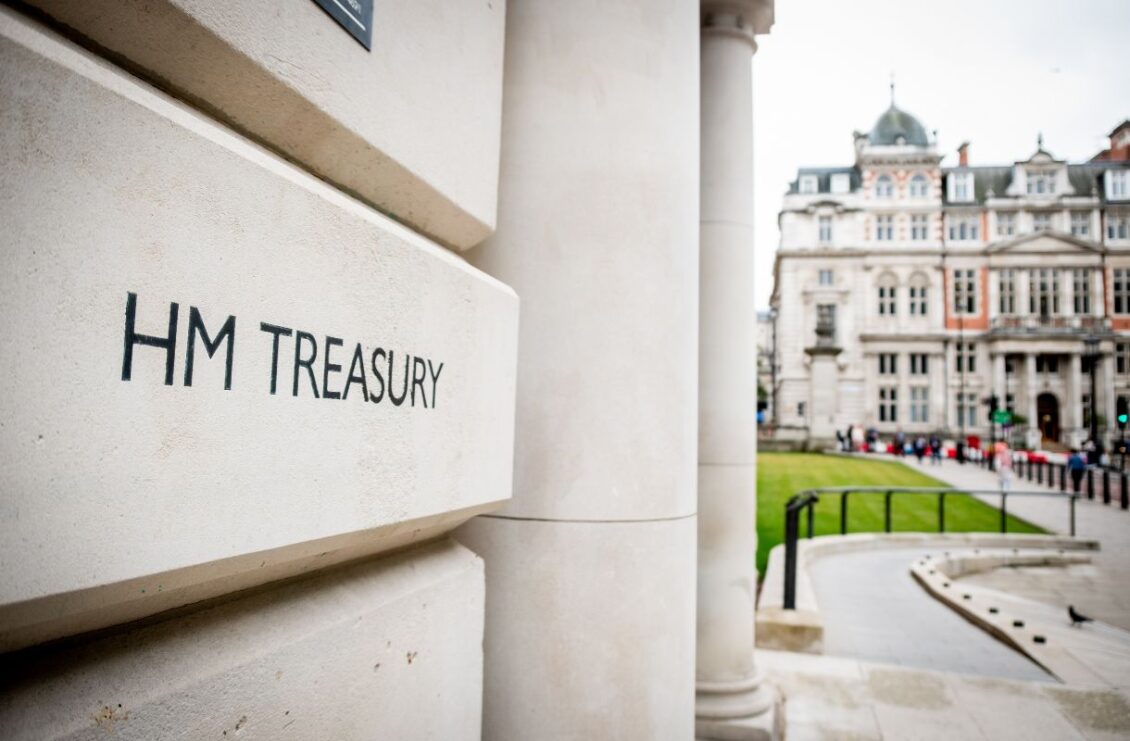
The Welsh business community has been quick to react to today’s Budget, offering a mix of concern, caution and calls for clarity. While many welcome the new investment heading to Wales, business leaders say the tax rises and lack of detail risk holding back confidence at a time when firms need stability.
Gus Williams, CEO of Chambers Wales South East, South West and Mid, said:
“It is not entirely clear who this Budget is really for. There are a mix of backloaded taxes that will impact various people while there is no real standout boost for business. The leaked OBR report highlights reduced profitability for smaller businesses in its forecast which is concerning.
The main question is will businesses and the markets see this Budget as drawing a line under the tax rises and uncertainty which has held back business investment and spending? The jury is still out on that. With the tax rises being backloaded, particularly the income tax threshold freezes, that means there is still a budget deficit for the next couple of years. I am not 100% sure that has drawn a clear line under all the uncertainty. The OBR report is full of risks to its assumptions.
The chancellor has talked about putting more control back into local and regional hands, with 13 billion pounds of flexible funding. Welsh firms will want to know how this will convert into practical support. Businesses that fall within the industrial strategy will likely be able to access funding and support but the details are not yet clear, along with questions about how this will filter through the devolved countries.
Several of the tax changes will clearly affect business decisions. Salary sacrificed pension contributions above 2,000 pounds will now face National Insurance. Taxes on dividends, savings and property income are rising by two percentage points. The main writing down allowance in corporation tax is being reduced and capital gains relief on sales to employee ownership trusts is tightening. These measures raise billions and will influence investment, hiring and planning across. Businesses impacted by these changes will have to try and figure out the individual impact to their plans and budgets.
Welsh businesses want to see reform to the planning system to unblock the construction sector, a focus on skills, reduction in energy costs, rates relief and simplification of the political landscape. None of that is the direct purview of this Budget.
The big question is how businesses will react. Messages I have received so far are ambiguous at best.
Our members are clear. They need confidence and a stable environment so they can get on with doing business.”
Russell Greenslade, Director, CBI Wales, said:
“The government’s growth mission is currently stalled. While the Chancellor has succeeded in creating the fiscal headroom she needed, a scattergun approach to tax risks leaving the economy stuck in neutral.
“Adding national insurance to salary sacrifice pension contributions curtails savings and pushes up the cost of employment. Coming on top of the rise to the National Living Wage, increased employment costs make it even more expensive for employers to offer jobs to young people and jobseekers.
“The government should be commended for protecting capital spending, boosting innovation, sticking with the corporate tax roadmap, and hiring the planning officers business asked for. But business will still rue a missed opportunity to be bold and press on with much needed tax reform, simplification and alignment of incentives to catalyse business investment and job creation.
“With business investment and profitability weaker as a result of these decisions, the government must now double-down on leveraging the experience and expertise of enterprise to find the step-change in economic growth that has proven elusive. One of the biggest things the government can do right now is get round the table with business to find a landing zone on the Employment Rights Bill that works for everyone.
“Support is needed for local supply chains to be integrated into plans for the Wylfa Small Modular Reactor, ensuring the nuclear site delivers on its promise to benefit the north Wales economy and keep Wales’ clean energy ambitions on track. We also welcome the government’s ambitions for the south Wales semi-conductor cluster, AI growth zones and development of the Port Talbot Celtic Freeport site. These will all boost the regions’ ability to attract world leading manufacturing and industrial sectors, as well as skilled jobs.”
Richard Selby, co founder of Pro Steel Engineering and National Chair of IoD Wales, said:
“It was good to hear the Chancellor highlight fresh investment for Wales and a clear intention to work more closely with entrepreneurs. The focus on making, buying and selling British is welcome too. The question that always follows a Budget is how and when these plans will happen. Confidence among IoD members is already low, especially in Wales, so we need to see prompt action and clear timelines. Without that, it is hard for businesses to plan and move forward with certainty.”
The Federation of Small Businesses Wales offered a mixed view, welcoming major investment already announced but warning that tax rises will add pressure.
Joshua Miles, Head of FSB Wales, said:
“There’s some positive news for Wales through the two AI growth zones, promising over 8,000 jobs, and the UK’s first small modular reactors at Wylfa on Anglesey. However, UK-wide tax rises and ongoing cost pressures risk another tough year ahead for businesses across Wales.”
“The extra £505 million and new borrowing flexibilities give Welsh Government the opportunity to help small firms through lower rates and greater investment in infrastructure. It’s crucial that this extra money is used to replicate UK Government’s decision to permanently lower tax rates for retail, hospitality and leisure (RHL) properties in Wales.”
Lloyd Powell, Head of ACCA Cymru Wales, said:
“While today’s announcements draw a line under weeks of speculation, businesses in Wales will be concerned at additional costs to businesses, given the cost pressures many were already facing. These include future NI contributions on salary-sacrificed pensions and through the increase in the national minimum wage. It remains to be seen whether businesses continue to hold back on investment in expectation of more uncertainty.
On tax, we’re disappointed that the government has opted for further tweaks, including freezing thresholds, rather than bolder reform. This only adds to the complexity of the UK’s tax landscape and diverts from key principles of transparency and simplicity. Furthermore, drawing more taxpayers into the orbit of HMRC further overburdens an already-creaking agency.
The Welsh economy will gain through the additional £505 million to be passed onto the Welsh Government through the Barnett formula, as well as through the two AI growth zones, support for the Welsh semiconductor industry and the small nuclear reactor project at Wylfa.”
EV sector leaders also raised concerns.
Jarrad Morris, founder and CEO of FleetEV, said:
“With the Chancellor’s confirmation that a 3 pence-per-mile charge for electric vehicles, alongside a 1.5 pence-per-mile charge for plug-in hybrids, will be introduced from April 2028, and that both rates will rise annually in line with inflation, FleetEV calls on the Government to reconsider, or at least significantly amend, the policy in its current form.
While we welcome the commitment to fund a £200 million expansion of the UK’s charging network, this must not come at the expense of undermining the economics of electrification at a crucial moment for fleets.
UK fleets, many of which only recently began electrifying, urgently need long-term certainty. Imposing a pay-per-mile levy at this critical stage risks destabilising business cases built around the incentives and fiscal environment originally promised.
For organisations, especially public bodies and essential services already under financial strain, the additional mileage cost could derail plans to move to zero-emission transport.
Early adopters of EVs made their decisions in good faith based on Government-backed support for decarbonisation. It would be deeply unfair to penalise them now for acting early in the transition.
If the Government proceeds, any mileage-based levy should only apply to new EV registrations from 2028. That approach would protect those who invested early in the transition, whilst giving fleets, businesses and public sector operators the time and predictability they require to plan future purchases and operations sensibly.
Above all, the UK’s ambition to lead globally in green mobility depends on stable, consistent policy. Sudden shifts that undermine EV economics risk reversing hard-won progress, discouraging fleet electrification, eroding investor confidence, and slowing the shift away from higher-emission vehicles at exactly the moment net-zero commitments demand acceleration.
FleetEV remains committed to supporting organisations to electrify their fleets efficiently, but we urge the Government to ensure that the policy framework does not punish those who led the charge.”
David Williams, South West and Wales Office Senior Partner at KPMG UK, said:
“The £505 million in additional Barnett formula funding, combined with two new AI Growth Zones positions Wales at the heart of the UK’s technology future.”
“The £10 million investment on semiconductor technologies in South Wales alongside the small modular reactor project in Anglesey back Wales’ existing industrial strengths. With Anglesey Freeport now fully approved and £4.2 million for Port Talbot land remediation, there’s a clear infrastructure investment pipeline.
For our SME-dominated economy, free apprenticeships for under-25s will be transformational in building the skilled workforce these growth sectors need, though businesses will be managing the broader impacts of pension and wage cost increases announced today.
Wales has the investment commitments and strategic focus, but delivery will be key to turning funding announcements into jobs and growth.”
The property sector also has concerns, especially around the rise in income tax for landlords.
David Adams, Managing Director of Cavendish, said:
“Almost a third of landlords are so-called accidental landlords and they will be among those most affected by this announcement, along with more traditional landlords who don’t use limited companies to run their portfolios.
The consequences of the tax raid by the Chancellor will either be that landlords compensate by increasing rents or they decide this is the final straw and withdraw from the market.
The tax increase comes just days after the Renters Rights Act became law which represents the biggest upheaval in the landlord and tenant sector in a generation.
The combination of the Renters Rights Act and the Budget announcement will inevitably present opportunities for landlords to grow their portfolios as others reduce their portfolios or exit completely from the sector.
We are already seeing an increase in enquiries from landlords seeking a health check and we expect this trend to only intensify as landlords continue to take stock.”
He also warned that the new mansion tax could cause confusion.
“It is a bureaucratic nightmare given that it will require the first revaluation of council tax bands in almost 35 years. If the policy does ever go ahead, it will inevitably be beset by appeals by homeowners who find themselves being dragged into the mansion tax.”
The Budget’s focus on pensions also drew scrutiny.
Sarah Garnish, Consultant at Quantum Advisory, said:
“Over the past couple of years, we have seen the Government make a conscious effort to improve the UK’s pension system. The Pensions Bill will introduce a new framework to improve pension scheme value and outcomes for members, while the Pensions Commission has been reformed, to address the ever-increasing concerns that future retirees are on track to have lower retirement incomes.
The limit on salary sacrifice contributions, in isolation, will for many employees make it less likely for them to contribute more to their pension and could potentially lead them to reduce what they contribute. All of this is very counterproductive to the aims of the Government where they are looking to improve retirement outcomes for individuals.
I would encourage employers to consider the impact of the change on their pension scheme and ensure that the impact on their employees is carefully communicated. The current structure of each employer’s pension scheme should be reviewed and I’d recommend alternative options which may help reduce the impact on employers and employees alike are explored. For example, it might be possible to restructure the pension scheme to make it non-contributory for employees – albeit the complications of this would need to be fully investigated.
The only silver lining is that these changes won’t come into effect until April 2029. This gives us time to explore creative solutions and possibly work towards having the proposed change stopped.”
