

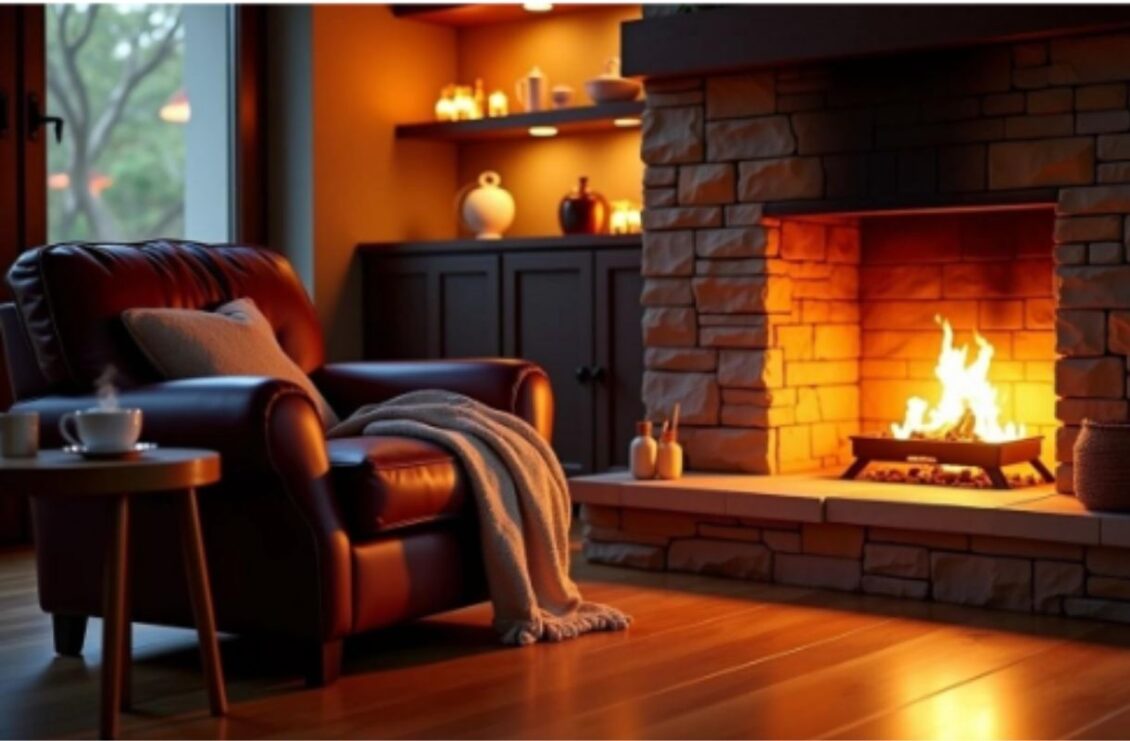
Have you ever wondered why fireplace relaxation feels so deeply satisfying? That mesmerizing dance of flames seems to work magic on our minds and bodies, instantly melting away stress. Scientists have certainly taken notice of this phenomenon!
Researchers have discovered fascinating evidence behind what many of us intuitively know – sitting by a crackling fire triggers profound physiological and psychological responses. Surprisingly, these effects aren’t just subjective feelings but measurable changes in blood pressure, heart rate, and stress hormone levels. Furthermore, studies from the University of Alabama reveal that watching flames may actually decrease blood pressure while increasing our sense of contentment.
Throughout this article, we’ll explore the evolutionary reasons behind our attraction to fire, examine the scientific research confirming these benefits, and discover how incorporating fireplace relaxation into your routine might significantly improve your mental health. You’ll also learn how fireplaces create social bonds and even help combat seasonal mood disorders during darker months.
The Evolutionary Bond Between Humans and Fire
Our ancient connection with fire runs deeper than most people realize. Archeological evidence suggests that the controlled use of fire dates back to Homo erectus nearly two million years ago. This critical technology became one of humanity’s defining traits, alongside language, carried wherever humans migrated—even into the barren Arctic.
How fire shaped early human survival
The mastery of fire fundamentally changed human evolution. Initially, fire provided protection from predators, enabling our ancestors to inhabit a broader range of environments. Beyond safety, fire brought multiple survival advantages:
- Extended wakefulness: Modern humans have an exceptionally long 16-hour waking day, compared to just 8 hours in many other mammals
- Better sleep quality: Humans spend 25% of sleep in REM, versus only 15% for apes and monkeys
- Geographic expansion: Fire allowed hominids to move into much colder regions previously uninhabitable after the loss of body hair
- Improved nutrition: Cooking softened foods and reduced chewing time, with apes spending 4-7 hours daily just chewing
Perhaps most importantly, fire transformed our biology. Richard Wrangham, a Harvard biologist, proposes that fire fueled our most distinctive organ—the human brain. Our brains require approximately one-fifth of our body’s energy budget, even at rest. Consequently, the unprecedented increase in brain size that began around 1.8 million years ago needed additional calories.
The “expensive tissue hypothesis” provides a crucial insight—cooking created an evolutionary trade-off between gut size and brain development. By making food more digestible through cooking, humans could develop smaller digestive systems yet larger brains.
Why we still find fire comforting today
That sense of calm you feel watching flames isn’t coincidental—it’s essentially hardwired. Researchers suggest this response evolved because, for early humans, fire signified safety, warmth, and community.
Throughout thousands of years, fire has provided us with heat, cooking capabilities, protection, illumination, and a space for rituals. This long historical relationship explains why we remain naturally attracted to flickering flames today.
Many experts refer to this phenomenon as “the campfire effect”—a state of reduced stress, heightened attentiveness, and deeper interpersonal connection triggered by exposure to natural flame. In a world overwhelmed by digital stimulation, fire offers something increasingly rare: stillness.
The multisensory experience of fire—warmth, flickering light, crackling sounds, and distinctive scent—engages several senses simultaneously. This combination creates a captivating effect that helps take your mind off daily concerns.
Notably, despite our modern homes rarely relying on fire for heat or cooking, our emotional response to flame remains unchanged. The soft, flickering glow still draws people in, slowing them down, and creating space for meaningful connection. This primal attraction explains why fireplace relaxation continues to hold such power in our technological age.
What Science Says About Fire and Relaxation
Researchers have moved beyond anecdotal evidence to scientifically validate what many intuitively feel about sitting by a crackling fireplace. Recent studies have documented measurable physiological changes that occur when we experience the sight and sound of flames.
University of Alabama study findings
At the University of Alabama, anthropologist Dr. Christopher Lynn and his team conducted groundbreaking research that finally put the relaxation effects of fire to scientific test. Through a series of three studies involving 226 adults, researchers used a randomized crossover design to isolate different sensory components of the fire experience.
The methodology was particularly rigorous:
- Study 1 compared blood pressure changes between viewing a 5-minute silent fire video versus a blank computer screen
- Study 2 added a fire-with-sound condition to test multisensory effects
- Study 3 extended viewing time to 15 minutes and changed the control to an upside-down static picture of fire
“Humans have evolved to self-soothe through what’s called the relaxation response, which is essentially the opposite of stress response,” explained Dr. Lynn. This evolutionary adaptation appears specifically triggered by fire’s unique combination of sensory stimuli.
The ‘fireplace effect’ and relaxation response
Following these studies, scientists began referring to the phenomenon as “the fireplace effect”—a documented state of reduced stress, heightened attentiveness, and deeper interpersonal connection triggered by exposure to natural flame.
The research revealed a fascinating insight: fire is most effective at inducing relaxation when experienced as a multisensory phenomenon. The combination of visual flickering flames with crackling sounds produced significantly stronger relaxation responses than visual stimuli alone.
Moreover, individual differences play a role in how strongly people respond to fire. Researchers discovered that traits like “absorption” (the capacity to become completely engrossed in experiences) and “prosociality” (tenderness toward others) enhanced the relaxation response to fire. This suggests our ancestors who responded most positively to fireside gatherings may have gained social advantages.
Impact on blood pressure and heart rate
The physiological changes documented in these studies were substantial. On average, participants experienced a decrease in blood pressure by six points when watching a fireplace. The effect was most pronounced in the fire-with-sound condition, which consistently produced the greatest blood pressure reduction across all studies.
In one experiment, researchers found “a significant influence of condition for systolic pressure with a large effect size”. Post-hoc comparisons demonstrated meaningful differences between fire-with-sound versus control conditions and between fire-with-sound versus muted-fire conditions.
Additionally, these effects appeared dose-dependent—the longer participants watched the fire, the calmer they became. Just 15 minutes of fireplace viewing demonstrated a measurable impact on stress levels and potentially on stress-related health conditions.
Susan Albers, a psychologist at Cleveland Clinic, explains: “Sitting by a fire is a multi-sensory experience. We listen to the sound of the fire crackling, feel the warmth against our skin, inhale the aroma of the fire. All of these things help us to feel very comforted and relaxed”.
The science confirms what our ancestors instinctively knew—fire induces a parasympathetic nervous system response, triggering the release of feel-good neurochemicals including serotonin, dopamine, and endorphins. These pleasure chemicals boost our mood and create that distinctive sense of comfort we associate with fireplace relaxation.
Mental Health Benefits of Watching a Fireplace
Beyond creating a cozy atmosphere, fireplace relaxation offers substantive psychological benefits supported by scientific research. The profound mental health effects of watching flames extend far beyond simple esthetic pleasure.
Reduced anxiety and stress
The hypnotic dance of flames provides a natural antidote to modern stress. Studies confirm that watching fire significantly reduces cortisol levels—the primary stress hormone in our bodies. This physiological change explains why people instinctively feel calmer when gazing at a fireplace.
Research published in the Journal of Environmental Psychology found that simply observing a fire can lower blood pressure and induce a state of calm. This effect is remarkably similar to watching other natural elements like flowing streams or ocean waves.
In fact, scientists have discovered that fire can be used as a powerful tool for emotion regulation, effectively transforming unpleasant stress into genuine joy. For many people struggling with anxiety, hence, regular fireplace sessions offer a non-pharmaceutical approach to finding relief.
The benefits include:
- A distinctive trance-like state where breathing slows and muscles relax
- Mental clarity that helps with prioritizing worries and tasks
- Decreased anxiety leading to higher productivity afterwards
Improved sleep and relaxation
The gentle, rhythmic qualities of fire have direct implications for sleep quality. According to research, the soft light emitted by flames is substantially less harsh than modern electronic screens, reducing eye strain and helping prepare the body for rest.For people exploring ways to enhance their evening routine, browsing resources like fireplace.co.uk can also inspire how to incorporate soothing fire features into their homes.
The National Institute of Health found that engaging with natural light sources like fire can improve sleep quality by signaling to the body that it’s time to wind down. This becomes especially valuable in our perpetually connected world where sleep disorders are increasingly common.
“The study also found that it has a beneficial effect on the nervous system and thus aids better sleep,” notes research from the University of Alabama. Indeed, the crackling of wood and rhythm of flames create a soothing effect similar to white noise, helping reduce stress and anxiety levels before bedtime.
Enhanced mindfulness and presence
Fire gazing, known in traditional yogic practice as “Trataka,” offers remarkable benefits for mental focus. This ancient technique involves sustained attention on a flame and is believed to purify and calm the mind.
Throughout human history, watching fire has served as a form of passive meditation that helps cleanse mental clutter. The practice encourages individuals to focus on the present moment, temporarily releasing everyday concerns. Above all, this quality makes fireplace relaxation an accessible form of mindfulness practice.
The rhythmic flickering of flames provides a natural focal point that encourages staying present. According to researchers, this can lead to a meditative state that helps process emotions more effectively while enhancing mental clarity.
This mindful engagement with fire promotes self-awareness and emotional regulation. By becoming more attuned to thoughts and emotions while watching flames, people can respond to challenges more constructively in their daily lives.
Fireplaces as Social Anchors in the Home
Throughout human history, fire has been more than just a source of warmth—it has served as the central gathering point for entire communities. From ancient villages huddled around communal flames to modern homes with stylish hearths, our connection to fire remains fundamentally social.
Encouraging conversation and bonding
Fireplaces naturally draw people into their orbit, creating what researchers call a “social catalyst” effect. Studies reveal that simply being in the presence of fire increases our desire to spend time with others. This isn’t merely coincidence—it’s deeply rooted in our evolutionary past, when gathering around flames meant safety and community.
The circular arrangement typically formed around a fireplace fosters equality in conversation and encourages open communication. Unlike television, which demands attention be directed away from others, fireplaces create a focal point that still allows face-to-face interaction. As a result, fireplaces often become the most likely location for meaningful conversations, shared meals, or game nights.
Research among the Bushmen of the Kalahari found a fascinating pattern: daytime conversations typically focused on economic matters and gossip, yet nighttime talks around the fire shifted dramatically toward storytelling, singing, and deeper social bonding. This transformation highlights how fire creates a unique atmospheric backdrop for connection.
Reducing feelings of loneliness
One surprising effect of fire exposure is its impact on mental health conditions associated with isolation. Depression and anxiety often create a vicious cycle—we feel lonely yet simultaneously resist social interaction. Fireplaces help break this pattern by creating a comfortable environment that makes socializing feel natural rather than forced.
The social bonding that occurs around flames increases levels of oxytocin—often called the “love hormone”—which is linked to feelings of trust and connection. For individuals struggling with mental health challenges, these moments can combat feelings of isolation and foster a sense of belonging.
Creating shared experiences
Fireplaces offer unique opportunities for creating lasting memories through shared activities:
- Storytelling sessions where family members share personal tales or memories
- Game nights enhanced by the warm glow and relaxing ambiance
- Simple moments of reflection and conversation that strengthen relationships
Remarkably, even in our technology-dominated world, the flickering flames of a fireplace still have a unique ability to pull us away from screens and back to each other. As individual screen time increasingly dominates our attention, fireplaces offer precious shared moments that strengthen bonds and foster meaningful conversation.
Combating Seasonal Affective Disorder with Firelight
As winter darkness sets in, many people experience Seasonal Affective Disorder (SAD), a type of depression related to changes in seasons. The warm glow of a fireplace offers more than just physical comfort—it provides a natural remedy for the winter blues through its distinctive light and warmth.
The role of light and warmth in mood regulation
SAD primarily stems from reduced sunlight exposure during darker months, which disrupts your body’s internal clock and lowers serotonin levels. The natural light from a fire helps regulate your circadian rhythm, subsequently improving mood and sleep quality. Although not as bright as specialized light therapy boxes (which produce around 10,000 lux), firelight offers a more natural, soothing alternative that delivers both psychological and physiological benefits.
How fireplaces help during winter months
Fireplaces create a cozy, bright environment that directly counteracts the environmental factors triggering SAD. Studies show that watching flames helps empty the mind into a meditative state, primarily benefiting those struggling with seasonal depression. Given that SAD results from shortened daylight hours and long, dark nights, a fire provides healthy, natural light that positively affects mood throughout the evening hours.
Pairing fire with self-care routines
For maximum benefit, consider integrating fireplace time into your winter self-care practices. Together with activities like journaling, yoga, or simply relaxing with a blanket, firelight can transform winter from a challenging season into one of comfort. This approach aligns with the Danish concept of “hygge”—creating a cozy atmosphere that promotes happiness and alleviates stress. Throughout winter months, regularly scheduled evenings by the fire become a powerful tool for maintaining emotional equilibrium.
Conclusion
Throughout human history, fire has remained one of our most powerful natural allies for mental and physical wellbeing. The mesmerizing dance of flames speaks to something ancient within us, triggering responses hardwired through millions of years of evolution. Scientists have now confirmed what our ancestors intuitively knew – fireplace relaxation offers genuine therapeutic benefits.
Research clearly demonstrates that sitting before a crackling fire lowers blood pressure, reduces stress hormones, and activates our parasympathetic nervous system. This relaxation response grows stronger when we experience fire as a multisensory phenomenon, combining visual, auditory, and thermal stimuli. Most importantly, these effects aren’t merely subjective – they manifest as measurable physiological changes that can significantly improve our health.
Fire also serves as a natural antidote to our modern digital lifestyle. Unlike electronic screens that stimulate our brains and disrupt sleep patterns, firelight gently guides us toward mindfulness and present-moment awareness. Additionally, fireplaces create natural gathering spaces that foster meaningful conversation and strengthen social bonds, counteracting the isolation many people experience today.
Winter months especially benefit from regular fireplace sessions. The warm glow provides natural light therapy during darker seasons, helping combat Seasonal Affective Disorder while creating a sanctuary of comfort within the home. Though modern heating systems may have replaced fire’s practical necessity, our psychological and physiological responses remain unchanged.
Fire relaxation offers an elegant solution to many contemporary challenges – from stress and anxiety to digital overload and social disconnection. Perhaps the true magic of fireplaces lies in their timeless simplicity: they reconnect us with our evolutionary past while addressing our very modern need for calm, connection, and mindfulness. After all, despite our technological advancement, the human mind and body still recognize that ancient signal of safety and community – the warm, flickering light of flame.
