

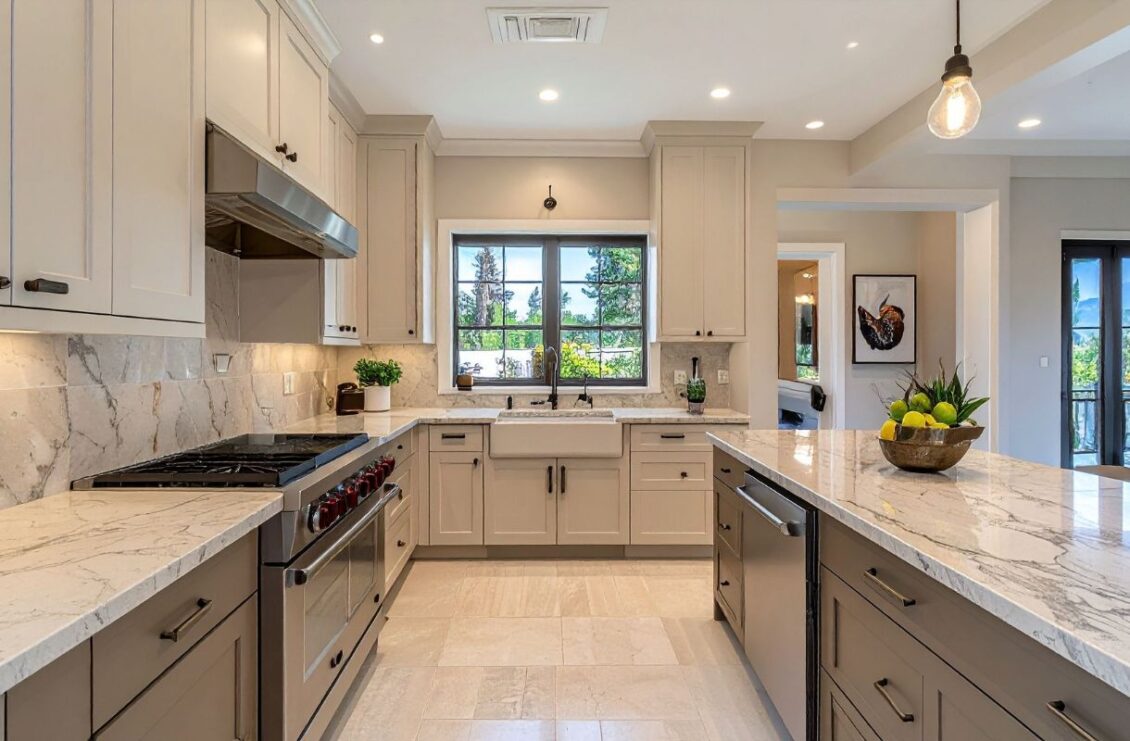
Kitchen flooring used to come with a familiar trade-off. Choose something practical and it often looked dull. Choose something stylish and it rarely stood up to daily life. Thankfully, that line of thinking is fading fast.
Today’s kitchens are busier, more lived-in, and more design-led than ever. Flooring has had to evolve to keep up and it has. Modern kitchen floors are proving that durability and good design can happily coexist.
What “Practical” Used To Mean
For a long time, practical kitchen flooring meant playing it safe. Think cold tiles, shiny vinyl or anything that could survive spills but added very little warmth or personality.
That made sense when kitchens were purely functional spaces. But as open-plan layouts became the norm and kitchens turned into social hubs, the old definition of “practical” started to feel outdated.
Now, flooring isn’t just expected to cope with heat, moisture and muddy footprints. It’s also expected to look good next to sofas, dining tables and soft furnishings.
Why Expectations Have Changed
Several shifts have pushed kitchen flooring into a new era.
Kitchens now double as living spaces, which means the floor is always on show. Social media has also played a role, with real homes setting the tone. Perfect, high-gloss rooms are giving way to warmer, more relaxed interiors that feel personal and usable.
At the same time, flooring technology has improved dramatically. Materials that once felt like compromises now look convincingly close to natural wood or stone, without the same upkeep worries.
Practical No Longer Means Plain
One of the biggest changes is visual. Practical floors are no longer limited to flat colours or generic finishes.
Wood-effect flooring, in particular, has become a favourite for kitchens.
It offers:
- Natural-looking grain and variation
- Warmer tones that soften modern cabinetry
- Designs that work seamlessly into open-plan spaces
Engineered wood is also appearing more confidently in kitchens. With its layered construction, it offers better stability than solid wood while delivering genuine character and depth underfoot.
Luxury vinyl tile (LVT) has pushed things even further, with detailed textures, matt finishes and plank formats that wouldn’t look out of place in a living room.
Designed for Real Life Kitchens
Style alone isn’t enough. Kitchens are demanding spaces, and modern practical flooring reflects that reality.
Today’s options are built with everyday life in mind:
- Water resistance to cope with spills and splashes
- Durable wear layers that stand up to dropped pans and chair legs
- Easy cleaning for homes where life happens quickly
Importantly, this durability is now hidden beneath considered design. Floors are quieter underfoot, warmer to the touch, and far more forgiving than traditional tiles.
The Role of Flooring In Open-Plan Homes
As kitchens blend into dining and living areas, flooring has taken on a new responsibility: visual continuity.
Practical flooring now needs to work across zones. A floor that looks too “kitchen-specific” can break the flow of an open-plan layout. This is where wood tones, subtle textures and plank formats shine.
Choosing a floor that can run from kitchen to living space creates cohesion while still meeting the demands of cooking, entertaining and everyday mess.
Is Practical Kitchen Flooring Worth Prioritising?
Absolutely, but the definition has changed.
Practical no longer means choosing the safest or cheapest option. It means selecting a floor that supports daily life without visually dragging the room down.
The best kitchen floors today:
- Age well rather than showing wear quickly
- Hide small marks and crumbs instead of highlighting them
- Feel considered, not purely functional
Investing in a floor that balances performance and design often leads to fewer regrets later on.
How to Get The Balance Right
When choosing kitchen flooring, it helps to look beyond labels and think about how the space is actually used.
Consider the amount of natural light and how the floor colour will reflect it. Think about whether the kitchen connects to other rooms, as well as how much texture or grain works with cabinetry and worktops.
A floor that feels calm and neutral tends to be more forgiving long-term than something overly bold or glossy.
A New Mindset For Kitchen Design
The idea that kitchen flooring must sacrifice style for practicality is quickly becoming outdated. Floors are now chosen as part of the wider design story, not as an afterthought.
Kitchens deserve the same level of visual care as living rooms and flooring plays a huge role in making that happen.
Practical flooring hasn’t disappeared. It’s simply grown up, learned some new tricks, and finally looks as good as it performs.
