

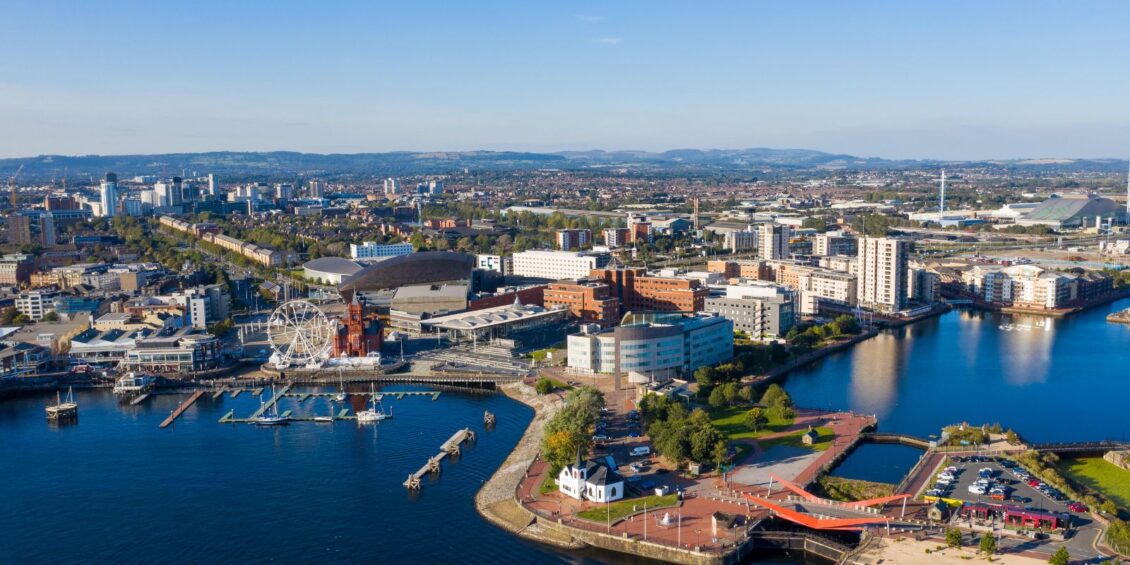
In recent years Cardiff’s office market has been gradually stabilising and in some areas showing renewed strength, with more space being leased and demand rising after several challenging years following the pandemic. The city has seen both landlords and occupiers adapt to changing patterns of work and business needs.
Annual figures from 2024 showed take-up reaching around 581,643 square feet, the highest total since 2017 and more than double the amount recorded in the previous year, indicating stronger activity and confidence returning to the market. This growth reflects interest from sectors such as financial services and professional firms, while some larger deals in the capital helped boost overall totals.
What does the current take-up data show about Cardiff’s office market?
Although early 2025 figures suggested that take-up in the first quarter was lower than the same period in 2024, data from Savills tracking office leasing activity in Q1 found that around 94,000 square feet of space was taken across 18 transactions.
That was down compared with the previous year but remained above the five-year average, showing that demand still exists even if patterns and timing vary.
Demand for Grade B and secondary space has been stronger than for new Grade A buildings, as many occupiers look for cost-effective locations and flexible terms.
However interest in higher quality premises has also increased compared with earlier years, with grade A take-up improving on a like-for-like basis — partly thanks to refurbishment activity and repositioning of existing buildings by investors. Meanwhile, overall supply has slowly tightened in parts of the market, putting some upward pressure on rents in busy locations.
Office space in Cardiff is significantly more affordable than renting an office in London, with prime CBD rents in Cardiff around £25 per sq ft, compared to £70–£150 per sq ft in Central London
How are working patterns affecting what companies want?
Workplace patterns have shifted since the pandemic, with hybrid and flexible working becoming more common in many sectors. This does not mean offices are unwanted, but it does shape demand differently. Some firms now prioritise collaborative and centrally-located space rather than large, traditional floors.
There are signs that co-working and flexible lease structures are becoming more attractive, as businesses balance remote work preferences with the need for office days that foster team culture and client meetings. These trends help explain why take-up is returning in stages rather than in a single boom.
How do redevelopment and regeneration plans impact office demand?
Major regeneration schemes like the Atlantic Wharf project in Cardiff Bay, which includes plans for hundreds of thousands of square feet of commercial space alongside new homes and leisure facilities, are contributing to a longer-term view that the city’s property market will continue to evolve.
The opportunity for investors is very positive, with access to development finance and commercial bridging to fund the projects.
Large-scale developments can attract occupiers seeking modern space in vibrant mixed-use locations. Investors and developers also continue to refurbish existing buildings to meet current occupier expectations, turning older stock into more desirable office space.
What larger trends are visible in the UK office sector?
Across the UK office market, activity has begun to rebound after earlier uncertainty, with some regions recording higher take-up and greater leasing momentum.
Industry commentary suggests that return-to-office trends and demand for modern spaces with amenities are supporting growth, even if construction of new space remains subdued due to cost pressures and economic caution.
Also, some international research indicates that hybrid working has boosted usage of office-type spaces in certain cities, as more flexible approaches draw occupiers to maintain or expand their physical presence.
What challenges and opportunities lie ahead for Cardiff’s office market?
Despite positive signals, challenges remain. Vacancy levels are higher than pre-pandemic norms, and new development pipelines have slowed as construction costs and borrowing rates remain factors for investors and builders.
At the same time, Cardiff’s office market shows resilience in key sectors such as financial services, and strong annual leasing figures in 2024 have helped reinforce confidence. As occupiers continue to reassess space requirements and companies aim to use offices for collaboration and business identity, demand for well-located, flexible and upgraded office space is expected to persist.
Overall, Cardiff’s commercial property scene reflects a market in transition — not fully back to pre-pandemic patterns, but adapting and gradually regaining momentum as tenant demand returns and strategic investments shape its future.
