

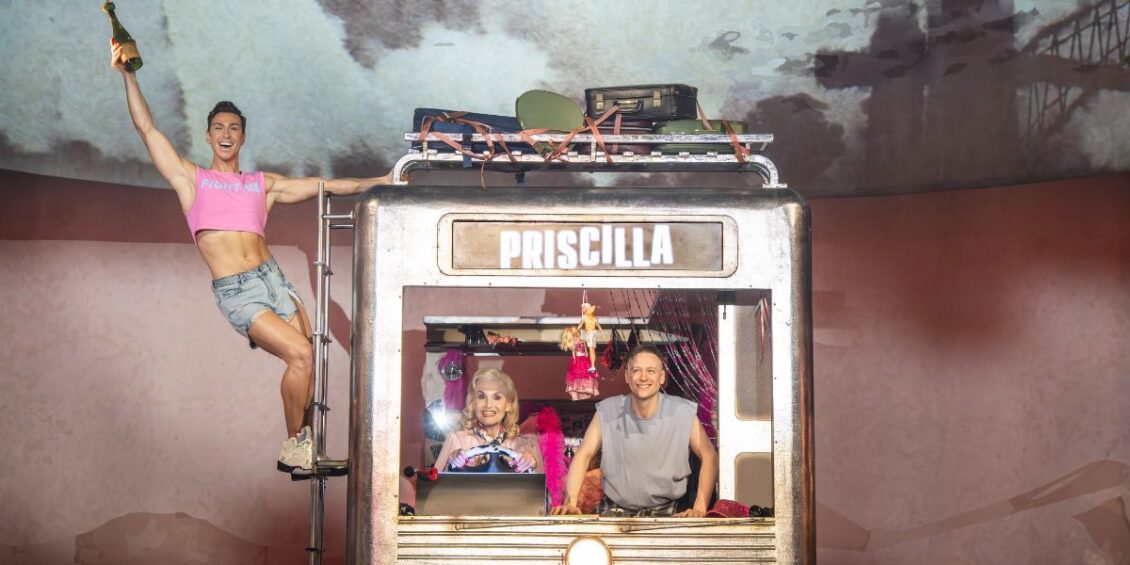
Priscilla Queen of the Desert arrives at the Wales Millennium Centre this April in a blaze of sequins, satire and soul, bringing with it not only a spectacular night of theatre but a story that has resonated with audiences for over three decades.
Originally released as the The Adventures of Priscilla, Queen of the Desert, the story quickly became a cult classic, celebrated for its bold portrayal of LGBTQ+ lives at a time when such narratives were rarely centred in mainstream cinema. Set against the vast, sun-scorched backdrop of the Australian outback, the film followed two drag performers and a transgender woman as they embarked on a life-changing journey aboard a battered bus, affectionately named Priscilla. What began as a simple performance tour evolved into a deeply personal exploration of identity, resilience and belonging. The stage adaptation honours this legacy while amplifying its theatricality, transforming an intimate road trip into a dazzling, large-scale musical experience.
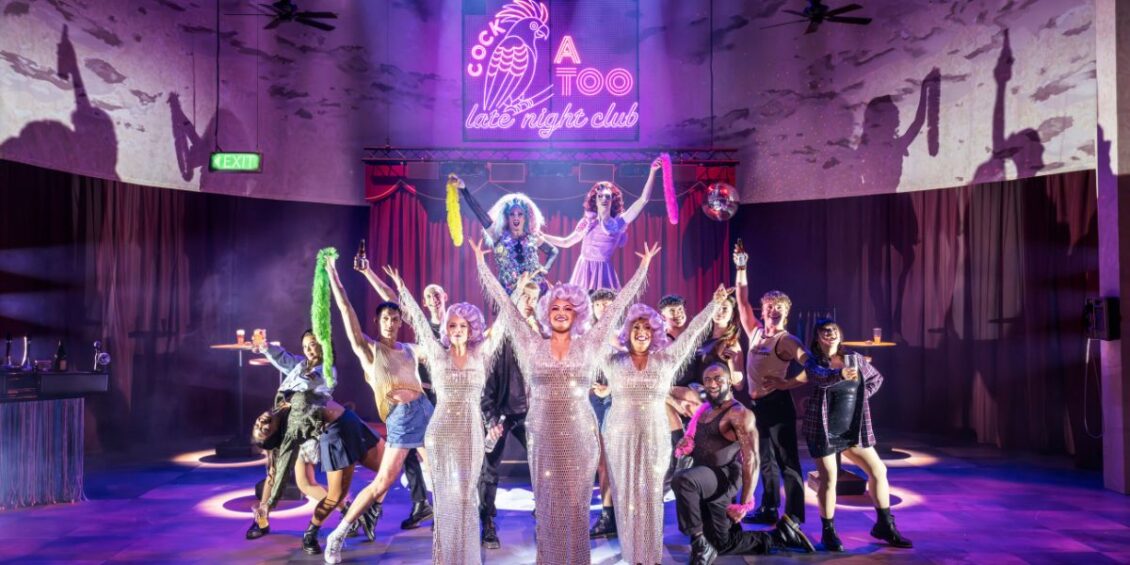
From the very beginning, the stage production leans unapologetically into its camp, high-energy roots. It opens like a full-scale comedy drag show, bursting with quick-fire humour, bold performances and plenty of audience engagement. The atmosphere is immediate and infectious, breaking down the barrier between stage and auditorium as the cast invite the audience to become part of the experience. Laughter comes easily in these early moments, with sharp wit and playful interactions setting the tone for what initially feels like pure escapism.
Under the direction of Ian Talbot, this production carefully preserves the heart of the original while embracing the heightened spectacle expected of modern musical theatre. Talbot ensures that the emotional core is never lost beneath the glitter, allowing quieter, more reflective moments to land with real impact. As the story progresses, the tone deepens, and themes surrounding the stigma of being gay and transgender begin to surface more prominently. These are conveyed not only through the behaviour of individuals the trio encounter along their journey, but also through striking visual moments, such as the graffiti scrawled across the bus. These scenes provide a stark and sobering contrast to the show’s vibrant exterior, grounding the narrative in real-world experiences.
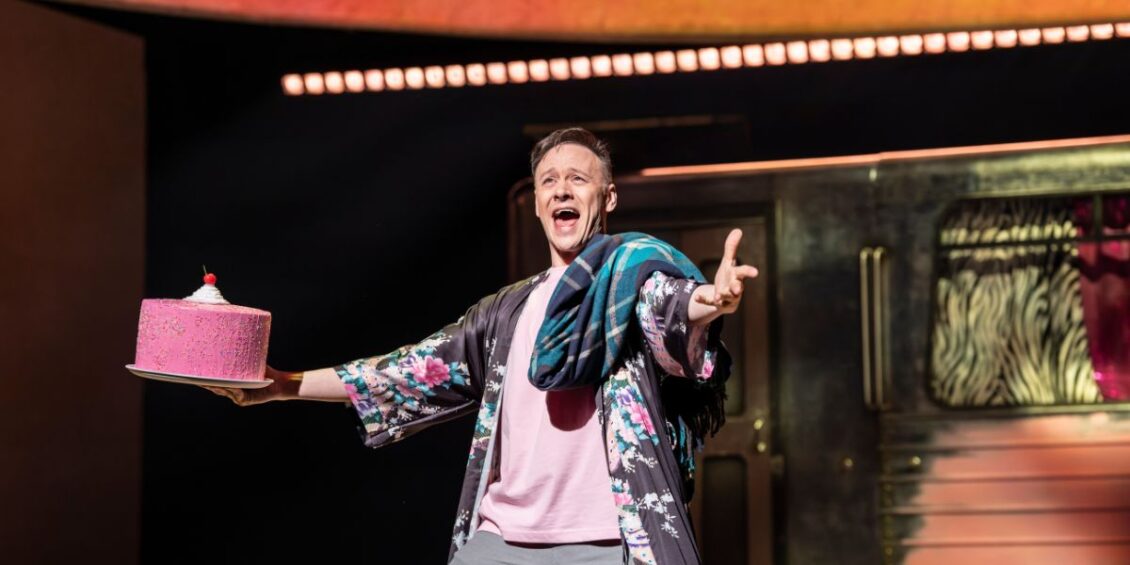
At the centre of the story is Tick, performing as Mitzi, played here by Kevin Clifton. Known widely for his work on Strictly Come Dancing, Clifton brings a layered performance that goes far beyond expectations. His portrayal captures Tick’s internal conflict as a performer, a father and a man navigating his own sense of self. There is a quiet vulnerability in his performance that grounds the production, particularly in moments where the bravado of the stage persona gives way to something more personal and uncertain.
Opposite him, Adèle Anderson delivers a beautifully measured performance as Bernadette. With a sharp wit and undeniable stage presence, Anderson embodies the character’s elegance and resilience, offering a portrayal that feels both authentic and deeply moving. Bernadette’s journey, shaped by loss, love and perseverance, becomes one of the emotional anchors of the show.
Meanwhile, Nick Hayes as Felicia/Adam provides much of the production’s high-energy dynamism. Hayes captures the character’s rebellious spirit and unapologetic flamboyance, injecting humour and attitude into every scene. Beneath the bold exterior, however, there is a subtle exploration of vulnerability, particularly as Felicia confronts hostility and prejudice along the journey. Completing the central quartet, Peter Duncan brings warmth and sincerity to Bob, grounding the story with a performance that feels refreshingly understated and genuine.
Beyond the principal cast, the production benefits from a strong and versatile ensemble. The Divas, portrayed by Leah Vassell, Bernadette Bangura and Jessie May, act as both narrators and vocal powerhouses, their harmonies elevating the show’s most iconic musical moments. Supporting performances from Billie Hardy, Isabella Glanznig Santos, Sario Solomon, Jak Allen-Anderson and Alexander Emery, alongside a committed ensemble including Michael Afemaré, Tia Antoine-Charles, Olivia Bella, Alexander Gage, Fionan O’Carroll, Nathan Ryles, Samuel Stokes and Mary Suarez, add richness and texture, ensuring that every moment on stage feels alive and purposeful.
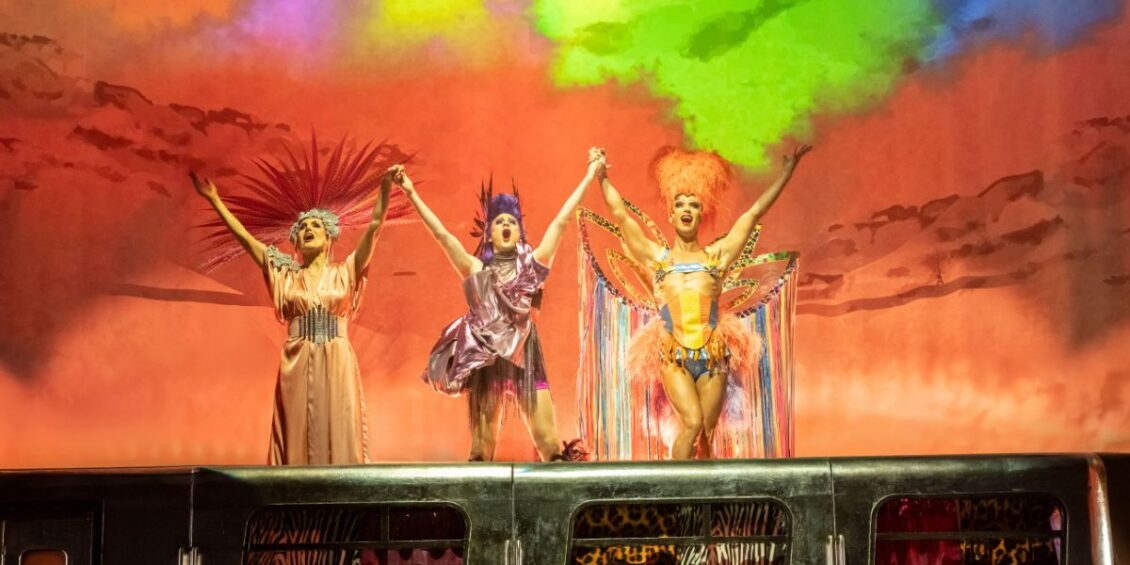
Visually, the production is nothing short of extraordinary. Costume designer Vicky Gill has crafted over 100 costumes, each more imaginative than the last. Known for her work on Strictly Come Dancing, Gill brings her signature flair for combining glamour with practicality, ensuring that each costume not only dazzles but enhances movement and performance. From towering headdresses to intricately detailed ensembles, the costumes become characters in their own right, contributing to the show’s sense of spectacle and celebration.
The design elements extend beyond costume. Andrew Exeter’s set and lighting design cleverly captures both the intimacy of small-town encounters and the sweeping scale of the Australian landscape. The transition between locations feels seamless, allowing the audience to journey alongside the characters without disruption. Choreography by Matt Cole is energetic and inventive, perfectly complementing the show’s infectious soundtrack.
And what a soundtrack it is. Featuring a collection of beloved disco and pop anthems including ‘Hot Stuff’, ‘It’s Raining Men’, ‘I Will Survive’, ‘Girls Just Wanna Have Fun’ and ‘Finally’, the musical taps into a sense of collective nostalgia while reinforcing its themes of joy, defiance and self-expression. Each number is staged with precision and flair, transforming the theatre into a vibrant celebration that invites the audience to fully immerse themselves in the experience.
However, it is ‘True Colours’ that provides one of the evening’s most powerful and unexpected moments. Stripped back and emotionally charged, the performance is genuinely moving, creating a stillness in the theatre that contrasts beautifully with the high-energy spectacle surrounding it. It is a standout scene that lingers long after the curtain falls, delivering a wave of emotion that is difficult to shake and, for many, genuinely goosebump-inducing.
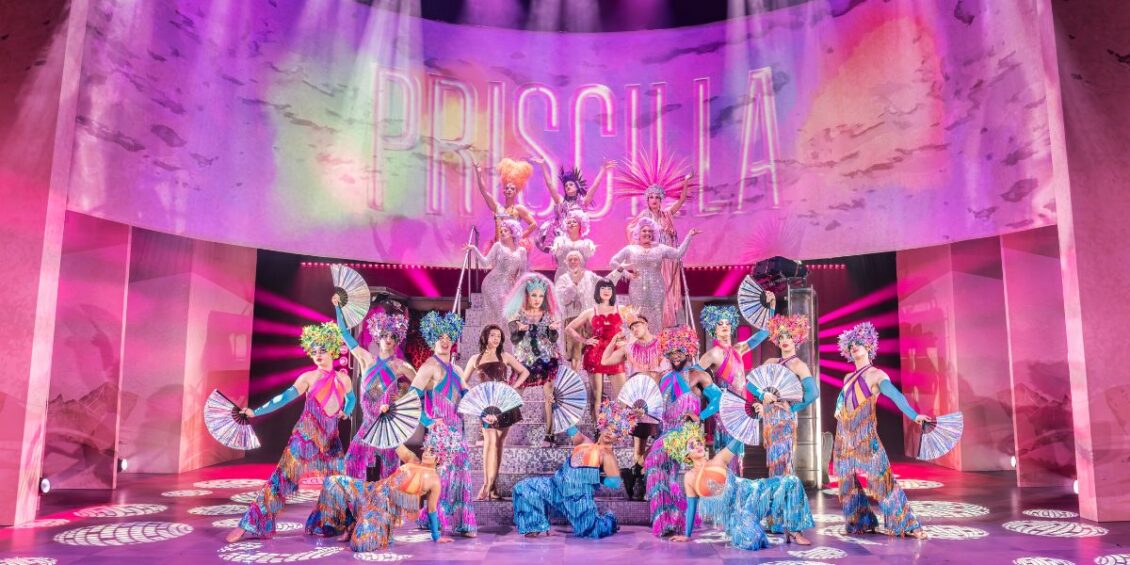
What truly sets Priscilla Queen of the Desert apart is its enduring message. Beneath the humour, music and spectacle lies a powerful exploration of acceptance, identity and the courage to live authentically. The journey across Australia becomes symbolic of a broader emotional journey, one that speaks to the universal desire for connection and understanding. The characters’ experiences, though rooted in specific identities, resonate on a deeply human level, reminding audiences of the importance of empathy and inclusivity.
This production at the Wales Millennium Centre succeeds in honouring the legacy of its source material while offering something fresh and relevant for contemporary audiences. It is bold without being overwhelming, heartfelt without becoming sentimental, and spectacular without losing sight of its story.
Ultimately, Priscilla Queen of the Desert is more than just a musical. It is a celebration of individuality, a tribute to resilience and a reminder that even in the face of adversity, there is strength to be found in authenticity and community. As the final curtain falls, it leaves behind not just applause, but a lasting sense of joy, reflection and connection.
Don’t miss your chance to catch Priscilla Queen of the Desert at the Wales Millennium Centre from 20 to 25 April 2026. Tickets are selling fast, so be sure to secure your seats before they’re gone, you can check availability here.
