

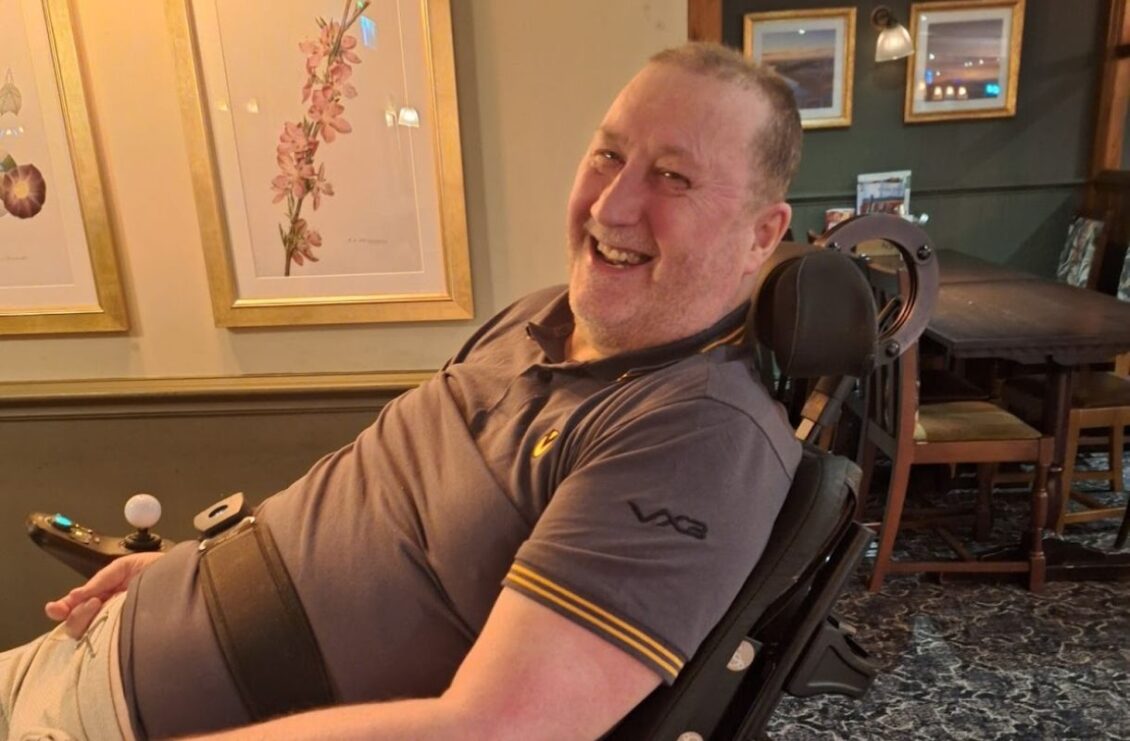
Patients in Wales are being left stuck in hospital beds for weeks longer than necessary due to a lack of suitable housing and support, with delays costing the equivalent of £31,500 in NHS bed capacity each night according to new research published today by Community Housing Cymru (CHC).
Russell Williams is one of them. When he was declared medically fit for discharge from hospital in early 2024, he should have been able to go home.
Instead, he spent another year in an NHS bed because there was no suitable home for him to move to.
CHC’s research reveals that Russell’s experience is far from unique, and although overall NHS discharge delays in Wales are beginning to improve, delays caused by shortages in suitable housing are getting worse.
For those waiting for housing, since April 2023 the average delay has increased from 63 to 76 days. The average delay for most patients has fallen from 50 to 45 days.
For the patients caught in this situation, every extra day in hospital takes its toll: a rapid loss of muscle strength, increased risk of infection, and a growing threat to their long-term recovery and independence.
Russell, from Newport, who had worked at Tesco before his illness, was diagnosed with cervical myelopathy, a compression of the spine, in 2022. Surgery to relieve the condition was unsuccessful, leaving him tetraplegic, with little to no use of his hands and limited movement in his legs and right arm.
The home he and his wife had shared for 36 years could not be adapted to meet his needs. With nowhere suitable to go, Russell remained in hospital long after he was medically ready to leave.
Russell said of his experience:
“I was stuck in limbo. My wife was still at our old house, she couldn’t plan for anything. I was ready to leave but because of the housing shortages there was not an adapted home ready to go. I felt trapped, I was frustrated, angry, that long wait really took its toll, away from family, away from my home. There were lots of false starts and delays. We eventually moved to the bungalow, over a year later. My wife and I are settled now but there are lots of people who are facing similar waits. This has to change.”
In February 2025, Russell and his wife finally moved into their adapted home, provided by Codi Group, a housing, care and support provider based in South Wales.
Terry Peake, Physical Disability Specialist Housing Worker at Codi Group, supported Mr Williams’ transition from hospital to a specially adapted home. Terry is candid about where the pressure points lie.
“You do feel powerless when you’ve done everything you can, the networking, the applications, and then you just have to wait for a property that is like gold dust.”
Clarissa Corbisiero, director of external affairs / deputy chief executive at Community Housing Cymru, said:
“Russell’s story is a stark reminder that home is the foundation of our health. As things stand, the housing crisis is keeping people in hospital when they should be recovering at home.
Making progress relies on powerful and committed action across housing, health and other partners. As part of a long-term plan to chat a course out of the housing emergency, Wales needs a Hospital to Home Mission. A programme that invests in housing to allow people to return to their communities, cements joined up working and accountability to free up bedspace for those most in need.
Increasing the supply of social housing investing in adaptations and removing barriers to data sharing and joint working are practical health interventions that will support patient recovery, free up the NHS, and enable more people to live well at home”.
