

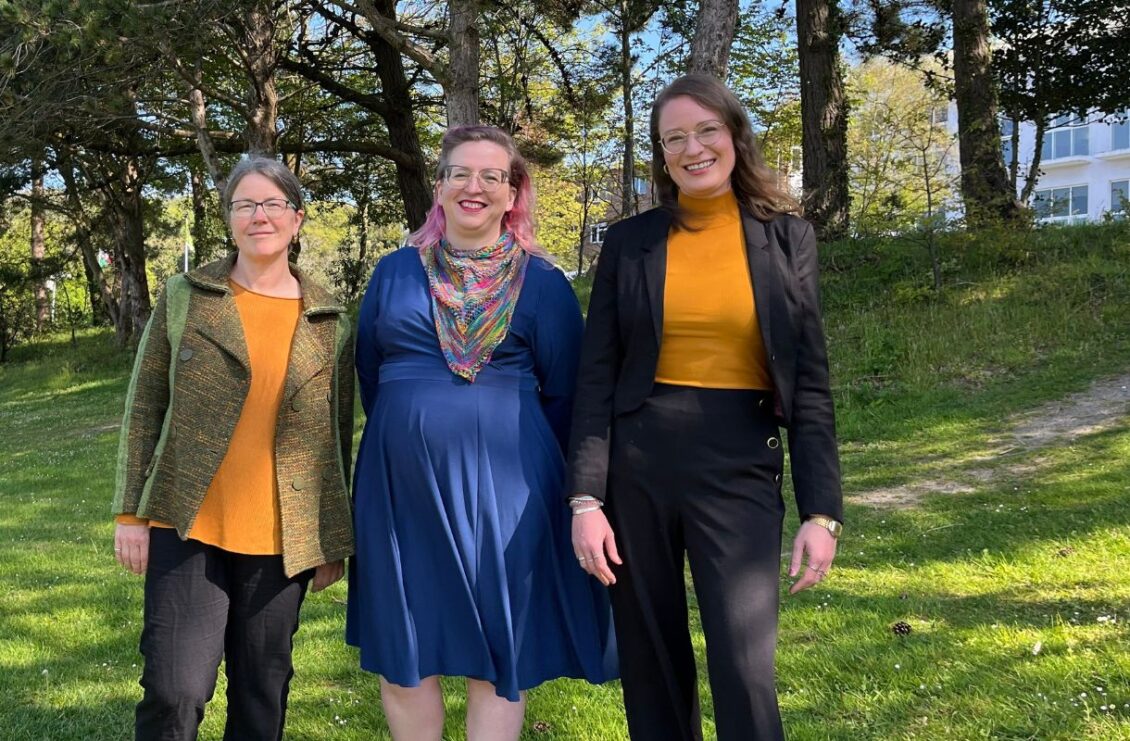
Transforming how disabled people are recruited, supported and retained in work is the aim of a new initiative led by Aberystwyth University academics.
The project will bring together small and medium-sized enterprises, business organisations and public-sector partners from across Wales to explore how employers can be better supported to create more inclusive workplaces.
Disabled and chronically ill people in Wales face a disproportionate risk of unemployment, with higher rates of claims for health-related benefits than in many parts of England. Yet disabled people are frequently and wrongly perceived as lacking the skills, qualifications or ambition to work.
Dr Emma Sheppard, Lecturer in Sociology at Aberystwyth University, said:
“A lot of the time, disabled people like me are treated as the problem to be fixed, and policy tends to focus on them individually, rather than on recognising and removing the structural barriers that exist within employment systems. This project changes that script; we want to ask employers what they need to create meaningful, sustainable employment for disabled and chronically ill people in Wales.”
One aim of the initiative is to ensure that smaller Welsh employers are included in discussions around inclusive employment, reflecting their important role in the Welsh economy.
Dr Maria Plotnikova, Lecturer in Economics at Aberystwyth University said:
“Most guidance and support around inclusive employment has been developed with larger organisations in mind. Smaller businesses often lack dedicated HR or occupational health capacity, yet they make up the majority of employers in Wales. This project is an opportunity to listen, learn and begin developing approaches that reflect the realities of smaller Welsh workplaces, helping to close the disability employment gap in ways that are practical and achievable.”
The project team will host a series of in‑person networking events in north, mid and south Wales bringing together local employers, business organisations, local authorities and chambers of commerce.
Participants will discuss what currently helps or hinders the employment of disabled people and any gaps in understanding the attitudes and ways decisions are made by employers.
The sessions will also consider the potential for a Wales‑wide, employer‑led network to help boost employment among disabled people.
The research team is keen to hear from businesses and organisations across the country interested in getting involved in the networking events in Anglesey, Aberystwyth or Swansea during May and June. Further information can be found at: https://www.linkedin.com/company/disability-employment-wales/
Sociology lecturer Dr Yvonne Ehrstein added:
“This project is about creating space for honest, constructive conversations and using them as a starting point for shifting how inclusive employment is imagined and delivered in Wales. We hope this work will lay the foundations for enduring cultural and structural change — supporting a future in which disabled people are recognised, valued and able to thrive in work throughout Wales.”
The project is funded by the University’s AberCollab programme.
