

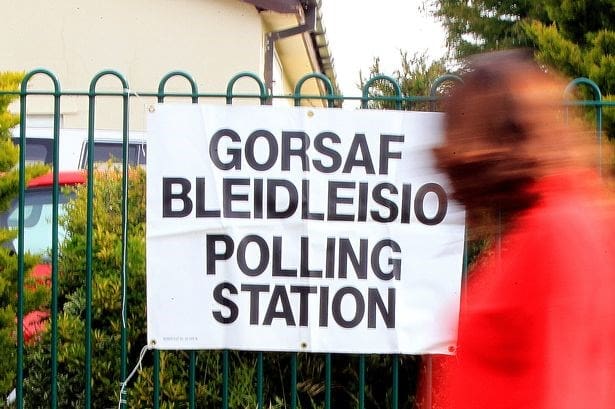
Votes cast in the 2026 Senedd election will begin to be counted during the daytime on Friday 8 May, following polling day across Wales on Thursday 7 May.
Polling stations will remain open from 07:00 until 22:00 on election day, giving voters across Wales the chance to cast their ballot in what is expected to become one of the most significant and unpredictable Senedd elections since devolution began.
Once polling stations close at 10pm, sealed ballot boxes from across Wales will be transported securely to local counting centres, where preparations for the official count will begin overnight.
Unlike UK General Elections, where counting often begins immediately after polls close, votes in the Senedd election will instead be counted during the day on Friday.
Election counts are managed locally, meaning declaration times will vary between different parts of Wales.
A historic election for Wales
This year’s election is attracting particular attention because it marks the biggest overhaul of the Senedd since it was established in 1999.
For the first time, Wales is using a fully proportional voting system, replacing the previous mixed system that combined first past the post constituencies with regional top-up seats.
The Senedd itself is also expanding from 60 Members of the Senedd to 96.
Under the new system, Wales has been divided into 16 larger “super constituencies”, each electing six Members of the Senedd using the D’Hondt proportional voting system.
The changes mean every vote is expected to carry greater weight, while coalition governments are now seen as more likely than ever before.
Political uncertainty unlike previous elections
For more than two decades, Welsh elections have largely followed a familiar pattern, with Welsh Labour emerging as the largest party at every Senedd election since 1999.
However, polling ahead of the 2026 vote suggests that political certainty may now be over.
Recent YouGov projections suggest Plaid Cymru could emerge as the largest party with 43 seats, ahead of Reform UK on 34 seats.
The polling also projects Labour’s vote share could fall to just 12%, which would represent its worst major election result in Wales in more than a century.
Meanwhile, the Welsh Conservatives are projected to fall to just four seats, while the Green Party could secure representation in the Senedd for the first time.
What to expect as results come in
Because this is the first election being held under the new system, results may take longer to fully understand and interpret compared with previous Senedd elections.
The proportional D’Hondt system means small changes in vote share can have a major impact on how seats are allocated.
Polling experts have described some seat contests as being “on a knife-edge”, with relatively small swings capable of changing the balance of power across the Senedd.
Attention on Friday will focus not only on which party finishes first, but also on whether any party is able to form a workable majority in the expanded 96-seat chamber.
Under the new system, 49 seats are needed for an overall majority.
With coalition politics expected to play a far bigger role in Wales going forward, the outcome of Friday’s count could shape Welsh politics for years to come.
