

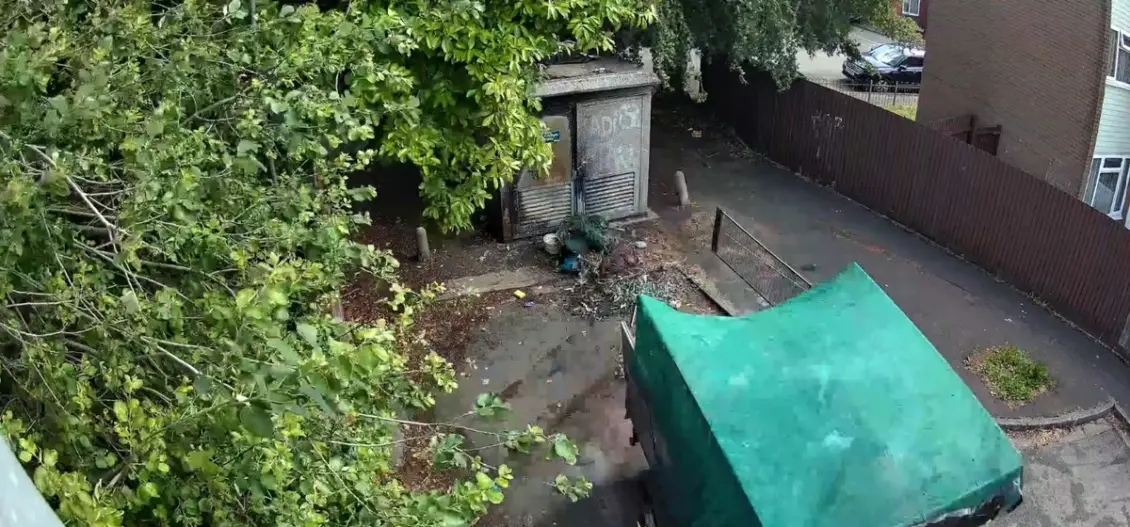
Fly-tipping across Newport has fallen by more than 28 per cent over the past year, with the city council crediting its targeted enforcement and monitoring programme for the significant reduction.
New figures from Newport City Council show there were 28.4 per cent fewer fly-tipping incidents between April and June 2026 compared with the same period in 2025.
The latest figures continue a wider downward trend, with fly-tipping across the city falling by almost 20 per cent over the past two years.
The council’s waste enforcement and engagement team has continued to focus on deterring, investigating and taking action against illegal waste dumping.
Between April and June this year, officers carried out 2,921 visits to known fly-tipping hotspots across the city to proactively check for incidents.
During the same period, the team issued 101 fixed penalty notices for fly-tipping offences and a further 85 for other waste offences. Sixteen cases were referred to the council’s legal team for further action, resulting in six successful court prosecutions.
Officers also issued 166 warning letters and 118 notices, collected 356 abandoned shopping trolleys and spoke to 331 residents about excess waste.
The council said hotspot locations include urban areas such as Pottery Road in Pillgwenlly, as well as rural locations including Marshfield and Peterstone. Areas are identified as hotspots following repeated fly-tipping incidents.
In addition to regular patrols, the council uses intelligence led visits and CCTV to monitor problem areas, gather evidence and identify offenders. Officers also work with residents in hotspot locations as part of a wider programme of monitoring, engagement and enforcement.
Councillor Yvonne Forsey, cabinet member for climate change, waste and recycling, said: “We know from our records that we have areas of the city where repeat fly-tipping is an issue.
“By adopting a targeted approach to these hotspots, we can take more effective measures to combat the scourge of illegal fly-tipping.
“Measures such as these are having a positive impact, as shown by our latest figures. We will continue to do everything we can to bring fly-tipping levels down.”
