

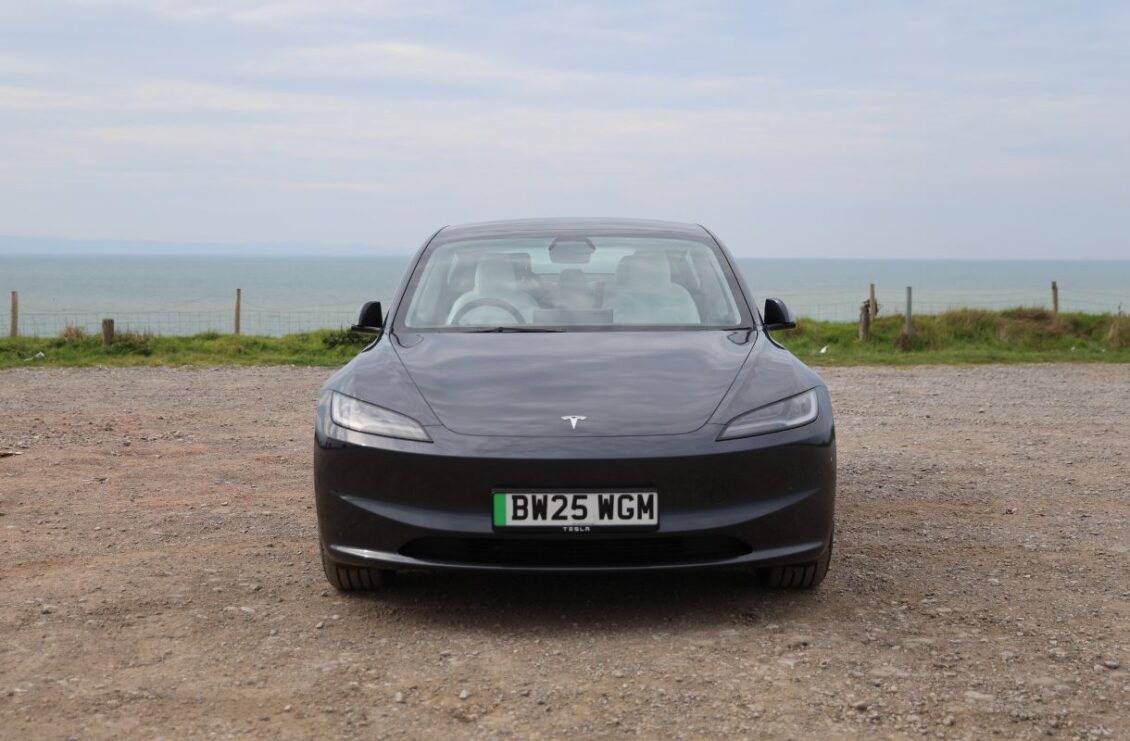
If you’re wondering whether an electric car is truly up to the task of driving from South Wales to North Wales, our recent experience suggests that the answer is yes — you just need the right car and a bit of planning.
We took the new 2025 Tesla Model 3 from Cardiff to Golden Sands in Kinmel Bay (Rhyl) — about 175 miles, to see whether it delivers the kind of real-world confidence that many EV drivers crave. You can read our full review of the car here.
What’s new in the 2025 Model 3 (so you know what we tested)
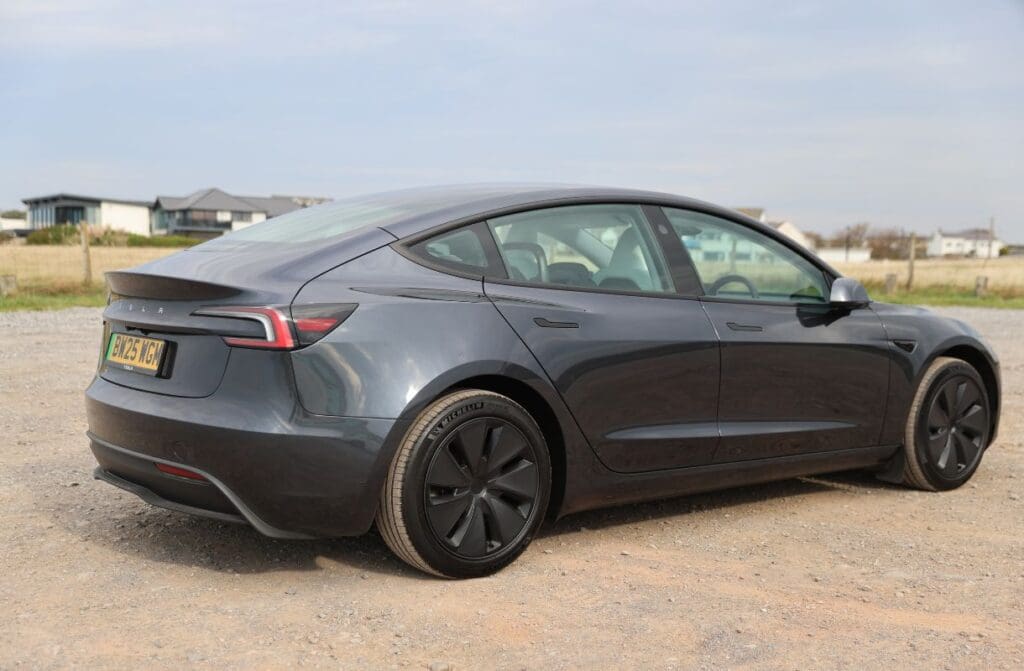
From your original write-up and the Wales247 review, these are the key improvements that matter for a big journey:
-
This Long Range Rear-Wheel Drive version has a WLTP range of up to 436 miles, making it the longest-range Model 3 yet.
-
In terms of efficiency, the car uses about 20.1 kWh per 100 miles, which is a strong step forward.
-
It’s designed to be Tesla’s most efficient Model 3 to date.
-
In the back, there’s now an 8-inch screen between the front seats so rear passengers can control climate, seat heating, and even stream Netflix or YouTube.
-
Boot space is generous: 425 litres, or 682 litres when you include the front trunk (frunk).
-
Improvements also include sharper styling, better aerodynamics, improved materials inside, quieter ride, and enhanced soundproofing.
These enhancements aren’t just for the spec sheet, they matter when you’re doing a long, real-world trip across Wales.
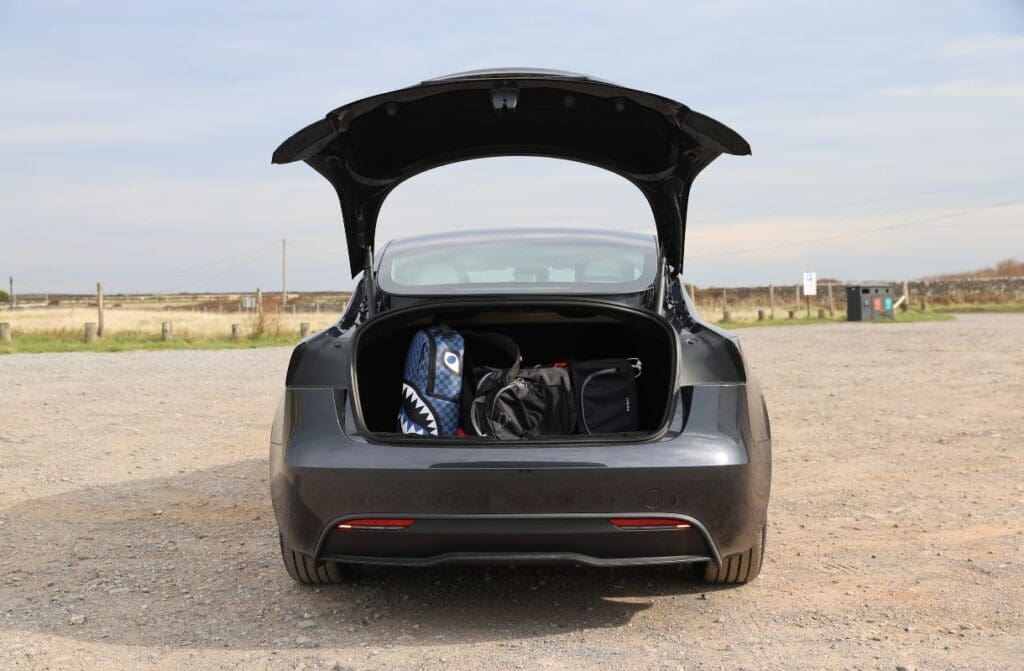
The drive north, what we did and how it went
I want to be clear: we didn’t baby the car. We loaded it up. We used the comforts. We drove in real conditions. Here’s how it mapped out.
Before the start
-
The car was charged to 100% the night before.
-
On the day itself, we used it through the day — school run, errands, dropping family off, etc.
-
By the time we left Cardiff around 4:30 p.m., we were at 89% charge.
-
Based on the sat nav, the predicted arrival charge when we hit the Flint Supercharger (about 153 miles) was 46%.
On the way
-
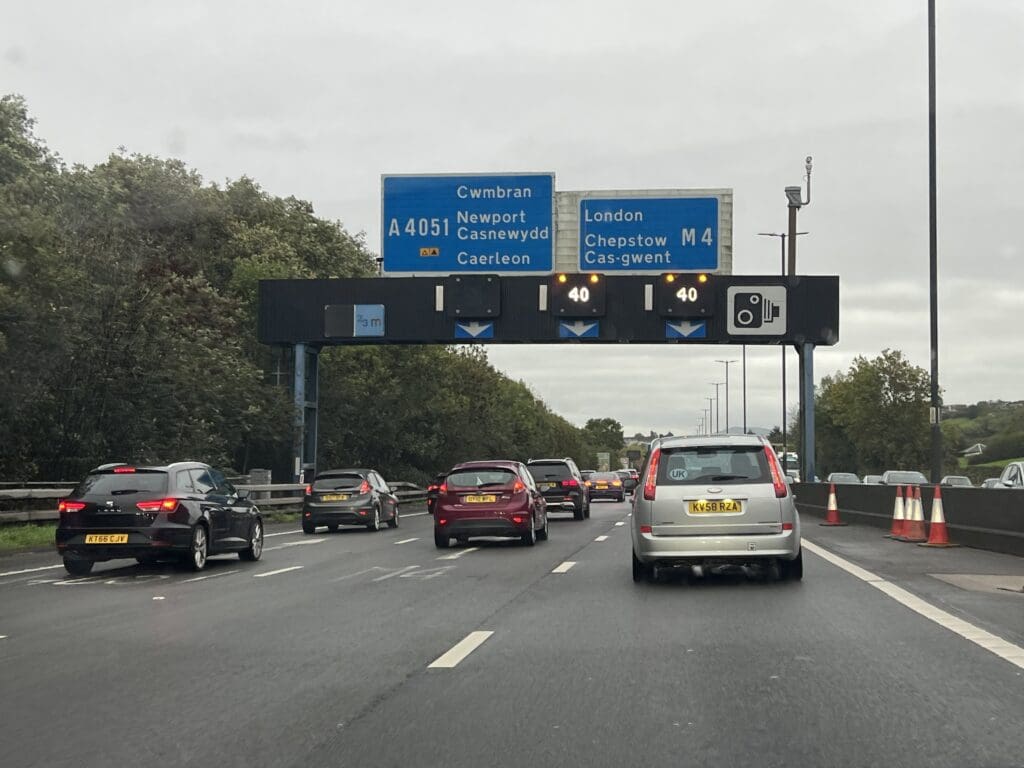
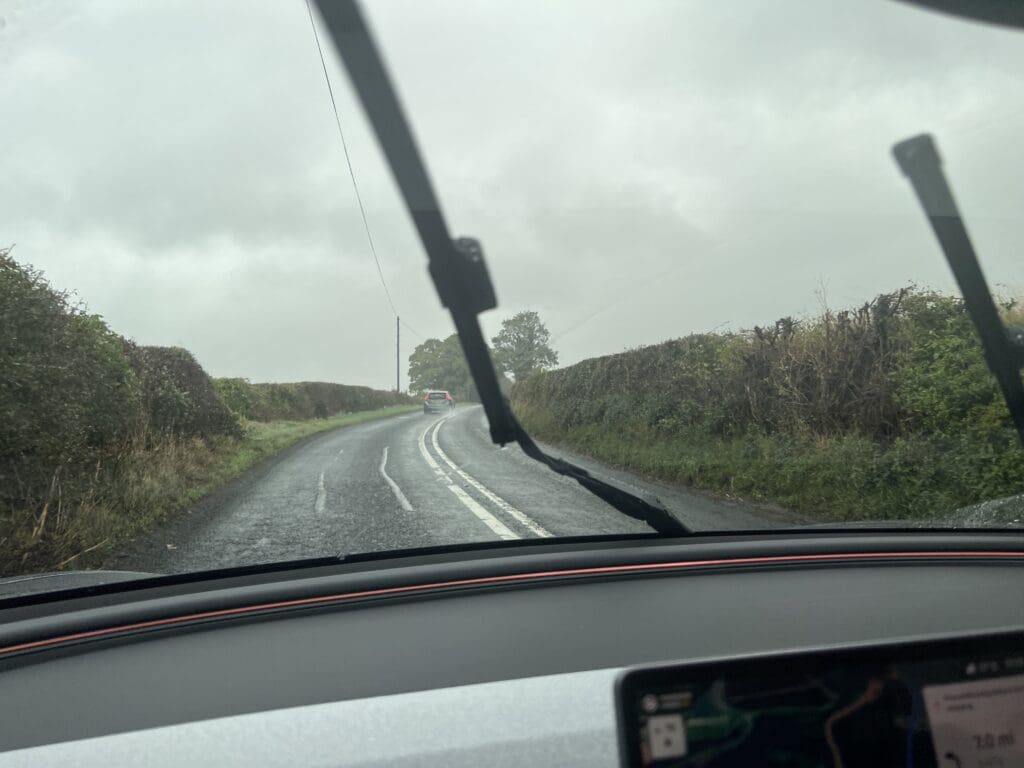
The route recommended cut through the A449, via Monmouthshire, Hereford, Shrewsbury, mixing trunk roads, dual carriageways and motorway segments.
-
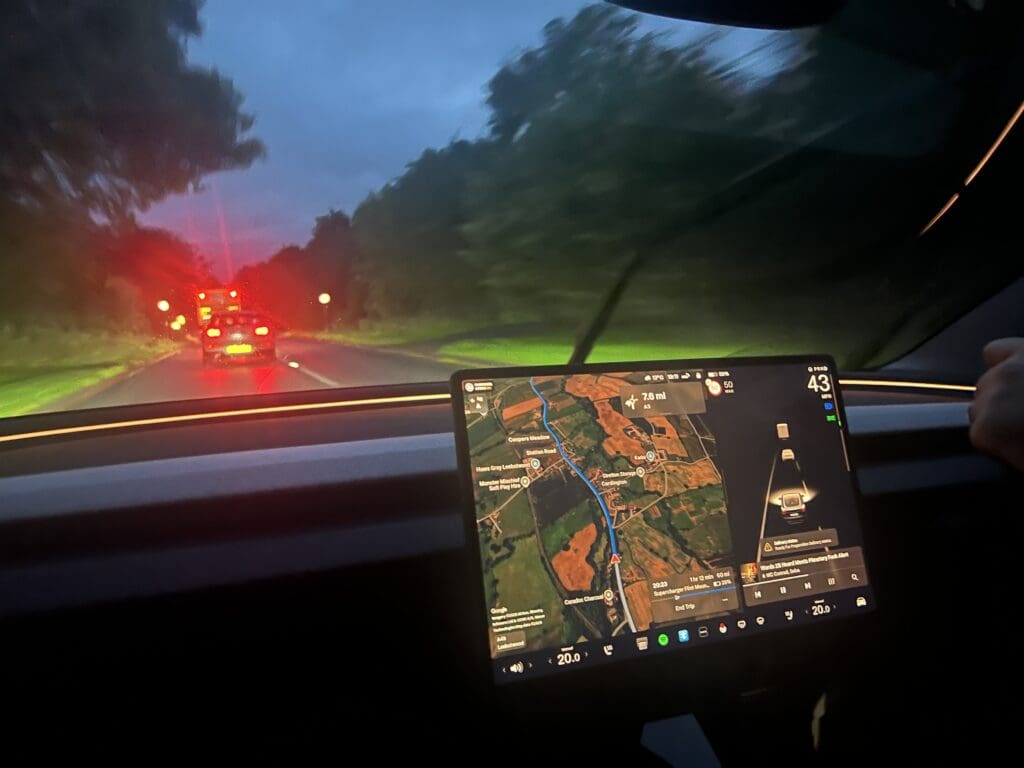
Along the way: rain, darkness, traffic, windy conditions.
-
We used all the creature comforts: heated seats, heated steering wheel, windshield wipers, lights, Spotify, sat nav — nothing was cut back.
-
We also made a couple of unplanned stops (with a baby, you know how it goes).
At Flint Supercharger
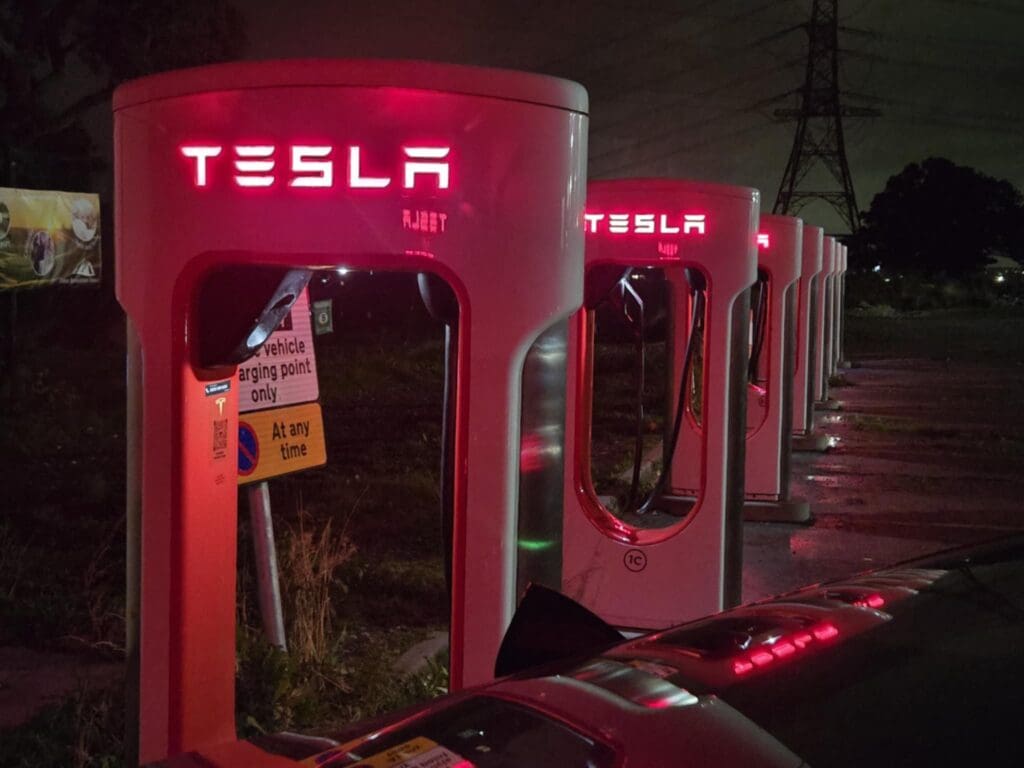
We made it, and the arrival charge was only 4% lower than predicted. That’s impressively close to what the car said it would do with all things considering.
The return trip, pushing the limits
The journey back was tougher in theory: longer distances between chargers. We opted for a different route via the M6, M5 and then into the M4 corridor, aiming to hit on the way. That leg was about 208 miles between Flint and home.
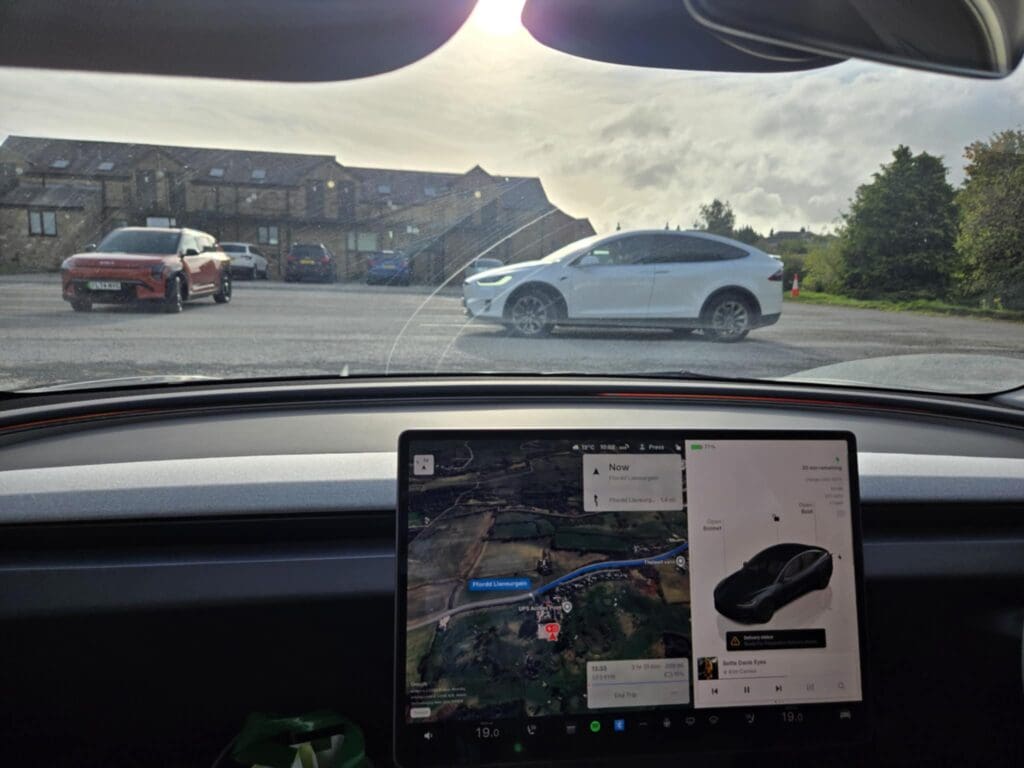
We fully intended to stop at Flint again. We did briefly, but it was busy, so instead we pushed on and stopped at other Tesla charging points en route to top up. Because there are now many Superchargers along that path, we never felt stranded.
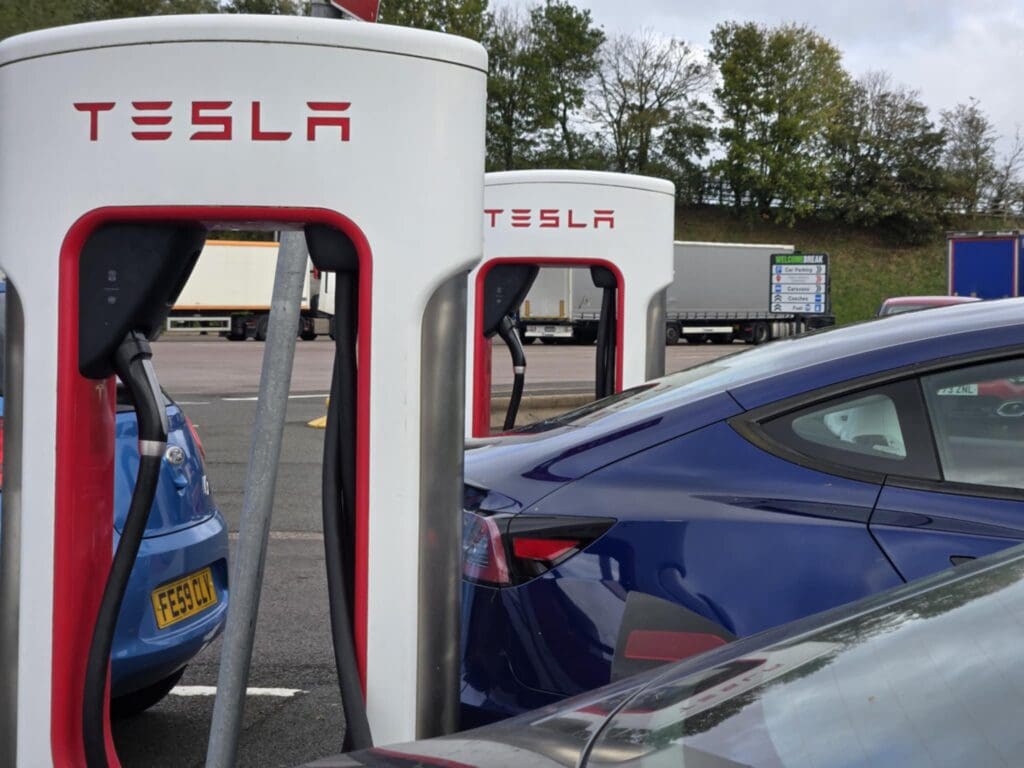
Again, despite load, weather, traffic, and using all the same features as before, the Tesla’s predicted arrival percentage was within 1% of the real arrival charge. In practice, we ended up at 55% at home, just 1% off prediction. That level of accuracy in real conditions, on a long drive, is something that helps banish lingering range anxiety.
The personal side — what surprised me (and what didn’t)
I’ll admit: with my old 2019 Model 3 (Performance), I simply wouldn’t have attempted this. That car claimed 300+ miles, but in real life I saw big drops as soon as traffic, wind, hills or detours appeared. I always felt I needed a safety buffer, and that meant not pushing it far.
But this 2025 version? It felt like I had permission to relax. I wasn’t constantly watching the battery. I didn’t switch off the heater or drive eco friendly. We took it as a family car should be used: loaded, comfortable, in all weather.
What also struck me is just how closely the car’s estimates matched reality. In decades of driving, many cars overpromise. That 4% deviation northbound, 1% return — that builds trust in my book. I can live with that and factor it in to future journeys.
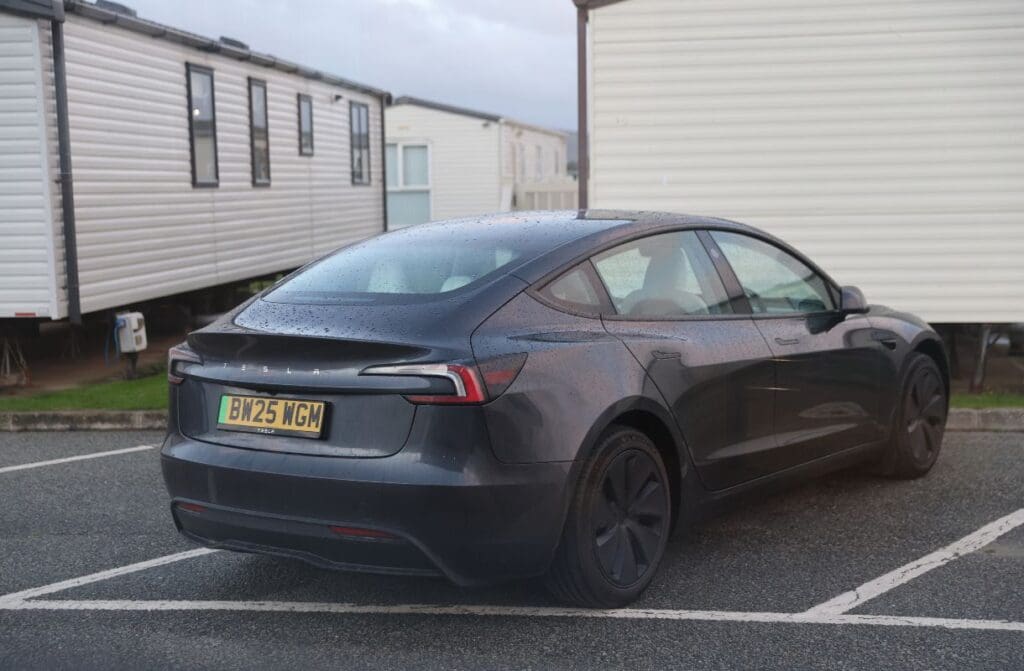
One small gripe: we couldn’t charge at the holiday park (no EV charger on site), so that forced the stop at Flint. If the destination had a charger, we’d have had more flexibility. Also, the Flint Supercharger was busy when we returned, so we couldn’t get a “full” charge there. For future trips I’d plan to skip that and top up further along the route, timed with stops for food or nappy changes. That way, the car can charge when we’re stopped, unlike our journey North.
Does this give you confidence to drive an EV in Wales?
If you asked me “would I do it again tomorrow?” — yes. With this generation of EV and the Supercharger network as it is, I’d take it in a heartbeat. They’ve really come along way since I owned a Tesla.
We drove from South to North Wales and back, under real conditions, with a family’s worth of luggage and gear, and didn’t sacrifice comfort. The car simply delivered. That’s the shift: it’s no longer a question of can the EV do it? — the question is do you trust it to do it without stress? And after this trip, the answer is yes, I do.
