

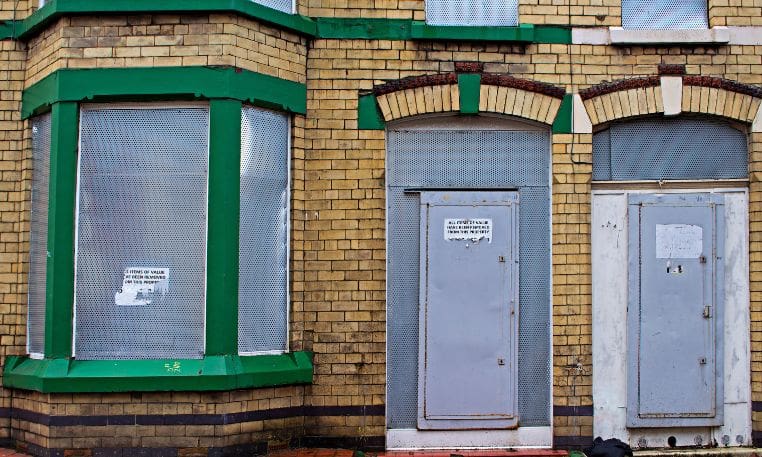
Residents are being invited to help shape a new strategy aimed at bringing more empty properties back into use across Rhondda Cynon Taf.
The Council has launched a six week public consultation on its proposed Empty Homes Strategy 2026 to 2031, which builds on progress already made in reducing the number of long term empty homes across the county borough.
Since 2017, Rhondda Cynon Taf Council has helped reduce the number of private sector homes that have been empty for six months or more from 3,556 to 2,687, bringing 869 properties back into use.
The Council says empty homes are a wasted housing resource and can have a negative impact on communities by affecting the appearance of neighbourhoods and attracting anti social behaviour. Bringing these properties back into use can increase housing supply, support local communities and create more affordable housing opportunities.
The proposed strategy sets out a vision to:
“Bring empty homes back into use as safe, good quality housing that meets local need, supports thriving communities and makes the best use of our existing stock across Rhondda Cynon Taf.”
To achieve this, the strategy focuses on four key priorities: strengthening partnerships, providing advice, assistance and financial support, delivering proportionate and effective enforcement, and supporting regeneration and community wellbeing.
A recent report to the Council’s Cabinet highlighted several achievements, including £1.85 million delivered through the Welsh Government’s Houses into Homes loan scheme, which leveraged a further £2.21 million of private investment.
The Council also helped bring 263 empty homes back into use through the Valleys Taskforce Empty Homes Grant Scheme with £4.6 million of investment, while a further 121 properties were returned to use through the National Empty Homes Grant Scheme using £2.8 million in grant funding.
Other successes include securing £7 million in Welsh Government Transitional Accommodation Capital Programme funding to help reduce homelessness, supporting 24 first time buyers through the Homestep Plus scheme, and developing an in house Social Lettings Agency that now manages 54 previously empty private rented homes for households in temporary accommodation.
The report also highlights the impact of Council Tax premiums introduced for long term empty homes and second homes. Since the premium for long term empty properties was introduced in April 2023, followed by the second homes premium in April 2024, the number of long term empty homes has reduced by 25%.
Councillor Mark Norris, Rhondda Cynon Taf Council’s Cabinet Member for Regeneration and Housing, said: “The progress made over recent years demonstrates the positive impact of the Council’s commitment to tackling empty homes. Since our first Empty Homes Strategy was introduced, we have reduced the number of empty properties by 869.
“Empty homes represent a missed opportunity at a time when demand for housing remains high. They can also negatively affect neighbouring residents and communities if left empty for long periods.
“The proposed Empty Homes Strategy 2026-2031 sets out how we will continue to work proactively with homeowners, Registered Social Landlords, community organisations and other partners to bring more properties back into use. The Strategy combines practical support, financial assistance and, where required, appropriate enforcement action.
“It also places a strong focus on regeneration, community wellbeing and making the best possible use of existing housing stock. Through initiatives such as the Social Lettings Agency, grant funding programmes and targeted interventions, we want to ensure that empty homes can once again provide safe, good-quality accommodation that meets local needs.
“We are now undertaking a six-week public consultation on the proposed strategy. Feedback from residents, property owners and stakeholders will help shape the final document before it is presented for consideration.”
The consultation gives residents, property owners and stakeholders the opportunity to comment on the proposed strategy before a final version is presented to Cabinet for consideration.
