

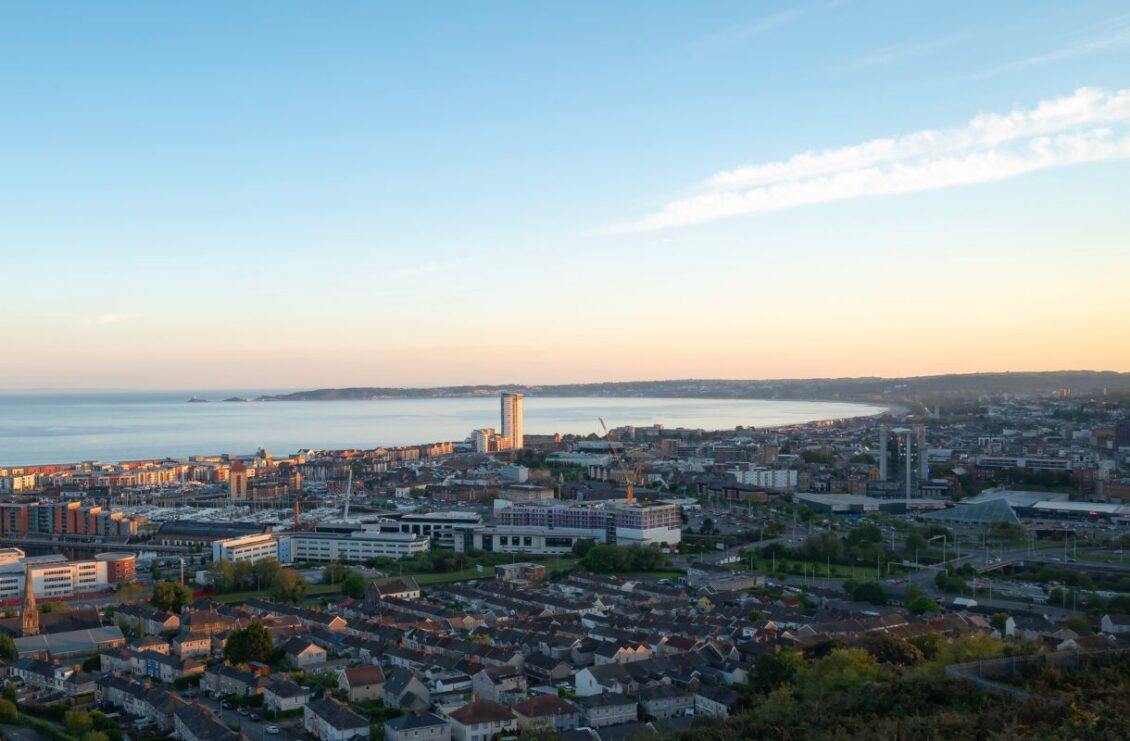
Swansea is set to take a significant step in strengthening the role of nature in urban life by applying for biophilic city status.
A successful application would see Swansea join an international network of cities committed to placing the natural environment at the heart of urban design, planning and wellbeing.
Natural Resources Wales, Swansea Council and Swansea University are due to make a joint application.
Partner cities benefit from sharing learning, innovation and best practice, while also showcasing their achievements on an international stage.
The move builds on existing work to improve the quality and diversity of green infrastructure in Swansea, including action to regenerate the city centre in ways that support wellbeing and wildlife.
Cllr Andrew Stevens, Swansea Council’s Cabinet Member for Environment and Infrastructure, said: “Swansea has an exceptional natural environment, from our coastline and marine areas to the green spaces that sit at the heart of our communities.
“Applying for biophilic city status is about recognising the value of these assets and building on the work already underway to protect and enhance them.
“It will allow us to learn from other cities facing similar challenges, share best practices, strengthen our approach to tackling climate change, and support the recovery of biodiversity while improving people’s health and wellbeing.
“This is a long-term commitment to creating a city where nature is part of everyday life and where future generations can thrive.”
Running in parallel to the International Biophilic City’s application are two complementary projects – the unique and innovative biophilic designed Biome building in Swansea city centre and the REPAIR research programme funded by the Arts and Humanities Research Council (AHRC).
Professor Geoff Proffitt, from Swansea University said: “The Biome will clearly be an inspirational building; for the people who will live and work there, but it is much more than just an exciting home and workplace.
“It will be a living working example of great design and innovation, combining to support and nurture human health and wellbeing. In the heart of a city, it will be an oasis of green, gardens, trees and locally-produced food.
“The REPAIR research programme led by Swansea University and working in close partnership with colleagues from the University of Wales Trinity Saint David and University College London is designed to follow and understand the impact that this new and exciting urban renewal will have upon the wider environment, on the individuals who live and work there, and upon the communities surrounding this exciting development.”
Fran Rolfe, Green Infrastructure Specialist at Natural Resources Wales, said: “Swansea has everything it needs to be a truly biophilic city – incredible natural assets, passionate communities and a growing commitment to designing places where people and nature thrive together. This application is an exciting step forward.
“It shows we’re not just protecting what we have but actively reshaping our urban spaces to tackle climate and ecological challenges head‑on.
“By joining the global biophilic cities network, we can accelerate that momentum, learn from others and showcase Swansea’s leadership in creating greener, healthier and more resilient places for everyone.”
