

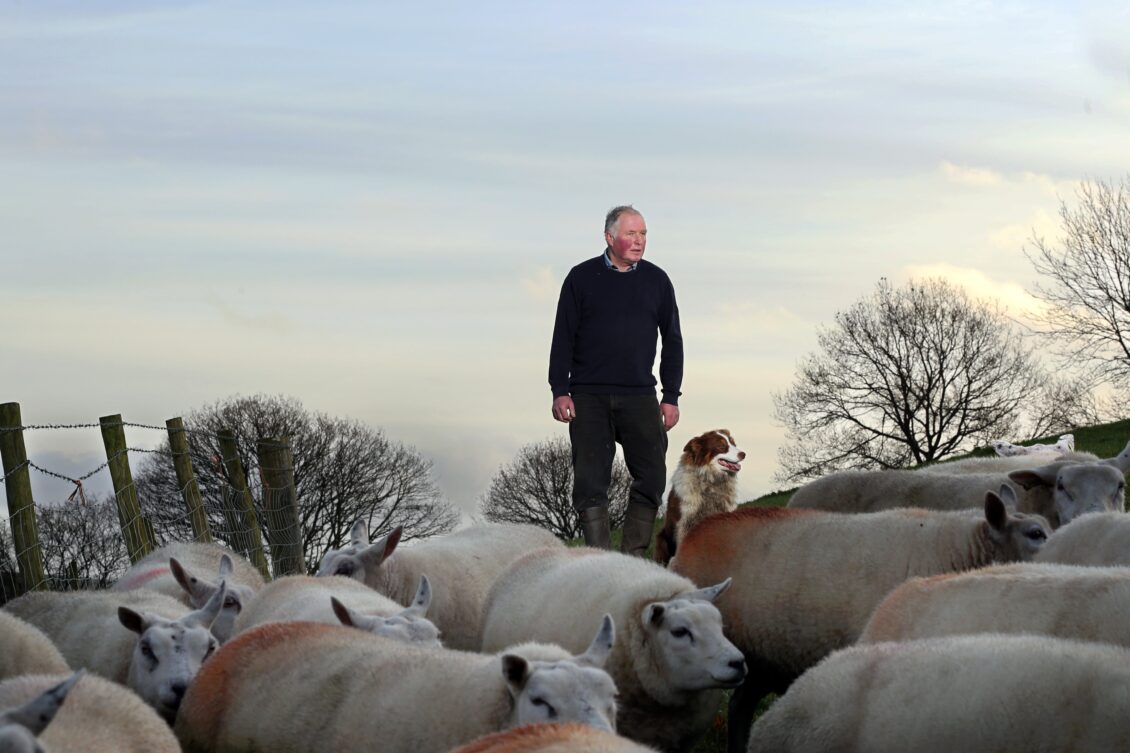
As the lambing season begins, a Welsh farmer – who developed a life-threatening infection – is urging his fellow farmers to be aware of the dangers posed to human and animal health by antibiotic resistance.
A seemingly simple cut resulted in Corwen beef and sheep farmer Arwel Evans developing an infection, which put his life in danger as doctors battled to find an effective antibiotic.
Now recovered, Mr Evans said, “I developed sepsis, and the doctors tried all different antibiotics, but none would work on me because the infection I had was resistant to them. We were down to one last antibiotic, and fortunately, it worked. Had it not, I would have lost my leg, or I could even have died.
“It is so important that farmers are aware of antibiotic resistance and how it can put their own health at serious risk. I know when you’ve got sick animals, you want to get them better, but unless we are more careful and selective in how we use antibiotics, there is a danger they won’t be effective for us and our animals when we need them most.”
Historically, Pendre Fawr Farm had suffered with a large number of cases of watery mouth – a potentially fatal disease affecting newborn lambs. The disease is associated with the ingestion by lambs of non-specific strains of E.coli bacteria which result in an endotoxic syndrome.
It was once commonplace on many farms to administer antibiotics to newborn lambs to prevent outbreaks. But, investigations revealed that many of the E.coli bacteria at Pendre Fawr were resistant to common antibiotics, with the E.coli isolates only sensitive to some antibiotics.
Eventually, the only effective antibiotics were those designated as critically important for human medicine. Therefore, using them on the farm was not a long-term solution because the more antibiotics are used, the greater the potential for further resistance to develop.
Working with the farm’s vet, Dr Joe Angell of Wern Vets CYF, a plan was devised to successfully reduce the need to use antibiotics at Pendre Fawr. Activity included investigating the sensitivities of the E.coli causing the watery mouth cases and implementing non-pharmacological protocols to prevent the disease.
Dr Joe Angell said, “As well as reducing overall antibiotic use to as low as possible, measures were taken to improve the ‘three Q’s’ of colostrum – quantity, quality, and quickly – as well as focusing on improving the lambing shed hygiene.”
The results have been impressive, and farm antibiotic use has reduced dramatically to very low levels, with use focusing on the lowest category antibiotics in targeted situations only.
The number of cases of watery mouth has dropped, and the administration of antibiotics to prevent the disease has been phased out completely, with routine monitoring carried out to keep an eye on the situation.
There has been such a dramatic improvement in the sensitivities of the E.coli bacteria isolated from clinical cases of watery mouth disease that lower-category antibiotics can be used again to treat clinical cases, making it much easier to treat sick animals with bacterial infections.
Importantly, the use of antibiotics vital to human health has been phased out completely.
Mr Evans said, “We were running out of options, so we had to do something quickly. I am delighted that by making simple changes, we have been able to reduce the need to use antibiotics on the farm, and my livestock are healthier. But I can’t stress enough how important it is to safeguard these critical antibiotics; I owe my life to them being effective.”
Dr Joe Angell said, “Diseases requiring antibiotic treatment will occur on farms. However, many can be prevented or made less severe by non-pharmacological preventive measures, and vets are well-placed to help with this.
“The use of antibiotics as a preventive measure is not necessary, except in very exceptional circumstances and then should be monitored closely by the prescribing veterinary surgeon.
“The infection in Mr Evans’ leg was not linked to any infection acquired from his farm. This case, however, highlights the problem of antibiotic resistance, which is a one health problem, and ongoing efforts by farmers will lead to reduced risk of infection in people of antibiotic resistant strains.”
Through its award-winning work, the Arwain DGC (Defnydd Gwrthficrobaidd Cyfrifol / Responsible Antimicrobial Use) programme promotes the responsible use of antibiotics in farm livestock.
Arwain DGC Veterinary Development Manager Dr Gwen Rees said, “Hearing Mr Evans’ experience really brings into focus the reality antimicrobial resistance and the impact of a world where infections do not respond to antibiotics. By working closely with his vet, this farmer has been able to significantly reduce antimicrobial use on the farm which is a key factor in reducing the risk of antimicrobial resistance in animals and humans.”
Described by the World Health Organisation as a ‘One Health’ challenge, antibiotic resistance is an issue where “without urgent action, we are heading for a post-antibiotic era, in which common infections and minor injuries can once again kill.”
Dr Eleri Davies, Deputy Medical Director and Head of the Healthcare Associated Infection and Antimicrobial Resistance Programme at Public Health Wales, said, “Mr Evans’ experience demonstrates what a precious, lifesaving resource antibiotics are, and that we need to use them responsibly.
“We can all play a part in slowing the spread of antibiotic resistance. Antibiotics should only be taken when prescribed by a doctor, pharmacist, nurse, or dentist, and these should be taken exactly as directed. No-one should save antibiotics for later or share them with family, friends, or pets. If you have unused antibiotics, you should return them to your local pharmacy. Throwing them in the bin or flushing them down the toilet leads to the contamination of rivers threatening human and animal health.”
