

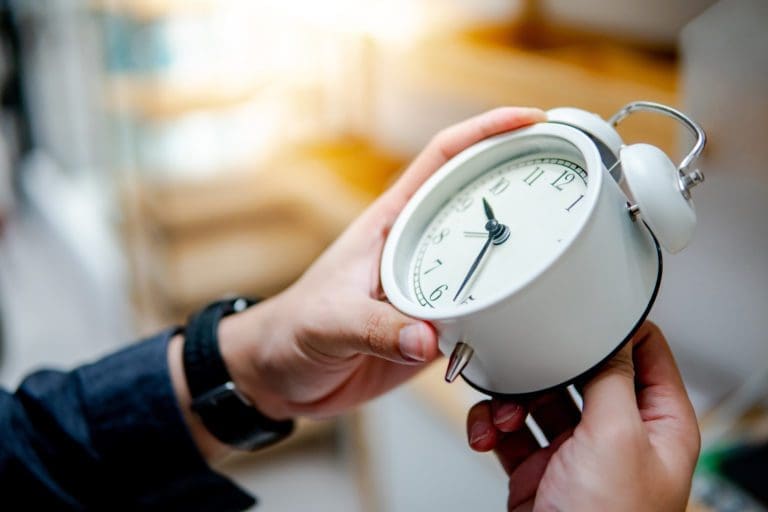
It’s that time of year again when we all start to wonder when the clocks are changing. Do they go forward or back, and does that mean an extra hour in bed?
The good news this time around is that we get the extra hour.
In the UK, the clocks will go back by one hour on Sunday 25 October 2026, marking the end of British Summer Time (BST) and the return to Greenwich Mean Time (GMT).
At 2am, the clocks will go back to 1am, giving most of us an extra hour in bed but also bringing noticeably darker evenings.
A handy way to remember which way the clocks change is the old saying, ‘spring forward, fall back’. In autumn they go back, while in spring they move forward.
Why do the clocks change?
The UK changes its clocks twice a year to make better use of daylight.
During British Summer Time, clocks are one hour ahead of GMT. This provides more daylight during the evenings throughout the spring and summer months, although it also means less daylight early in the morning.
When the clocks go back in October, the UK returns to GMT. This shifts an hour of daylight back towards the morning, but means sunset arrives earlier in the evening.
The clocks always go forward on the last Sunday in March and go back on the last Sunday in October.
When do the clocks go forward again in 2027?
British Summer Time will return on Sunday 28 March 2027.
At 1am, the clocks will move forward by one hour to 2am. Unfortunately, that means losing an hour in bed, but it also signals the return of lighter evenings as we head towards summer.
Most smartphones, tablets, computers and other internet-connected devices should change automatically.
However, it is still worth checking traditional clocks, watches, ovens, microwaves and some car clocks, which may need to be changed manually.
So, the two dates to remember are Sunday 25 October 2026, when the clocks go back one hour, and Sunday 28 March 2027, when they go forward again.
