


Scott Harbour flats in Cardiff Bay have become the first residential building in Cardiff to receive heat and hot water from Cardiff Council’s pioneering low-carbon district heat network.
The former office block was recently converted into 78 council-owned apartments and now provides much-needed social housing in the city. As well as modern new accommodation, residents are now also enjoying sustainable heat and hot water.
Cardiff Heat Network captures heat from steam already produced as a by-product of the process that powers electricity-generating turbines at Viridor’s Trident Park Energy Recovery Facility. The heat is then transported through a network of highly insulated pipes to buildings across Cardiff Bay, where it provides a sustainable source of heat and hot water.
Cabinet Member for Climate Change, Strategic Planning and Transport, Cllr Dan De’Ath, said: “The heat network provides customers with an affordable, reliable and sustainable source of heat and hot water and has the scope to expand further over time.
“The moment a building connects, it eliminates the need for gas boilers and delivers an 80% cut in carbon emissions.
“It’s a complicated project to deliver, but an incredibly simple idea at heart – capturing heat that already exists but is currently wasted and transporting it to where it can be used instead of burning fossil fuels.
“What we’ve built is the first city-scale network of its kind in Wales. It represents a significant investment in the long-term infrastructure needed to ensure we play our part in tackling the global challenge of climate change, and build a stronger, fairer, greener Cardiff.”
Cardiff & Vale College recently became the first building to receive heat from the network. Over coming weeks, other major buildings in Cardiff Bay, including Wales Millennium Centre, Butetown Hub, Nelson House, Tresillian House, Ty Hywel and the Senedd will also connect.
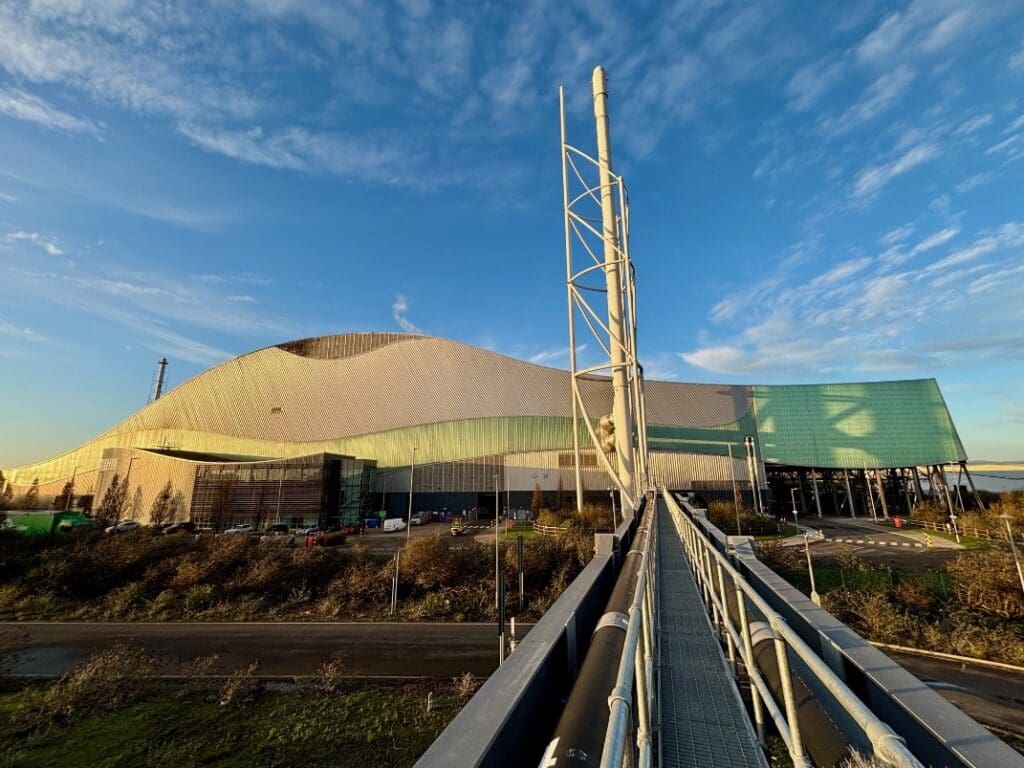
Led by Cardiff Council and delivered through its arm’s-length company, Cardiff Heat Network Ltd, the £15.5 million heat network project was funded through a grant from the UK Government’s Heat Networks Investment Project (HNIP) and a loan from the Welsh Government. The network forms a central pillar of the Council’s One Planet Cardiff strategic response to climate change.
Cardiff Heat Network Ltd is in discussions with more potential customers, in close proximity to the current network of pipes, with a view to adding further connections. Funding options are also being explored for a potential ‘phase 2′ of the network, which could see the network expand further into the city centre.
Although the network’s initial heat source is Viridor’s Energy Recovery Facility, the network is designed to be ‘heat source neutral.’ This means that in the future, it could potentially be connected to alternative or additional heat sources such as the groundwater or deep geothermal heat that exists beneath Cardiff’s streets.
Cardiff’s Heat Network in numbers:
- 15,500,000 – the number of pounds it cost to build.
- 10,000 – the number of tonnes of CO₂e the network is expected to save annually once complete.
- 3,700 – the number of residential gas boilers that would need to be switched off to save the amount of CO₂e the network is expected to save.
- 30 – the number of local people working on site, for every day of the construction period.
- 4.9 – the number of kilometres of pipes in the current network.
- 4 – the number of years it took to build.
