

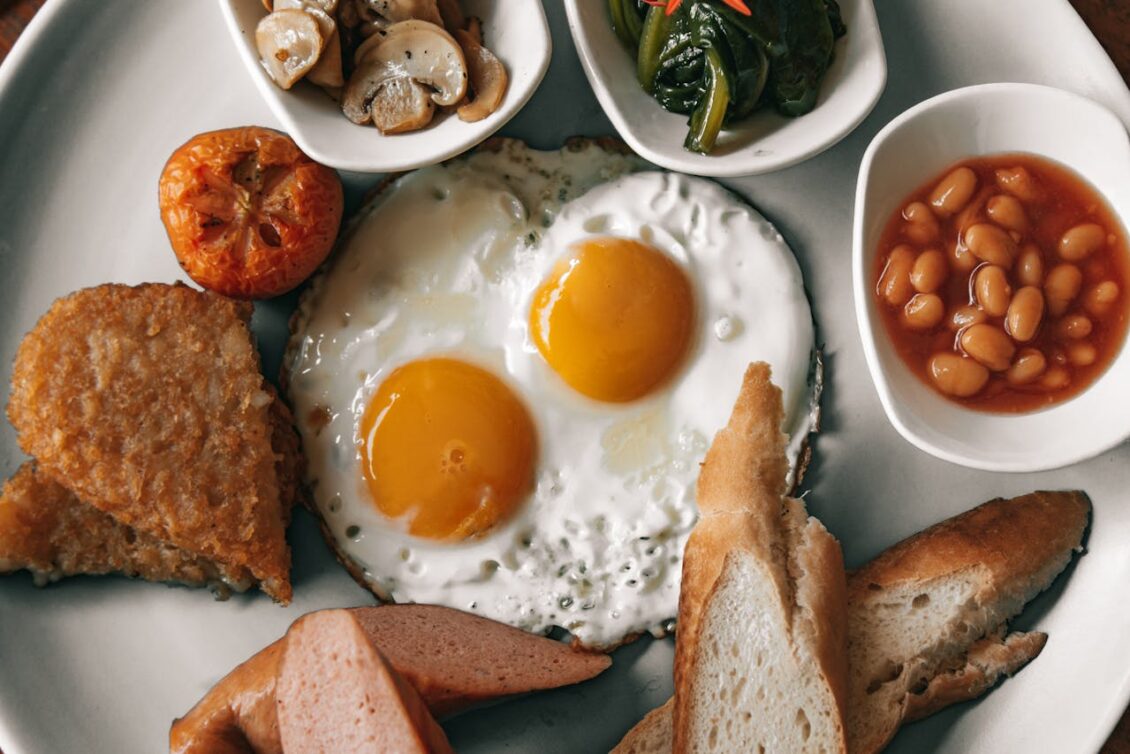
There’s a particular comfort in a British breakfast. Eggs, toast, beans, warmth — not just food, but ritual. Even after years away from the UK, that craving doesn’t disappear. Interestingly, neither has it in Dubai. As more UK founders explore business setup in Dubai, many are surprised to find that the city has evolved into one of the world’s most dynamic breakfast destinations.
Dubai’s dining scene is driven by tourists searching for familiarity, expats craving home comforts, and locals who love globally inspired food with personality. In that mix, British breakfast flavours land perfectly. They offer nostalgia for some, novelty for others, and a heritage story that aligns naturally with Dubai’s obsession with curated, experience-led dining.
This guide explores how British breakfast products and concepts can succeed in Dubai, from market positioning and menu strategy to licensing, imports, and tax considerations, with Meydan Free Zone as the launchpad.
Why British breakfast works so well in Dubai
Breakfast in Dubai is not a side dish; it’s a headline act. The city welcomed over 17 million tourists last year, and for hotels, cafés, and lifestyle venues, breakfast is often the most competitive and profitable mealtime.
Layer onto that a British expat population exceeding 120,000, alongside Europeans with similar tastes, and you get a built-in audience that instantly recognises British breakfast flavours. Add Dubai’s love for storytelling, presentation, and global cuisine, and British breakfast becomes a strong commercial fit.
The British breakfast elements Dubai loves most
Dubai doesn’t lean toward a greasy, traditional fry-up. What works is refinement. Recognisable British flavours, elevated for a modern, café-led market.
Many venues now serve polished interpretations of the Full English: organic eggs, halal artisanal sausages, sautéed mushrooms, slow-roasted tomatoes, and refined takes on baked beans. Sourdough replaces standard toast, and presentation becomes part of the value.
British baked goods are also thriving. Scones sit naturally alongside specialty tea menus, shortbread appears as a premium brunch dessert element, and oat biscuits pair effortlessly with coffee culture. Condiments such as marmalade, lemon curd, clotted cream, and British-style jams are especially attractive to cafés because they offer strong margins and storytelling value.
Getting licensed: the legal foundation for supplying Dubai cafés
Supplying food products in Dubai requires structure. You cannot import, distribute, or sell food items without a UAE trade license and proper product registration.
This is where free zones matter. Digital-first free zones, in particular, simplify what could otherwise be a slow process. Meydan Free Zone is a popular entry point for UK founders because it mirrors the efficiency of UK digital government systems, while offering broader flexibility.
With Meydan Free Zone, founders benefit from:
- Fully online company formation
- Passport-only setup
- The Fawri business license, issued in under 60 minutes
- Guaranteed IBAN through partner banks
- Over 2,500 business activities
- Modern visa management through mResidency
For British breakfast brands that want to combine importing, wholesale, consultancy, pop-ups, and e-commerce under one structure, that breadth matters.
Registering breakfast products and packaging compliance
Every food product imported into Dubai must be registered with Dubai Municipality. Authorities review ingredients, allergens, nutritional data, artwork, shelf life, and storage requirements.
For UK brands, this process is predictable but detail-driven. Packaging must include both English and Arabic. Many British brands either integrate Arabic elegantly into the design or use bilingual labels that preserve brand aesthetics.
Precision at this stage prevents delays later, especially for spreads, baked goods, and condiments.
Importing British breakfast ingredients: practical considerations
British breakfast products span multiple categories: baked goods, preserves, teas, and dairy-heavy items. Each comes with its own logistics requirements.
Most food items attract 5% customs duty, while some tea classifications may qualify for 0%. Air freight is preferred for fragile or premium goods, while sea freight becomes cost-effective once volumes increase.
Climate-controlled storage is essential for butter-based products and preserves.
VAT, corporate tax, and free zone advantages explained
VAT in the UAE is straightforward:
- 5% VAT on UAE sales
- 0% VAT on exports
Corporate tax is where strategy matters. The UAE applies 0% tax on the first AED 375,000 of profit and 9% above that. However, free zones introduce a significant advantage.
A Meydan Free Zone company can qualify as a Qualifying Free Zone Person (QFZP), allowing 0% corporate tax on eligible income, provided the business:
- Operates from a qualifying free zone
- Earns income from permitted activities
- Avoids excluded activities
- Maintains proper accounting records
For British breakfast brands exporting across the GCC or running cross-border e-commerce, qualifying income may remain tax-free, making Dubai an attractive regional hub.
Why Dubai is ready for a British breakfast renaissance

Dubai loves global flavours, strong narratives, and comfort food done well. British breakfast delivers all three. Whether you’re supplying preserves, baked goods, tea, artisanal components, or complete breakfast concepts, the opportunity is wide and scalable.
Combine that with Meydan Free Zone’s digital-first setup, fast licensing, guaranteed banking, and a free zone structure that supports 0% corporate tax on qualifying income, and the proposition becomes compelling for UK founders.
In short, if you’ve ever imagined British breakfast flavours appearing on Dubai’s best tables, the market is ready — and the infrastructure is already in place.
