


You spend roughly a third of your life unconscious, paralyzed, hallucinating. And somehow this is considered healthy. Sleep is one of the most mysterious things humans do – we’ve been doing it forever, it’s clearly essential, and yet scientists are still arguing about why exactly we need it. What we do know is fascinating enough to make you rethink every late night you’ve ever pulled.
What Actually Happens When You Fall Asleep
Sleep isn’t a single state – it’s a cycle repeating four to six times a night, each round lasting roughly 90 minutes. Within each cycle, your brain moves through distinct stages. Stage one is that half-awake twilight where you might jerk suddenly (a hypnic jerk – your muscles startling themselves awake). Stage two is proper light sleep. Then stages three and four – deep sleep, the one that feels like falling into a well.
Then comes REM. Rapid Eye Movement sleep is where things get weird. Your eyes dart back and forth under closed lids, your brain activity spikes to near-waking levels, and your body becomes temporarily paralyzed. Yes, paralyzed – your brainstem actively suppresses muscle movement so you don’t physically act out your dreams. People with REM sleep behavior disorder lose this paralysis and do act them out. Sleep researchers have found people punching walls, jumping out of bed, having full conversations – all completely asleep.
The first half of the night is dominated by deep sleep. The second half tilts toward REM. Cutting sleep short disproportionately cuts REM time.
What makes sleep compelling to researchers is that nearly every system in your body behaves differently during it. Growth hormone releases primarily during deep sleep – which is why teenagers need more sleep than adults, not less. Immune function ramps up. Cellular repair accelerates. The body isn’t resting – it’s working on a completely different schedule.
There’s an irony in reading this on a screen right now. Screens emit blue light that suppresses melatonin – the hormone that signals your brain it’s time to sleep. Everything from Netflix to platforms like Slotpalace competes for the exact hours your brain needs to wind down. The devices we use for evening entertainment are chemically arguing with our sleep cycles. Worth knowing.
What your brain does while you sleep:
- Memory consolidation – experiences from the day get transferred from short-term to long-term storage
- Toxin clearance – the glymphatic system flushes waste products from brain tissue, including proteins linked to Alzheimer’s
- Emotional processing – the emotional charge of difficult memories gets reduced overnight
- Skill solidification – motor skills and learned information improve after sleep, not just during practice
The old idea that sleep is just “off time” for the brain is completely wrong. If anything, certain brain regions are more active during sleep than wakefulness.
Dreams: Your Brain’s Overnight Processing Lab
Sigmund Freud thought dreams were the “royal road to the unconscious” – hidden desires bubbling up in symbolic form. Modern neuroscience is less poetic but more interesting. Dreams appear to be your brain’s way of processing emotional experiences, testing scenarios, and making unexpected connections between unrelated memories.
The activation-synthesis hypothesis suggested dreams are your brain making narrative sense of random neural firing during REM sleep. The cortex receives random signals and does what it always does – tries to build a coherent story. This is why dreams feel meaningful even when completely surreal.
More recent research suggests something more purposeful. Matthew Walker at UC Berkeley found that REM sleep strips the emotional tone from memories – you remember what happened but wake up less distressed about it. “Sleep to forget, sleep to remember.” This is why a bad day often feels less catastrophic after a good night. Your brain processed the emotional weight overnight.
Recurring anxiety dreams – showing up unprepared for an exam, missing a flight, teeth falling out – are remarkably consistent across cultures. They tap into something universal about how the brain processes stress. Your specific content differs, but the emotional architecture is shared.
Lucid dreaming – where you become aware you’re dreaming – is a real phenomenon verified in sleep labs. Researchers established a protocol where lucid dreamers move their eyes in specific patterns while asleep, sending signals from inside a dream. The papers reporting this are genuinely surreal to read.
Sleep Deprivation: What Happens When You Skip It
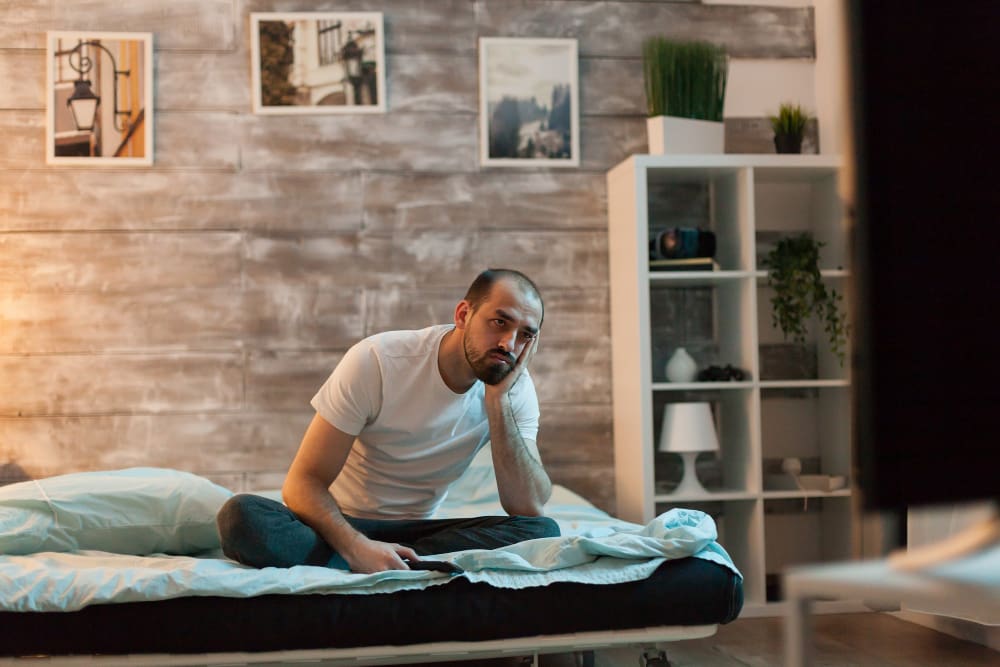
After 17 hours without sleep, cognitive performance drops to the equivalent of a blood alcohol level of 0.05%. After 24 hours, it’s 0.10% – legally drunk in most countries. The problem is that sleep-deprived people are spectacularly bad at assessing their own impairment. You think you’re fine. You are not fine.
A landmark University of Pennsylvania study took people sleeping six hours a night for two weeks – which many consider reasonable – and found their performance degraded as badly as people who went without sleep for 48 hours. The subjects rated themselves “slightly sleepy” throughout. They’d lost the ability to perceive their own decline.
One night of poor sleep makes your amygdala 60% more reactive to negative stimuli. You’re more anxious, more irritable, more likely to perceive neutral situations as threatening. It’s not in your head – it’s in your head, just differently.
The long-term picture is sobering. Chronic sleep restriction is associated with obesity, type 2 diabetes, cardiovascular disease, and compromised immunity. Getting under six hours consistently isn’t a productivity hack. It’s slow-motion damage.
Sleep as the Foundation
The uncomfortable truth is that most of what we consider “willpower” or “discipline” depends substantially on sleep quality. Decision-making, emotional regulation, impulse control, creative thinking – all heavily influenced by how much REM and deep sleep you got last night. The people who seem fine on five hours are largely just acclimated to impairment and can’t feel the gap anymore. Sleep isn’t something you optimize around. It’s the foundation everything else sits on.
