

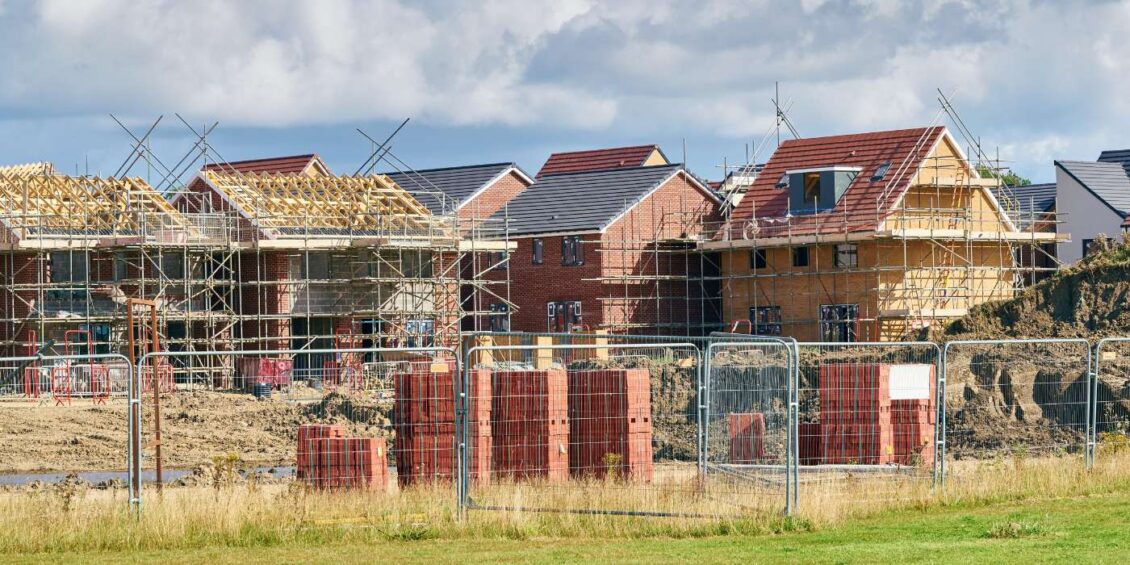
The construction market in Wales weakened during the first quarter of 2026 with workloads declining across most subsectors and the outlook softening, according to the latest Royal Institution of Chartered Surveyors (RICS) Construction Monitor.
A net balance of -17% of survey respondents in Wales reported a fall in overall construction activity in Q1, which is the lowest this balance has been in two years, and the third consecutive quarter this balance has been in negative territory.
All subsectors saw declines in activity according to the balance of respondents other than public housing which saw a marginal increase (a net balance of +5%). The weakest net balance was for the private commercial subsector with a net balance of -36% of respondents.
Financial constraints were cited by 76% of respondents in Wales as a factor limiting activity, making it the second most reported obstacle, after planning and regulation at 85%. This is the highest number of respondents citing financial constraints since 2019 and a significant increase since Q4 2025. Anecdotally, respondents pointed to planning issues relating to nutrient neutrality as a continuing challenge.
With the increase in challenges facing the construction market, expectations for the year ahead have lowered. The net balance for 12-month workload expectations was +5% in the latest report compared to +9% the last time. And 12-month expectations for both employment and profit margins are now in negative territory. In the net balance for profit margin expectations at -44% is now at its lowest since Q1 2020.
Survey respondent Jayne Rowland Evans of GKR Maintenance & Building Co Ltd in Caerphilly, said: “There is a lack of tenders. Procurement requirements and SSIP are ever-increasing and difficult for SMEs who do not have dedicated departments.”
Survey respondent, Mark Evans of Ivor Russell Partnership in Swansea said: “The impact of nitrates on the planning system in Wales has brought the construction industry to a near stop. NRW and the Welsh Government need to resolve the issue urgently, as all sectors are having to make staff redundant with immediate effect.”
RICS Chief Economist, Simon Rubinsohn, said: “The impact of the war in the Middle East is clearly visible in the Q1 RICS Construction Monitor. Rising material costs, a tougher credit environment and increased pressure on margins are already leading some developers to slow construction activity. More significantly, plans for the next twelve months are being scaled back most notably in the private sector. Expectations around housebuilding are now flat which aligns with the comments from leading housebuilders in their recent trading updates and results statements.
“Alongside the tougher financial environment, concerns continue to be raised around the challenges thrown up in the planning process and the ongoing impact of the Building Safety Regulator (BSR). Even with the passage of the Planning and Infrastructure Act and the improved performance of the BSR, it is evident that both these factors remain significant impediments for developers.”
