

If you’ve ever heard scurrying behind a wall at night or spotted droppings in the kitchen, you already know the feeling — that creeping anxiety that tells you something is sharing your home without an invitation. Demand for pest control in Bromley and across South East London has risen steadily, and understanding how to tackle infestations early can save both your property and your peace of mind.
This guide covers what homeowners across the region need to know about identifying, treating, and preventing common infestations — based on current best practices used by certified pest technicians. For general pest identification and prevention advice, the British Pest Control Association (BPCA) is the UK’s leading professional trade body and a reliable starting point for any homeowner.
Why South East London Homes Are Particularly Vulnerable
South East London’s mix of older Victorian terracing, proximity to green spaces, and dense urban sewer networks creates ideal conditions for pest activity year-round. According to the Prevention of Damage by Pests Act 1949, landowners and occupiers have a legal duty to keep their properties free from large-scale rodent infestations — a fact many homeowners aren’t aware of until the council steps in.
The borough of Bromley alone sees thousands of callouts annually for rats, mice, wasps, cockroaches, and bird-related issues. Warmer, wetter springs and autumns — increasingly the norm in southern England — accelerate pest reproduction cycles, making proactive pest management more important than ever.
The Most Common Household Pests in the Region
Rodents (Rats & Mice)
Did you know that 99.9% of rat infestations originate from sewer systems? Rats can squeeze through gaps the size of a 50-pence piece, while mice only need the width of a standard biro. Once inside, they cause structural damage by gnawing through insulation, timber, and electrical wiring — squirrels, similarly, are one of the leading causes of house fires due to chewed cables.
Signs of a rodent infestation include:
- Droppings along skirting boards or behind appliances
- Gnaw marks on food packaging or cables
- Smear marks (grease trails left by rats along walls)
- Scratching or scurrying sounds, particularly at night
The gold standard for dealing with rodents is an Integrated Pest Management (IPM) approach — one that combines root cause analysis, entry point sealing, habitat removal, and targeted treatment rather than simply laying bait and leaving.
Wasp Nests
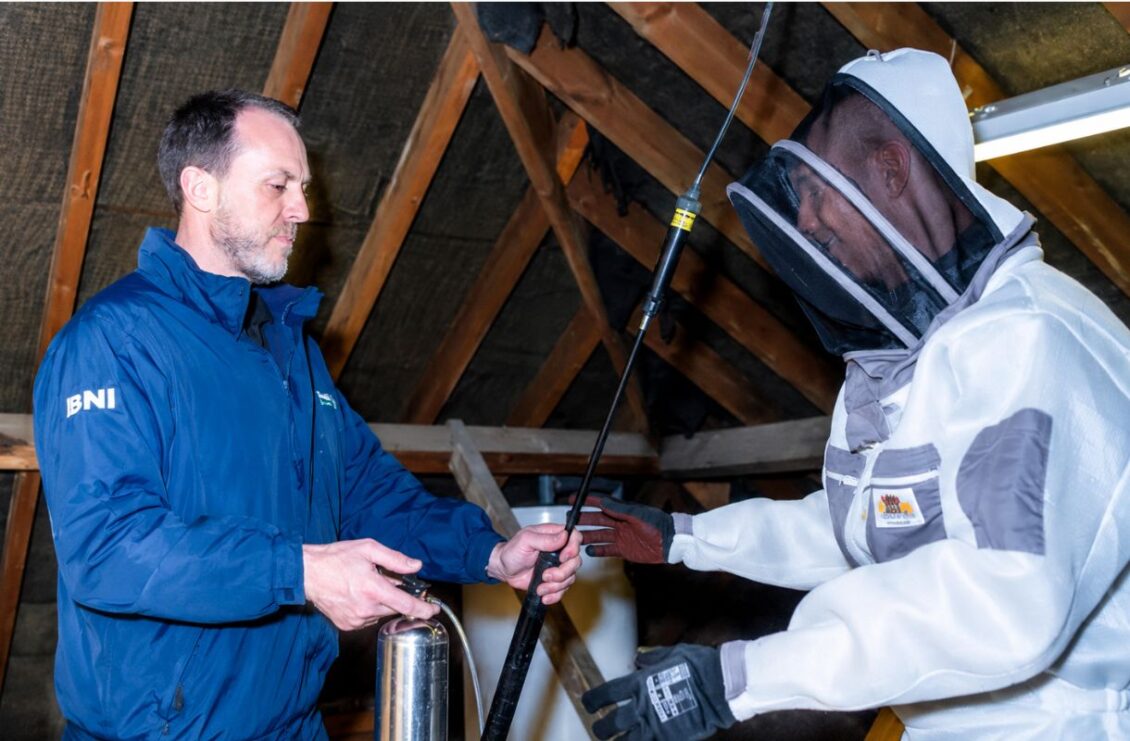
Wasp activity peaks between June and September, with nests forming in loft spaces, wall cavities, garden sheds, and even inside unused wardrobes in garages. A single nest can house thousands of wasps by late summer. DIY removal is strongly discouraged; disturbing an active nest without the correct protective equipment and insecticide can provoke mass stinging and, in severe cases, anaphylactic shock.
Professional wasp nest removal involves applying a specialist insecticide directly to the nest entrance, causing colony collapse within 24–48 hours.
Insect Infestations (Cockroaches, Bed Bugs, Fleas & Ants)
Cockroaches are nocturnal and incredibly resilient, thriving in warm, humid environments like kitchens and utility rooms. Bed bugs can spread rapidly between rooms and floors within a single property. Flea infestations — often introduced by pets — require treating both the host animal and the entire home environment, including soft furnishings and carpets.
Under the Environmental Protection Act 1990, local authorities can also investigate commercial premises where insect emanations create a statutory nuisance to neighbouring properties.
What a Professional Inspection Actually Looks Like
Reputable pest technicians follow a structured process. Understanding this helps you evaluate whether the company you hire is delivering genuine value or simply applying a generic spray-and-walk approach.
A proper site inspection should include:
- Property survey — identifying current entry points, harbourages, and nesting sites
- Infestation assessment — gauging the extent and duration of pest activity
- Root cause identification — understanding why pests entered (food sources, structural gaps, drainage issues)
- Treatment plan — selecting environmentally appropriate methods, including bait stations, residual insecticides, or exclusion work
- Written report — documenting findings, actions taken, and prevention recommendations
Be cautious of any pest controller who skips the inspection and goes straight to treatment. Effective residential pest control is built on data, not guesswork.
Pest Proofing: The Step Most Homeowners Skip
Treatment eliminates the current problem. Proofing prevents the next one. Yet many homeowners skip pest proofing after a successful treatment, only to face a reinfestation months later.
Practical pest proofing measures include:
- Sealing gaps around pipe work where it enters walls or floors
- Installing one-way valves on branch drain lines to prevent rat ingress from sewers
- Fitting chimney cowls and roof-line repairs to block entry for squirrels and birds
- Clearing clutter from loft spaces, cellars, and sheds that provide ideal nesting materials
- Securing bin storage areas with properly lidded containers
For homes with solar panels, bird activity beneath the panels is a rapidly growing problem across South East London. Pigeons nesting under solar arrays cause insulation damage, void warranties, and generate highly acidic droppings that corrode the panel fixings. Specialist bird netting installed around the panel perimeter is the only durable, long-term solution.
How to Choose a Qualified Pest Control Provider
The pest control industry in the UK is regulated but not fully licensed, meaning homeowners need to be vigilant. Here is what to look for before booking any treatment:
- RSPH or BPCA accreditation — technicians should hold relevant qualifications, such as the Royal Society for Public Health Award in Pest Management
- COSHH compliance — all pesticide application must follow Control of Substances Hazardous to Health regulations
- Transparent pricing — no hidden call-out charges; a reliable company will quote clearly upfront
- Guaranteed revisits — for rodent control in particular, any treatment programme requires follow-up visits to confirm bait uptake and activity cessation
- Discreet vehicles and uniforms — for residential clients who prefer discretion
Homeowners in the Bromley area looking for a locally established, fully accredited service should consider Clear-Zone, which covers residential and commercial properties across South East London and surrounding areas.
Frequently Asked Questions
How quickly should I act if I suspect a pest problem? Immediately. Rodent populations can double in three weeks under ideal conditions. Early intervention is always cheaper and less disruptive than treating an established infestation.
Are pest treatments safe for children and pets? Responsible technicians use targeted, low-toxicity treatments and will advise on any access restrictions during and immediately after treatment. Always disclose the presence of pets, fish tanks, or vulnerable family members before a technician begins work.
Does my landlord or council have to deal with pests? If you rent, your landlord is generally responsible for resolving infestations that existed before you moved in or resulted from structural issues. Councils retain powers under the Prevention of Damage by Pests Act 1949 to issue notices requiring owners of infested land to take remedial action. However, for most homeowners and private tenants, engaging a professional independently is faster and more reliable.
How many visits does rodent control typically require? A standard rodent control programme usually requires a minimum of three visits — initial treatment, a mid-programme bait check, and a final clearance visit. More severe infestations may require additional revisits and exclusion work.
Is it worth getting a pest survey before buying a property? Absolutely. A pre-purchase pest survey can identify active infestations, signs of previous activity, and structural vulnerabilities — potentially saving thousands in remediation costs down the line.
A Note on DIY Pest Control
Consumer-grade products have improved significantly in recent years, and for minor ant or flea issues, DIY approaches can be effective. However, for rodents, wasps, cockroaches, and bed bugs, professional treatment is almost always the more cost-effective route.
Misusing rodenticide, for example, risks building rodenticide resistance in local rat populations — a growing concern across urban London — and poses a serious secondary poisoning risk to non-target wildlife such as foxes, owls, and domestic cats.
For any South East London postcode, engaging a certified technician with local knowledge of sewer infrastructure, building types, and seasonal pest pressure will consistently deliver better, longer-lasting outcomes than a DIY approach.
Final Thoughts
Pest infestations are not a sign of an unclean home — they are an environmental and structural issue that affects properties of all types and ages. The most effective approach combines prompt professional treatment with a genuine commitment to pest proofing and habitat reduction. The homeowners who deal with pest problems most successfully are those who treat prevention as seriously as the cure.
If you are noticing early signs of activity, do not wait. A quick inspection from a qualified technician costs far less than the structural repairs that come from an unmanaged infestation.
