

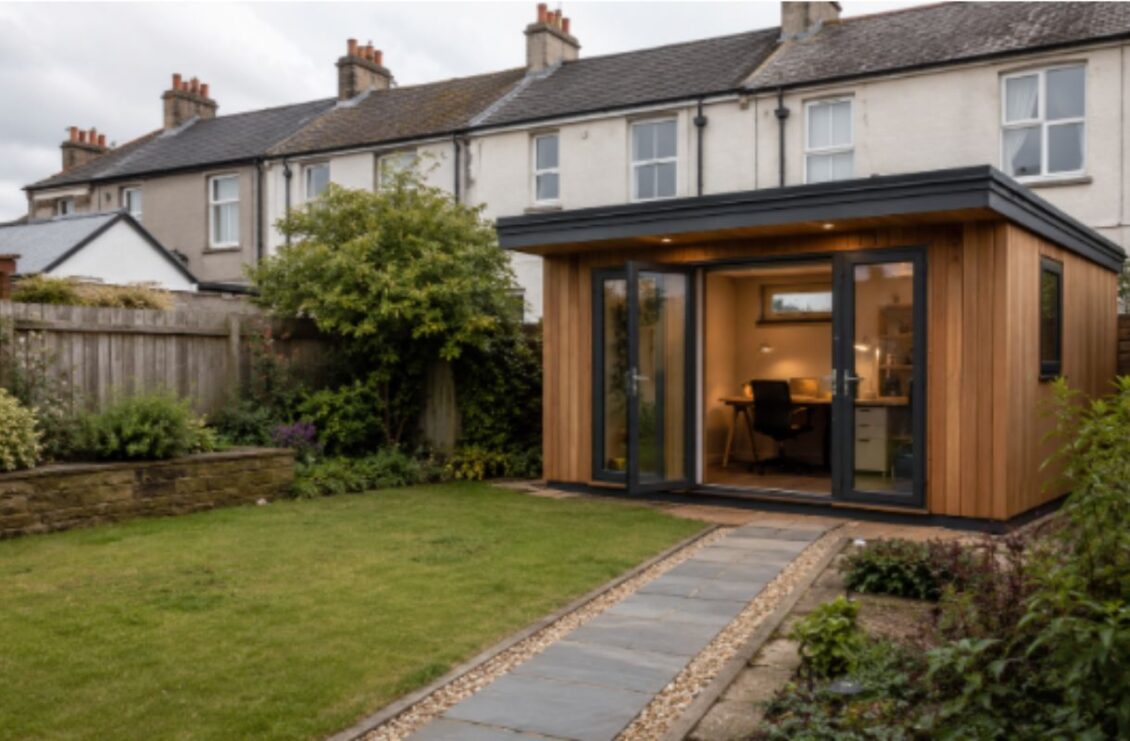
For Welsh homeowners weighing up space, value and practicality, the garden room has moved beyond its early home-working reputation. It is now seen as a serious way to make an existing home work harder.
The garden feature appearing across Welsh streets
Walk down a Cardiff Victorian street, a Vale of Glamorgan village, a Bridgend new-build estate or a Valleys terrace in 2026, and one feature keeps appearing where it did not used to be.
Not the flimsy summerhouse at the end of the lawn. The modern garden room is insulated, built, fitted with electrics and connectivity, and designed for year-round use.
What started as a lockdown solution has matured into a considered home improvement, combining practical space and potential resale appeal. The question is how much value it can add, how reliably, and what needs checking first.
Why has the demand in South Wales sharpened
Property Reporter, reporting analysis from The Property Centre, put the average uplift from a garden office at 8.4%, or about £22,739 based on average UK prices. The safer reading is not that every garden room adds a fixed percentage, but that quality, location and footprint decide whether buyers see it as valuable space.
Garden rooms can also be less disruptive than extensions, with many standard projects shorter than loft conversions or full renovations. Used as ancillary space rather than habitable accommodation, they tend not to create the same EPC questions as dwellings.
Hybrid working remains part of the Welsh picture. The Welsh Government’s remote working strategy set an ambition for 30% of the workforce to work at or near home, while flexible working is embedded across public services and professional roles.
For South Wales garden room specialists such as Eden Landscapes, the demand has been clear. The Cardiff-area garden room, landscaping and outdoor living specialist, working across Cardiff, Newport, Bridgend, Cowbridge, Penarth, the Vale of Glamorgan and the wider South Wales region, has reported more enquiries about daily use and home value.
Why Welsh homes are well placed for garden rooms
South Wales has a housing stock that lends itself to this addition. Victorian and Edwardian terraces, post-war family homes and village properties often come with deep rear gardens that are useful in theory, but underused in practice.
Welsh weather changes the standard required. A summer-only outbuilding has limited appeal in a climate that rarely waits to be invited in. Proper insulation, double glazing, heating, ventilation and weather protection turn it into a year-round room.
Family life adds another reason. Many Welsh homes are balancing hybrid work, teenagers needing quiet space, adult children staying at home longer, and relatives visiting regularly. In stronger family-home markets around Cardiff, the Vale, Penarth, Cowbridge and Monmouthshire, flexible workspace is part of buyer expectation.
What the extra space can add in real terms
Capital value is only one part of the story. Daily value often comes first.
A well-specified garden room can become a home office, gym, studio, hobby room, teenager space or family overflow area. On listings and property searches, those uses are easy to understand.
For Welsh families, the alternative may be upsizing, with legal fees, estate agent fees, removals and Land Transaction Tax. For landlords, flexible workspace can also improve rental appeal without making firm promises about rent.
The Welsh planning details that matter
Garden rooms in Wales can fall within permitted development rights under the Town and Country Planning (General Permitted Development) (Wales) Order 1995 when they remain ancillary to the home, but this is not automatic. Welsh Government guidance says outbuildings cannot usually sit in front of the principal elevation, cannot cover more than 50% of the curtilage and must meet height restrictions.
As a guide, any part of an outbuilding within two metres of a boundary cannot exceed 2.5 metres. Overall height limits vary by roof form.
Listed buildings, conservation areas, National Parks and protected landscapes need extra care. Bannau Brycheiniog, Eryri, Pembrokeshire Coast and Gower all bring planning sensitivities. Wales also has its own planning framework, including Future Wales 2040 and Local Development Plans, and some applications may need Welsh language impact consideration.
Welsh building regulations guidance may not apply to some small detached garden rooms, particularly where they are under 30 square metres, contain no sleeping accommodation and meet separation or construction conditions. Larger or more complex uses need specific advice.
What South Wales specialists are hearing
A spokesperson for Eden Landscapes said: “Over the past three years, we have seen a clear increase in garden room enquiries across Cardiff, Penarth, Cowbridge, the Vale of Glamorgan and South Wales.
“What has changed is the quality of the conversation. Homeowners are asking about insulation, electrics, connectivity, planning, building regulations and whether the finished room will support the value of the property over time.
“The biggest specification mistake is under-investing in insulation and weather protection. In South Wales, the climate will test the building. Specification and proper installation are what turn it from a nice idea into a room that works in January as well as July.
“Permitted development, faster installation, limited EPC complications for ancillary use and potential value impact make garden rooms a serious long-term home decision, provided the build quality matches expectations.”
The specification details that decide the outcome
Specification is where garden rooms succeed or disappoint. Wall, roof and floor insulation, double glazing, electrics, damp protection, roof quality and internal finish all affect whether the room feels like part of the property or a better-looking shed.
The base is just as important. Welsh gardens are not always level, and sloping ground, clay soil or poor drainage can expose shortcuts. A workspace needs safe electrical installation, RCD protection and reliable WiFi or Ethernet access.
Heating, ventilation and acoustic performance matter too, especially where more than one person works from home. Paths, lighting and landscaping affect daily use, while electrical certificates, warranties and specification documents are worth keeping for resale or refinancing.
The overlooked space with growing value
Garden rooms have quietly evolved into one of the more considered Welsh home improvement decisions of 2026. The appeal sits in permitted development advantages, faster installation, potential value uplift, year-round usability and lifestyle benefit.
For Welsh families with underused garden space, the question is increasingly not whether a garden room is worth considering. It is what specification, design and supplier choices will support daily use and long-term home value.
The most overlooked corner of most Welsh homes in 2026 is not an unused room indoors. It is the part of the garden nobody has quite figured out yet.
