

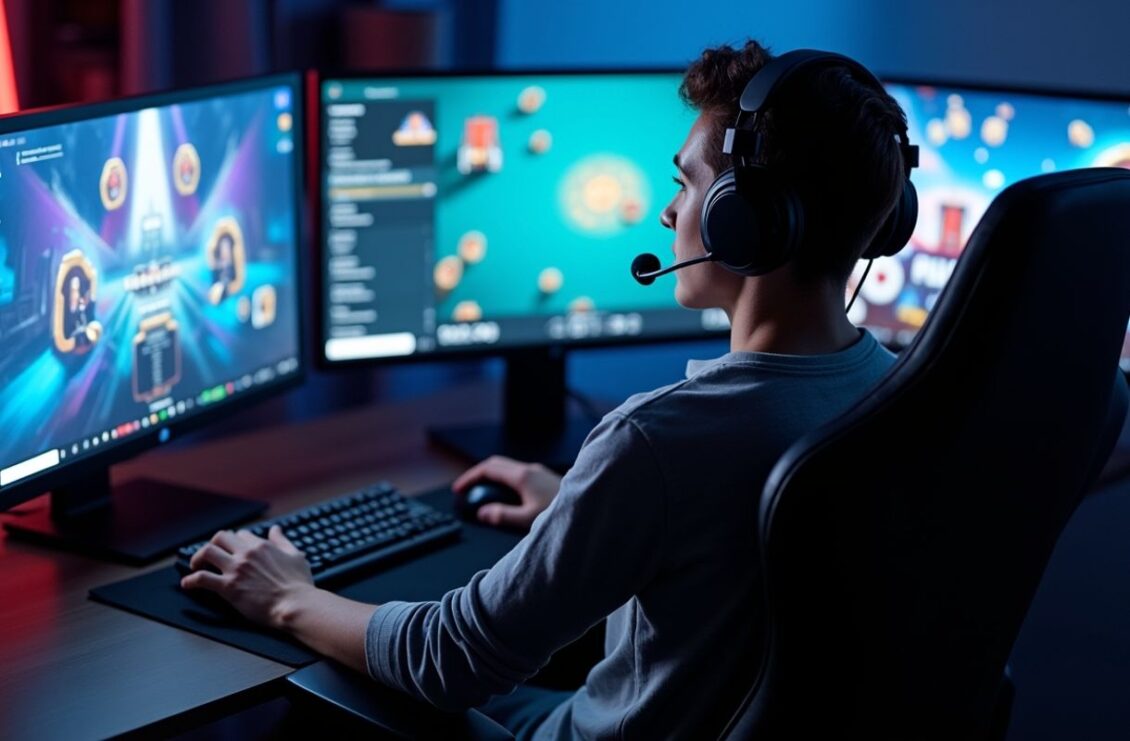
There is a particular quality of attention that only live experience produces. You know it when you feel it, and you notice its absence in everything that is not live. It is the quality of watching something that is happening now, whose outcome is not yet determined, in which your presence — however mediated — feels like genuine participation rather than passive consumption. This quality has become, paradoxically, more valuable as the total supply of available content has increased. When everything is accessible at any moment, the things that can only be experienced now become rare.
The attention economy and its discontents
We are living through the most abundant moment in the history of human entertainment. Every film ever made, every album ever recorded, every television programme ever broadcast is available, at minimal cost, to anyone with a broadband connection. This abundance was supposed to be straightforwardly good, and in many respects it is. But it has produced a side effect that was not widely anticipated: the devaluation of content as an experience.
When content is infinitely available, it becomes background. You can pause it. You can return to it. You can watch the first twenty minutes tonight and finish it next week. The relationship between the viewer and the content is one of total control, which sounds desirable until you recognise that total control is incompatible with the kind of absorbed, present attention that makes an experience genuinely memorable. You cannot be lost in something you can pause at will.
Why live resists this dynamic
Live experience operates according to a different logic. A concert is happening now, and it will not happen again in exactly this form. A sporting event is unfolding in real time, and the outcome is genuinely unknown. A conversation is taking place in the present moment, responsive to what has just been said, incapable of being replayed from a different emotional position. These experiences demand a quality of attention that recorded content, however excellent, cannot compel.
The premium that audiences now pay for live experience is a direct consequence of its scarcity relative to recorded content. Concert ticket prices have increased faster than inflation for decades. Live sport commands rights fees that dwarf the costs of equivalent recorded programming. The experience of being somewhere when something is happening, rather than being able to watch what happened, has become a luxury precisely because it requires genuine presence rather than deferred consumption.
The live format across different entertainment domains
This premium on presence has expressed itself differently across entertainment sectors. In music, the live show has become the primary commercial vehicle for artists whose recorded work is effectively free. In sport, the simultaneous shared experience of watching a match as it unfolds, with the result unknown, is the thing that no streaming service can offer at a later time. In gaming, the distinction between recorded and live has produced a category of experience that sits in an interesting middle ground.
Slots Islands Casino’s live casino section — where a croupier at a physical table spins a real roulette wheel and deals real cards in real time, streamed to players whose bets are placed and resolved as the events unfold — is a direct application of this premium on liveness to a context that might seem unlikely to care about it. Bingo rooms with live draws, live blackjack tables with instant results and dealer interaction, and live game shows with hosts responding to outcomes in real time: each of these formats creates the condition of genuine presence that distinguishes live experience from its recorded equivalent, and each of them has grown as a category precisely because that condition has become valuable.
Presence without physical co-location
One of the more interesting developments of the past decade is the growing evidence that the premium on live experience does not require physical presence. A sporting event watched live on television with the outcome unknown is experientially quite different from watching a recording of the same event with the score already known, even though the physical experience of watching a screen is identical. The liveness is the variable, not the location.
This separation of liveness from physical co-location has expanded the range of experiences that can carry the premium quality of the live. Twitch streamers attract live audiences who find something in watching a human navigate uncertainty in real time that they do not find in watching edited highlight packages of the same events. Slots Islands Casino’s live dealer tables create the same condition: a real person making real gestures with real objects in real time, generating outcomes that are genuinely unknown until they occur, and doing so in a format that is accessible from any device without requiring physical presence at a specific location.
What this means for how we think about quality
The cultural implication of this shift is worth pausing on. For most of the 20th century, quality in entertainment was associated with production values: better recording, better editing, better cinematography. The move to digital production and distribution has largely equalised production values, making the technical floor much higher and the ceiling not substantially higher than it was. What has become the primary differentiator is not production quality but experiential quality, and the most important dimension of experiential quality turns out to be the one that money spent on production cannot buy.
A live event with modest production values frequently creates more memorable experience than a polished recording, not despite its imperfections but partly because of them. The imperfections are evidence of liveness. They confirm that what you are watching is happening now, that no editor has smoothed it out, that the outcome was not known in advance. This confirmation is, counterintuitively, what audiences are paying a premium to receive.
The paradox of access
The deepest paradox of the attention economy is that the solution to the problem of infinite content is not more content. It is less availability. What makes live experience valuable is not its content per se but its temporal structure: it exists at a specific moment and only at that moment. The value of a live event is partly constituted by the fact that it cannot be consumed later without losing something essential.
In a culture that has organised itself around maximum availability and minimum friction, the experiences that require genuine presence in a specific moment have become the experiences that feel most real. This is not nostalgia for a simpler time. It is a rational response to an environment in which attention has become the genuinely scarce resource, and the experiences that command full attention have become correspondingly precious.
