

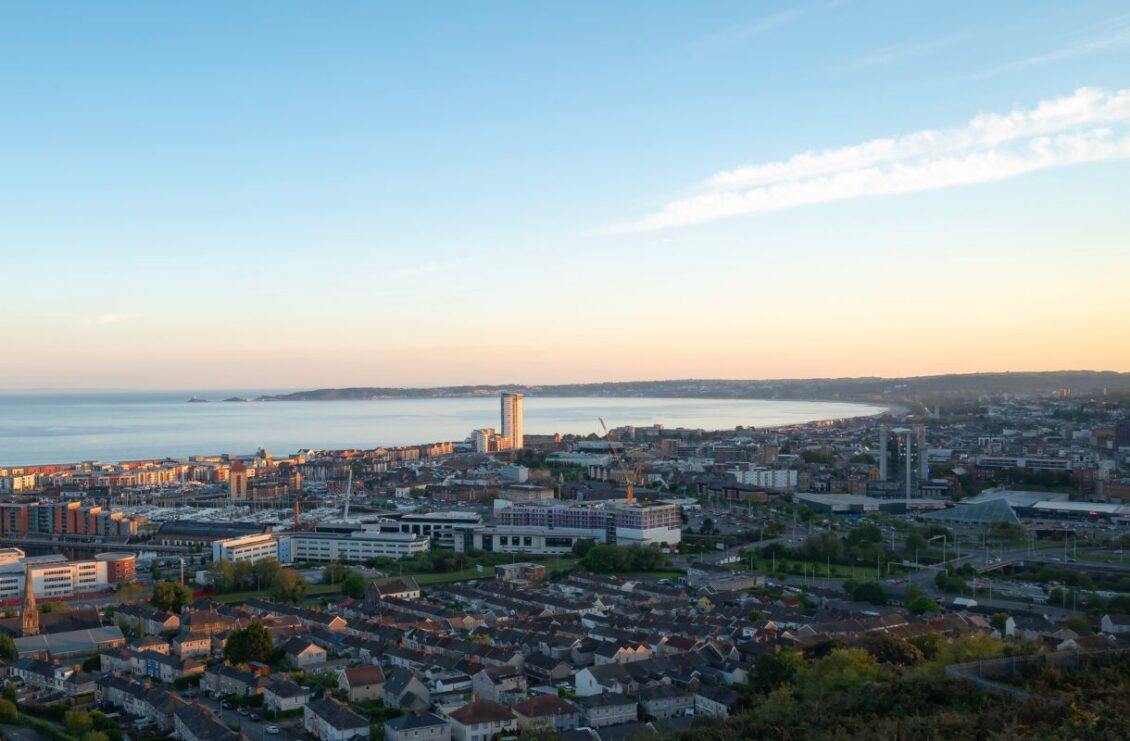
The University of South Wales (USW) has secured almost £89,000 for a new project aimed at helping housing professionals work together more effectively to improve the energy efficiency of social homes across the Swansea Bay City Region.
The £88,739 project will see USW researchers develop a new training programme over the next year for professionals involved in upgrading social housing.
Buildings account for around 40% of the UK’s carbon emissions, making improvements to their energy efficiency an important part of efforts to cut emissions, reduce energy bills and create a more sustainable future.
Rather than focusing solely on the technologies used to make homes more energy efficient, the USW project will concentrate on improving the communication and decision-making skills needed to deliver successful upgrades.
The training will use realistic simulations that allow participants to work through real-life scenarios and explore how their decisions could affect projects and residents.
Housing associations, local authorities, contractors and other partners will take part in exercises designed to encourage greater collaboration and help organisations learn from each other.
Up to 150 professionals are expected to participate in the programme.
The project has been developed with support from organisations including Codi Group, United Welsh, Caredig, Swansea Council, Beacon Cymru and Sero.
Dr Dan Bowers, Head of Psychology and Project Lead, said: “We are delighted to receive this funding and the opportunity to build on the work of USW’s Housing and Health Research Network.
“The project is particularly important for the Swansea Bay City Region (SBCR), which has around 50,000 social housing properties and is investing heavily in housing decarbonisation.
“A lot of attention has been given to the technologies needed to reach net zero, but technology alone is not enough. We believe that better coordination between organisations can help maximise the benefits of investment and improve outcomes for tenants.”
David Bould, Project Manager for The SWITCH to Net-Zero Buildings, said: “This is an exciting collaborative project which will transfer research outcomes into real-world applications to address the skills gap in adopting renewable technologies.
“The training will enhance the regional expertise and support available to residents, improving their experience of living in decarbonised homes, and supporting the SBCR’s transition to a low carbon economy.”
The funding has been awarded through the Engineering and Physical Sciences Research Council’s ‘Switch to Net Zero Buildings Place Based Impact Acceleration Account’.
