

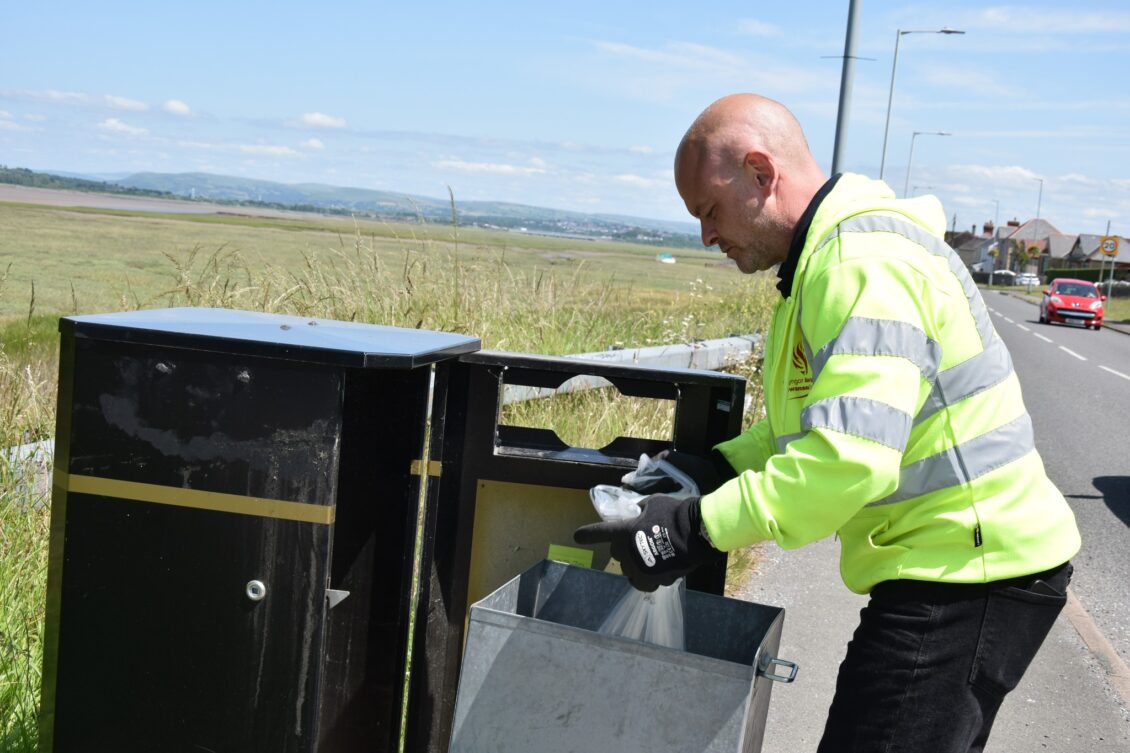
Swansea Council’s cleansing teams are piloting a brand new way to help keep rural communities tidy.
New technology being trialled in rural communities means that full litter bins are emptied in time while saving staff from making long distance visits to those that turn out to be mostly empty.
And it’s all thanks to clever new sensors fitted to bins that send a message to Cleansing Services staff telling them how full they are without having to set eyes on them.
Cyril Anderson, Cabinet Member for Community Services said: “The sensors are a win-win all round. For residents there’s less chance of them finding unsightly overflowing bins and for staff it means their time can be focussed on tackling bin and litter problems where they’re most needed.
He said: “It’s early days because we’re still piloting the scheme. But it’s looking very promising. This new initiative is part of our continuing commitment to the people of Swansea in playing our part in keeping our streets and communities clean.”
Cllr Anderson said: “There are thousands of litter bins all over Swansea, so we always welcome reports from residents when they spot a full bin as they can become full at any time.
“But the new sensors are helping us do our jobs more efficiently in rural areas which means we can play an even greater role in doing our bit to keep our communities clean.”
The technology behind the bin sensors includes a network called LoRaWAN – Low Power Wide Area Network – that enables wireless communication between devices and networks over long distances with low power consumption. The sensors themselves are powered by batteries that last up to eight years.
Stuart Willingale, Cleansing Strategy Team Leader in our Parks and Cleansing Team, says the technology is helping to better monitor bin usage in rural spots, particularly areas that experience seasonal tourism.
Stuart said: “Some of our bins are sited in fairly remote locations in places like Gower which are a considerable distance away from where our staff are based.
“Bin usage can vary considerably depending on the weather and the time of year. For example, a bin in Port Eynon close to the beach will become full much quicker on a sunny, summer’s day than on a cold, wet day in February.
“The data tells us when our Cleansing Teams need to visit a location to empty a bin – or when not to. This saves us time our teams can better use in other locations and tackling other cleansing issues. It also reduces our environmental impact of driving to a location only to be met with an empty bin.”
“We’re still in the early stages of the project following funding provided by the Welsh Government but initial indications are encouraging.”
