

In a world where urban homes are getting smaller and energy bills keep rising, modern architecture must respond. Cooling used to mean large outdoor air conditioning units, long runs of ductwork, and visible machinery. Today’s design ideas focus on compact, integrated systems that maintain comfort without compromising aesthetics or floor space. This article explores how modern home design is changing to accommodate space-saving cooling solutions, and why those changes matter for comfort, energy use, and even resale value.
The Pressures Driving Compact Cooling Design
Two trends are pushing architects and home designers toward more compact cooling systems. First, many new housing developments and infill projects come with tight footprints. Less space for utility rooms or outdoor equipment forces designers to rethink where cooling gear sits. Second, sustainability expectations are higher now. Homeowners expect efficient systems with minimal visual impact.
Traditional split-system air conditioners often require bulky outdoor condensers and lengthy refrigerant lines. In many urban homes, this is not feasible. That constraint is opening the door to alternative approaches that reduce or eliminate the need for an external unit altogether.
Core Strategies in Space-Saving Cooling
Modern design adapts through multiple strategies. The following are among the most viable.
- Ductless and Mini-Split Systems
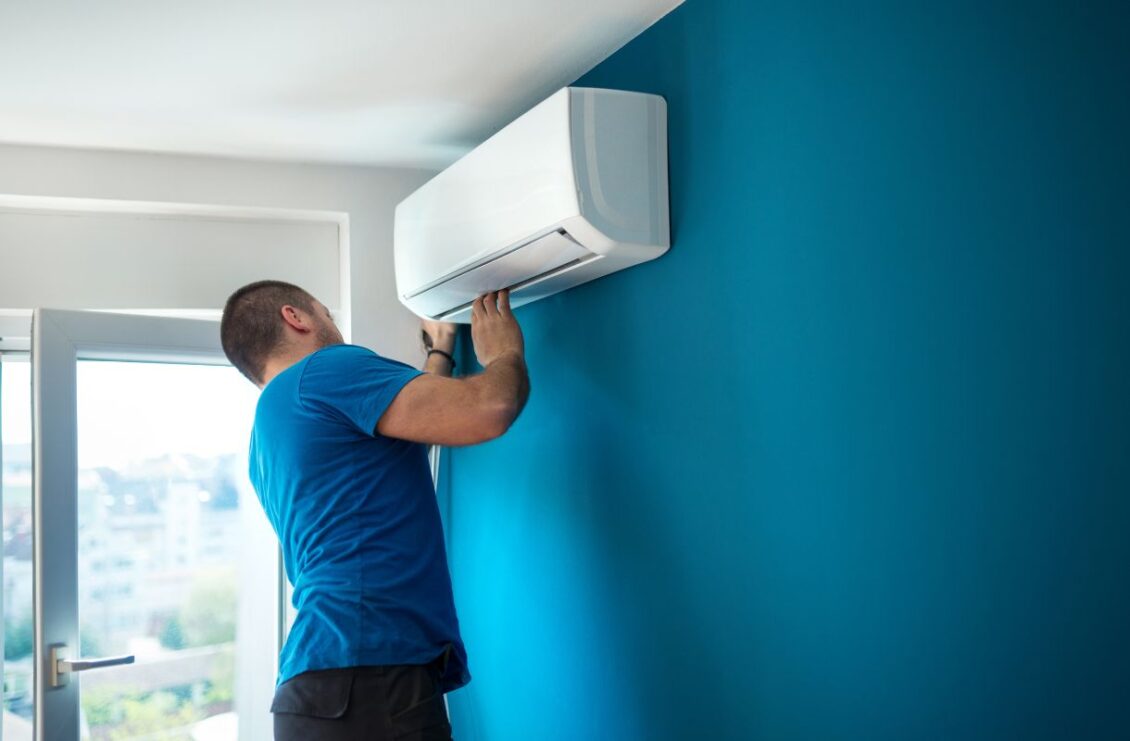
Ductless mini-split systems place indoor evaporator units on walls or ceilings, connected via small refrigerant lines to compact condensers. These systems need minimal ductwork or none at all. Their smaller size and modular nature make them ideal for retrofits or tighter modern homes.
Slimline versions mount flush to ceilings or high on walls, so they don’t intrude on furniture, windows, or décor. Clever use of airflow and zone control allows them to cool just the rooms in use, saving energy.
- Systems Without External Units
Some modern solutions eliminate the outdoor condenser entirely, moving components indoors or integrating them invisibly. A designer or homeowner can install such a system without a bulky outdoor unit. For example, homes can incorporate cooling systems inside walls, under floors, or in concealed mechanical corridors.
Those looking for residential air conditioning that avoids the need for visible exterior equipment can explore options like AC without external unit. These systems can free up façade space, reduce noise, and preserve the aesthetic of a clean building envelope.
- Chilled Beams and Radiant Cooling
Chilled beams are becoming more common in high-end residential and multi-family designs. Water circulates through ceiling-mounted beams, cooling the room by convection and radiation rather than forced air. Because water carries thermal energy more efficiently than air, ducts can be smaller or eliminated. These systems blend quietly into ceilings, freeing up wall space and removing the need for bulky machinery.
Passive chilled beams (which rely purely on buoyancy) and active chilled beams (which bring in a small amount of fresh air to induce circulation) are both in use. The idea: cooling capacity without a noisy fan or large duct system.
- Hybrid and Mixed-Mode Ventilation
Modern homes increasingly adopt mixed-mode ventilation, combining natural airflow with mechanical cooling only when needed. In mild weather, open windows, ventilated facades, and stack effect can handle cooling loads. In hotter conditions, compact mechanical systems engage. This reduces reliance on continuous air conditioning.
Double-skin façades or ventilated cavities can cloak mechanical systems inside building envelopes, further hiding components while allowing air exchange.
- Passive Cooling Techniques
Modern design is also reviving passive cooling strategies once standard in pre-air-conditioning eras. Techniques such as solar chimneys, cross ventilation, shading devices, thermal mass, and night flushing (venting at night to reduce heat gain) all reduce cooling demand.
A solar chimney, for example, uses hot air rising through a shaft to pull cooler air through rooms. That convection can reduce indoor temperatures without active cooling. Green roofs and shading also lower solar gain and thus reduce the size of required cooling systems.
Design Integration: How Homes Change to Suit Cooling
When switching from conventional HVAC to compact or hidden cooling, the home itself must adapt. Some key shifts include:
- Structural planning: Mechanical pathways are planned early. Walls, ceilings, and floors reserve shallow chases or cavities for refrigerant lines or piping.
- Ceiling design: Drop ceilings or integrated panels hide chilled beams, radiant tubing, or ductless heads. The ceiling becomes a system layer, not just a finish.
- Zoning and controls: Homes are designed in thermal zones. Each zone has its own control and minimal infrastructure, rather than forcing one-size-fits-all cooling.
- Envelope performance: High-performance insulation, airtightness, and glazing reduce cooling loads so that compact systems suffice.
- Facade strategy: Accessible to outdoor ventilation or concealed mechanical spaces helps hide condenser equivalents. Strategic courtyards or screened façades can host equipment unseen.
Designers must treat cooling as part of the architecture, not add-on afterthoughts.
Advantages and Trade-Offs
Shifting to space-saving cooling brings several benefits and some trade-offs:
Advantages
- Aesthetics: No bulky unit spoiling the look.
- Space efficiency: More usable interior or yard space.
- Quiet operation: Indoor or concealed systems can run silently.
- Energy efficiency: Less duct loss, more precise control, and lower electrical loads.
- Resale appeal: Homes with hidden systems often attract buyers seeking a clean, modern look.
Trade-Offs
- Upfront cost: Some cooling-system variants require more engineering.
- Maintenance access: Concealed systems must remain serviceable, which demands careful planning.
- Cooling capacity limits: In hot climates, compact systems might struggle or require supplemental cooling.
- Complex integration: Designers and engineers must coordinate tightly early in the project.
Future Directions
Emerging technologies promise even more compact cooling. Concepts such as tunable radiative cooling skins that reflect heat into the night sky may reduce reliance on mechanical systems. Adaptive facades that radiate or block heat based on tension or configuration may become part of the walls themselves.
Materials with phase change properties could absorb heat during the day and release it at night, shaving peak cooling loads. Solar-driven active cooling remains under development and may enable homes to run self-sufficiently.
Increasingly, architects see cooling not as an afterthought but as integral to spatial design. The home of the future will more often incorporate cooling systems invisibly in slabs, walls, panels, or structural elements.
Conclusion
Modern home design is adapting rapidly to the constraints of space, aesthetics, and energy. Cooling systems must shrink or vanish into architecture. Ductless systems, chilled beams, hybrid ventilation, and passive techniques are already shifting how residences are built. As materials and technology evolve, homes will embody climate control rather than just include equipment.
Designers embracing cooling as a sculptural and structural element unlock cleaner interiors, quieter environments, and lower energy use. In tight urban contexts, these shifts are no longer optional but essential. Modern living demands cooling systems that free up space, conceal themselves, and work in harmony with form.
