

Welsh scientists have mapped the hidden microbes thriving in south Wales’s abandoned coal mines, helping to overcome obstacles to using mine water to heat Britain’s homes.
With an estimated one-quarter of UK properties located above abandoned coal mines, the potential for geothermal heating is vast.
A pioneering heat exchange system set up in 2023 warms 350 homes and several businesses in Gateshead using naturally heated mine water. A larger project is underway in County Durham, where 1,500 homes will be heated entirely by this method.
The groundwater in flooded former coal workings is heated by natural geothermal processes and is a fertile breeding ground for naturally occurring bacteria. These microbes can significantly influence the chemistry of mine water, and have implications for the efficiency and longevity of geothermal systems.
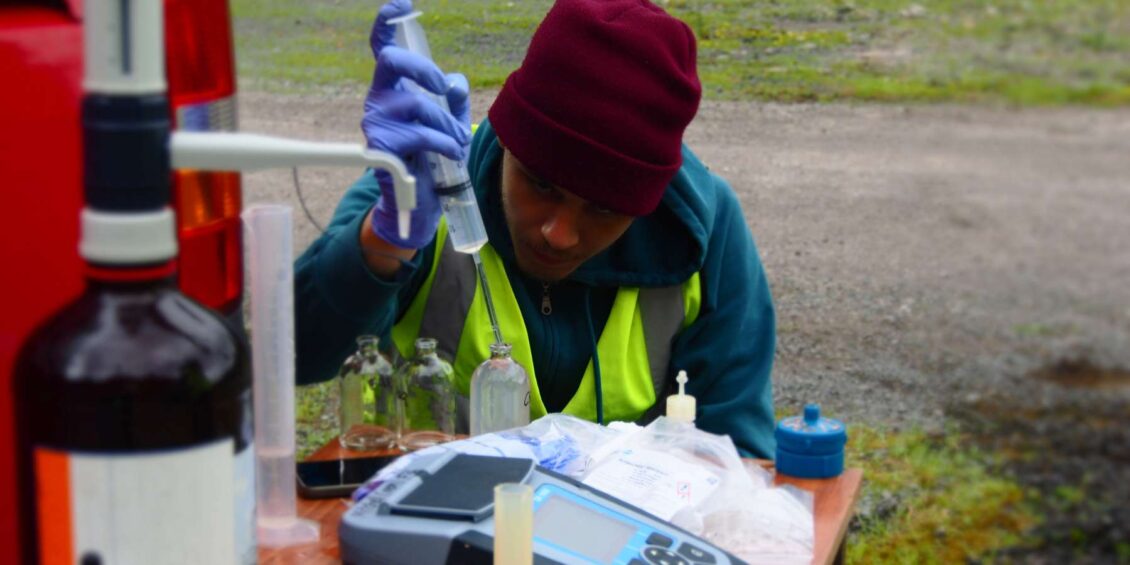
A team of microbiologists from Aberystwyth University sampled the water flowing out of old mine workings in south Wales and used advanced DNA sequencing to analyse bacterial populations and map the multitude of microbes present.
Bacteria can impact geothermal energy capture in many ways, including by affecting the chemistry of the water used, corroding pipes, and biofouling – the accumulation of biological substances on the heat transfer surfaces which reduces performance and efficiency.
Professor in Microbial Geochemistry at Aberystwyth University, Andy Mitchell, said:
“The water in flooded coal mines is a vast underused source of low-carbon energy which could heat homes and businesses across Britain. Until now, evaluating the potential of this resource as a geothermal heat source has involved temperature testing and assessing whether water can be successfully extracted and reinjected into a different coal seam after heat has been recovered.
“However, it is also vital to understand how microbial activity might affect the long-term viability of mine water heat exchanger installations.”
Published in FEMS Microbiology Ecology, the research has uncovered how underground microbial communities play an important role in cycling iron and sulphur – processes that can influence the acidity, metal content, and overall quality of groundwater.
Dr Arwyn Edwards, Director of the University’s Interdisciplinary Centre for Environmental Microbiology, said:
“In the global context, this study shows that the abandoned coal mines of south Wales offer a uniquely helpful insight into the exotic lives of the many trillions of trillions of microbes hidden deep underground.”
“Our findings show that microbial communities in these mine waters are not randomly distributed. Instead, they are strongly influenced by the underlying geology and the way groundwater flows through the coalfield. These bacteria’s life cycles and activities could contribute to the warmth of the waters rising up from deep in the coalfield, and they are key players in shaping the geochemistry of mine waters. Understanding their role is crucial for designing efficient and resilient geothermal systems.”
Much of the research was undertaken by Dr André Soares while he was a PhD student at Aberystwyth University, supervised by Professor Andy Mitchell and Dr Arwyn Edwards; and by Dr Sara Rassner, Research Fellow in the Interdisciplinary Centre for Environmental Microbiology at Aberystwyth University.
The research was supported by the Sêr Cymru National Research Network for Low Carbon, Energy and the Environment project Geo-Carb-Cymru and Natural Environment Research Council (NERC).
