

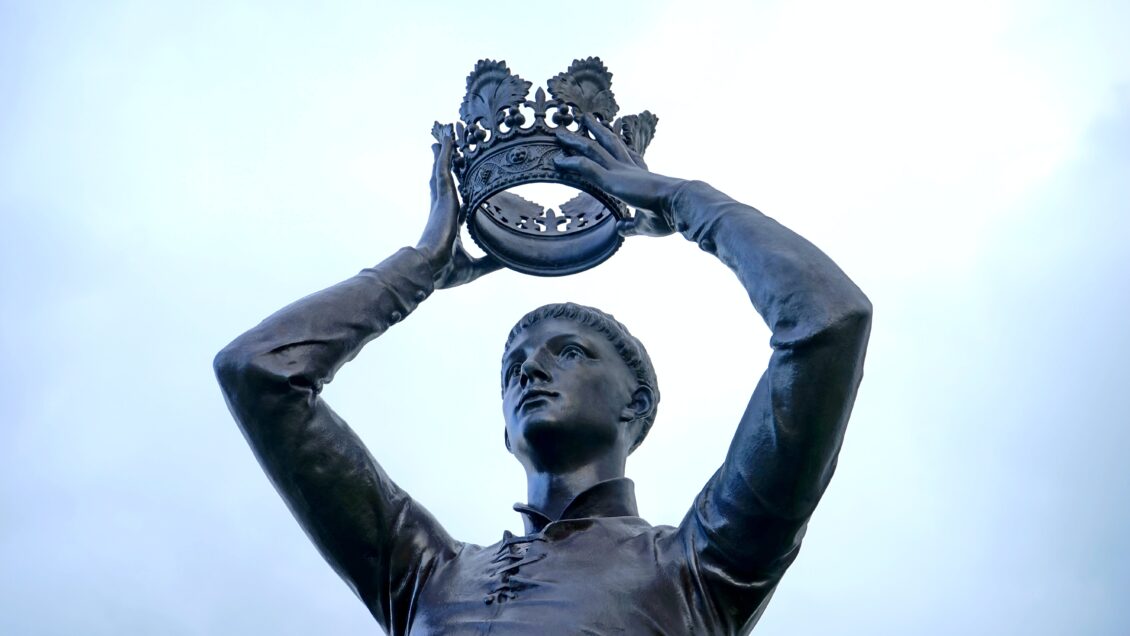
Have you ever wondered why many religious statues and paintings feature crowns and halos? Those circular golden bands and glowing rings aren’t just decorative elements that glam up Jesus, Mary, and the saints. They have deep symbolic meaning and represent divine qualities. When you see a halo in Christian art, it signifies holiness or spiritual purity. The crown, on the other hand, represents power and the sovereignty of God.
The History of Crowns and Halos in Religious Art
The use of crowns and halos in religious art has a long and symbolic history. Halos, the golden circles behind the heads of holy figures, date back to ancient Egypt and the Roman Empire, where they represented divinity and power. In Christian art, halos came to signify holiness and divine grace.
Crowns also have a deep religious meaning and were used in ancient Egypt to show a ruler’s dominion. In Christian art, crowns are a symbol of victory over worldly desires and eternal life. The crown of thorns worn by Jesus represents suffering and sacrifice.
By the Middle Ages, halos and crowns were commonly used in Christian art to depict sacred figures like Jesus, Mary, angels, saints, and martyrs. The gold colour symbolises light, purity and holiness. The circular shape of halos represented eternity, perfection, and the celestial. Crowns were a sign of spiritual triumph and the rewards of the afterlife. If you’re looking for religious stores near you who have high quality halos and crowns, be sure to check Holyart out.
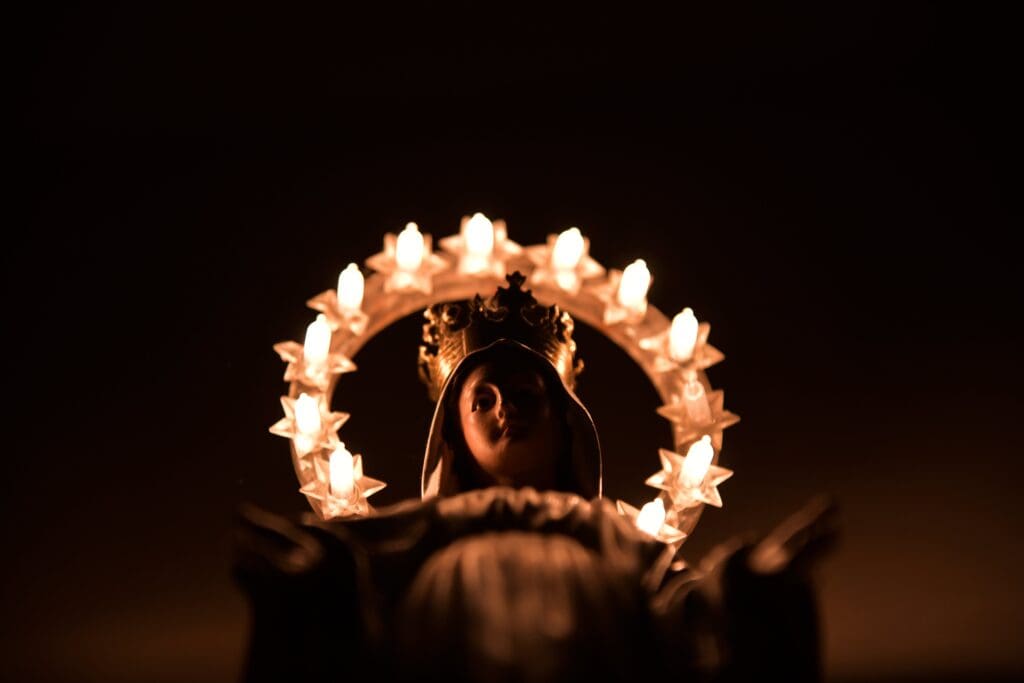
Today, halos and crowns remain popular in Catholic and Orthodox Christian art. They continue to signify holiness, divinity, and spiritual power. Their deeper meaning serves as a reminder of the virtues that faithful followers aspire to.
Halos as Symbols of Divinity and Holiness
Halos are one of the most recognizable symbols in religious art. The golden circle behind the head of a holy figure signifies their divinity or saintliness.
The halo is a luminous ring or disk of light surrounding the head of a deity or saint. Halos represent holiness, innocence, and divinity. They first appeared in Christian art in the 5th century and were later adopted in Buddhist and Hindu art. Halos visually signify that the figure is not an earthly being.
Halos are the circular glows around the heads of holy figures like angels, saints, and deities. In Christian art, halos symbolise holiness, innocence, and spiritual attainment. They are meant to evoke a heavenly light radiating from within. Halos first appeared in early Christian art and have been used in Western religious art for centuries.
Crowns as Symbol of Authority And Honor
Crowns have long been a symbol of authority, honour and glory. In religious art and iconography, crowns indicate the supreme power and spiritual status of divine figures.
Whether a simple ring of light or an elaborate, jewelled crown, they convey spiritual power, honour, glory and divine status. For the faithful, they serve as a visual reminder of the supreme authority and holiness of religious figures. Though crowns and halos originated in specific faiths, their symbolic meaning has transcended religious boundaries and spread around the globe.
In Christian art, crowns are worn by saints or religious figures to symbolise righteousness, virtue, and spiritual sovereignty. Saints are often depicted wearing crowns to signify their triumph over worldly temptations and ascension into heaven. The crown is a symbol of eternal life and being in God’s kingdom.
Conclusion
Crowns and halos in religious art are deeply symbolic. More than just decorative additions, they represent spiritual truths and the divine nature of the figures depicted. Halos signify holiness, divinity, and spiritual illumination. Crowns represent power, authority, and rulership. The next time you see a crown or halo in a religious statue or painting, remember there’s more meaning there than meets the eye. There are deep truths being conveyed about the nature of spiritual existence and our connection to the divine. Crowns and halos remind us that there is an eternal kingdom, an ultimate spiritual authority, and a transcendent holiness forever beyond our comprehension.
