

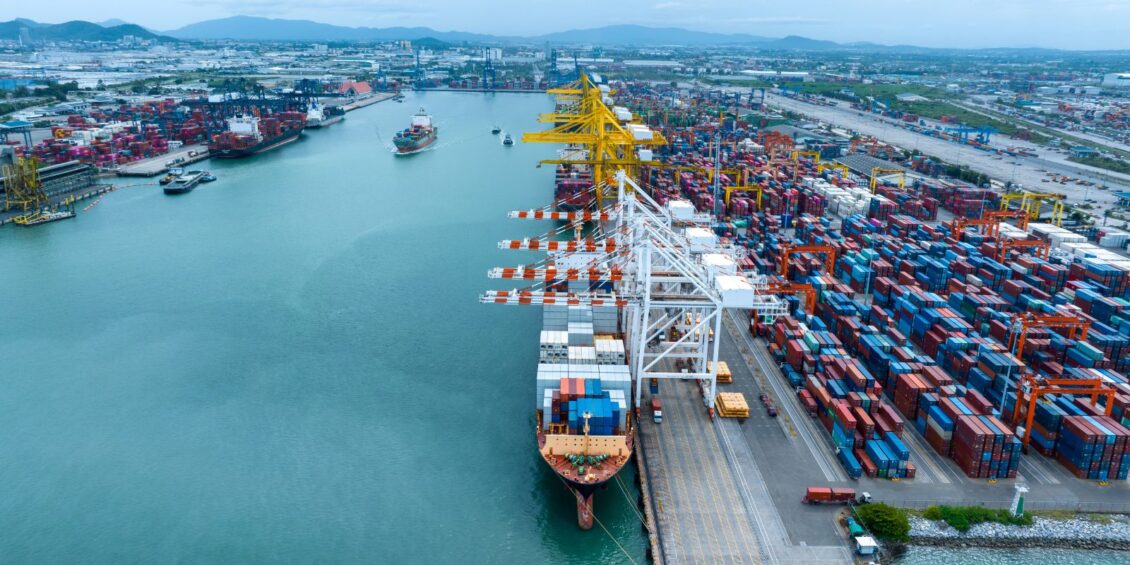
Maritime logistics and trade have long been the backbone of global commerce. With 85% of world trade transported by sea and 5.4 billion tonnes of seaborne trade being energy-related, according to Clarksons, the industry plays a vital role in connecting economies, enabling supply chains, and facilitating global economic growth. However, as with any sector, it has not remained static. The rapid advancement of technology is transforming maritime logistics, improving efficiency, enhancing safety, and reducing environmental impact.
From automation and artificial intelligence to digital platforms and greener shipping methods, the industry is witnessing a wave of innovation reshaping how goods are transported worldwide. This article explores the key technological developments influencing maritime logistics and their impact on global trade.
Digitalisation and Smart Shipping
The Rise of Smart Ports Modern ports are evolving into smart hubs with automated systems, artificial intelligence, and real-time data analytics. Digital twin technology, for instance, allows ports to create virtual models of their operations, helping to predict congestion, optimise traffic, and reduce turnaround times.
Automated cranes and self-driving cargo vehicles further streamline loading and unloading processes, reducing human error and improving overall efficiency. By implementing innovative technologies, ports can enhance productivity, reduce costs, and minimise delays, ultimately benefiting the entire supply chain.
Blockchain in Shipping The introduction of blockchain technology is revolutionising maritime trade by increasing transparency and security in transactions. Traditionally, shipping involves a vast amount of paperwork, which can be time-consuming. Blockchain provides a secure and tamper-proof digital ledger that records every transaction and movement of cargo, ensuring that all parties in the supply chain have access to accurate and verifiable information.
By eliminating intermediaries and paperwork, blockchain reduces delays, cuts administrative costs, and enhances stakeholder trust. This is particularly beneficial in cross-border trade, where efficiency and regulation compliance are crucial.
Automation and Artificial Intelligence
Autonomous Ships and Drones
One of the most groundbreaking advancements in maritime logistics is the development of autonomous ships. These vessels, equipped with AI-powered navigation systems, can operate with minimal human intervention, reducing labour costs and enhancing safety. While fully autonomous ships are still in their testing phase, AI-assisted navigation and predictive maintenance are already making a significant impact.
Drones are also being deployed to inspect ships for maintenance, deliver spare parts, and monitor maritime traffic. Their ability to reach inaccessible areas quickly makes them valuable assets in improving operational efficiency.
Predictive Maintenance and AI Analytics
AI-driven predictive maintenance helps shipping companies reduce downtime and avoid costly repairs by identifying potential mechanical failures before they occur. Sensors installed on vessels continuously collect data on engine performance, fuel efficiency, and structural integrity, allowing AI algorithms to detect early signs of wear and tear.
This proactive approach extends the vessels’ lifespan and ensures that cargo reaches its destination without unexpected delays, reducing financial losses and improving supply chain reliability.
Sustainable and Green Shipping Technologies
Alternative Fuels and Energy Efficiency
With increasing concerns about environmental sustainability, the maritime industry is shifting towards greener alternatives. Adopting liquefied natural gas (LNG), biofuels, and hydrogen fuel cells is gaining traction as companies seek ways to reduce carbon emissions.
The shift towards sustainability is clearly visible in the industry’s investment patterns. As noted by Clarksons, over 49% of global shipping tonnage on order today consists of vessels powered by alternative fuels, including LNG, methanol, hydrogen, and ammonia. Notably, 51% of all vessel orders since early 2022 are for alternative fuel vessels, underscoring the industry’s proactive approach to decarbonisation.
Energy-efficient designs, such as wind-assisted propulsion and solar-powered auxiliary systems, are also being explored to reduce fuel consumption further. These innovations align with global regulations aimed at reducing shipping’s environmental footprint.
Innovative vessel designs are also supporting the transition. In 2023 alone, Clarksons reported developments such as an ammonia floating storage and regasification barge, a battery transport vessel harnessing offshore wind energy, and an ‘E-bunker’ vessel designed to deliver electricity to ships in ports without shore-side power. These advancements reflect the sector’s creativity and commitment to cleaner energy solutions.
The Role of AI in Route Optimisation
AI-driven route optimisation tools help vessels navigate the most fuel-efficient paths by analysing weather patterns, sea conditions, and traffic congestion. By choosing optimal routes, ships can reduce fuel consumption, lower costs, and minimise delays caused by adverse weather conditions.
This benefits shipping companies financially and contributes to sustainability efforts by reducing emissions and conserving resources.
Conclusion
Technology is redefining maritime logistics and trade, improving efficiency, security, and sustainability. From smart ports and blockchain to AI-driven automation and green shipping solutions, the industry is undergoing a digital revolution shaping the future of global commerce.
According to Clarksons, the future looks promising, with annual newbuild investment in ships projected to rise from ~$90 billion (2012–2022) to ~$150 billion per year from 2023 to 2033. This significant increase highlights confidence in technological innovation and a strong commitment to building a greener, more efficient global fleet.
As Clarksons’ data shows, the shipping industry is not just adapting, it is leading the charge towards a more sustainable and technologically advanced future.
