

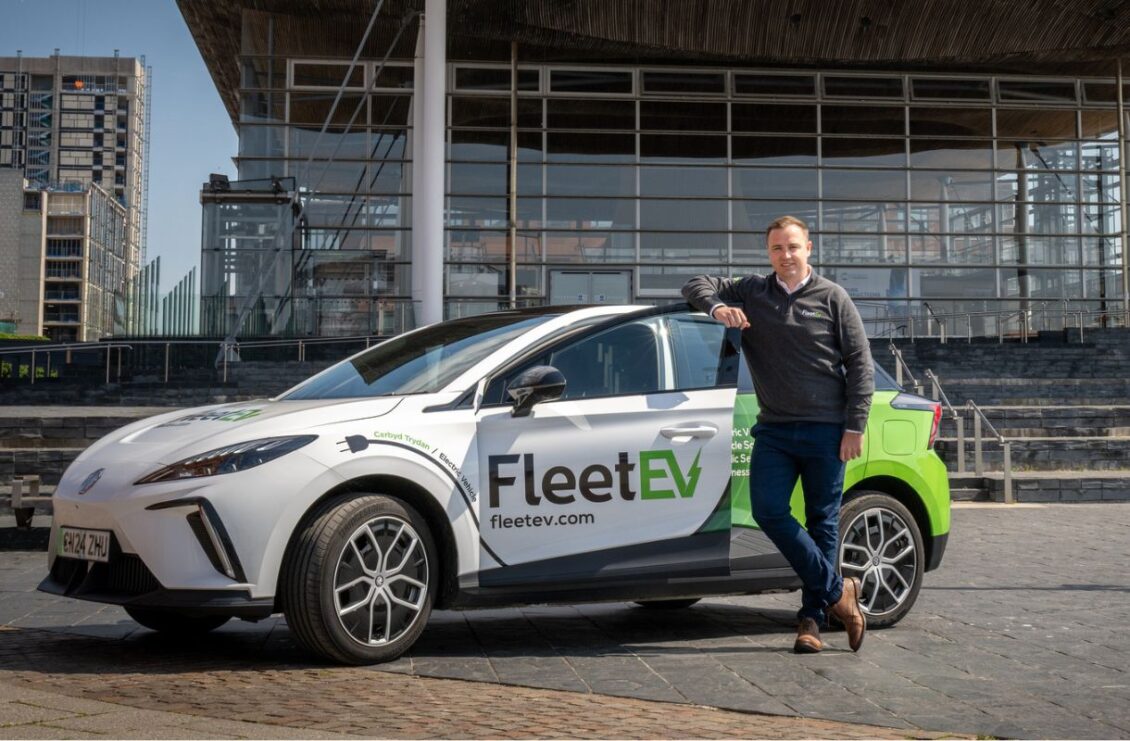
Welsh electric vehicle specialists have welcomed the Welsh Government’s commitment to deliver a renewed EV strategy for Wales, while calling for the next phase to focus on practical measures to accelerate the transition.
The commitment forms part of the Welsh Government’s new Programme for Government for 2026 to 2030 and sits alongside plans to review and refresh the wider Wales Transport Strategy.
Further details on the renewed EV strategy, including its timetable, funding and specific targets, have yet to be published.
Cardiff-based FleetEV and PLUG Charging have welcomed the announcement, saying the renewed strategy provides an opportunity to build on the progress already being made across Wales.
Recent analysis by the Welsh Government Energy Service found there are now 2,045 electric vehicles operating across the Welsh public sector.
The analysis estimates the fleet is avoiding the purchase of around 2.4 million litres of diesel each year, worth up to £3.7 million, while delivering net annual energy cost savings of between £1.4 million and £1.9 million after charging costs are taken into account.
Jarrad Morris, Founder and CEO of FleetEV and PLUG Charging, said:
“We welcome the Welsh Government’s commitment to a renewed EV strategy for Wales. This feels more like an evolution of the direction Wales is already travelling in than a complete overhaul, but it is a positive step from the new Government and an opportunity to look again at what is needed to accelerate the transition.
“We now need to see the detail. For fleets in particular, the next phase has to be about practical delivery and making sure investment is targeted where it can have the greatest impact.
“The latest public sector figures show what is already possible, with more than 2,000 EVs helping to avoid around 2.4 million litres of diesel purchases every year. The challenge now is how we build on that progress across both the public and private sectors.
“That means helping organisations understand which vehicles can realistically switch to electric, based on real-world mileage, duty cycles and operational requirements, rather than assuming every vehicle should change at the same time.
“It also means looking at the infrastructure behind those vehicles. EV charging and integrated Battery Energy Storage Systems (BESS), alongside grid capacity, shared charging and renewable generation, all need to be considered as part of the same conversation.”
“A renewed strategy gives Wales an opportunity to bring vehicles, charging and energy infrastructure together. We look forward to seeing how the Welsh Government intends to turn that commitment into practical measures that help more organisations make the transition.”
The Welsh Government’s Programme for Government also includes plans to develop a National Energy Strategy setting out Wales’s current and future energy needs and the infrastructure required to meet them.
