

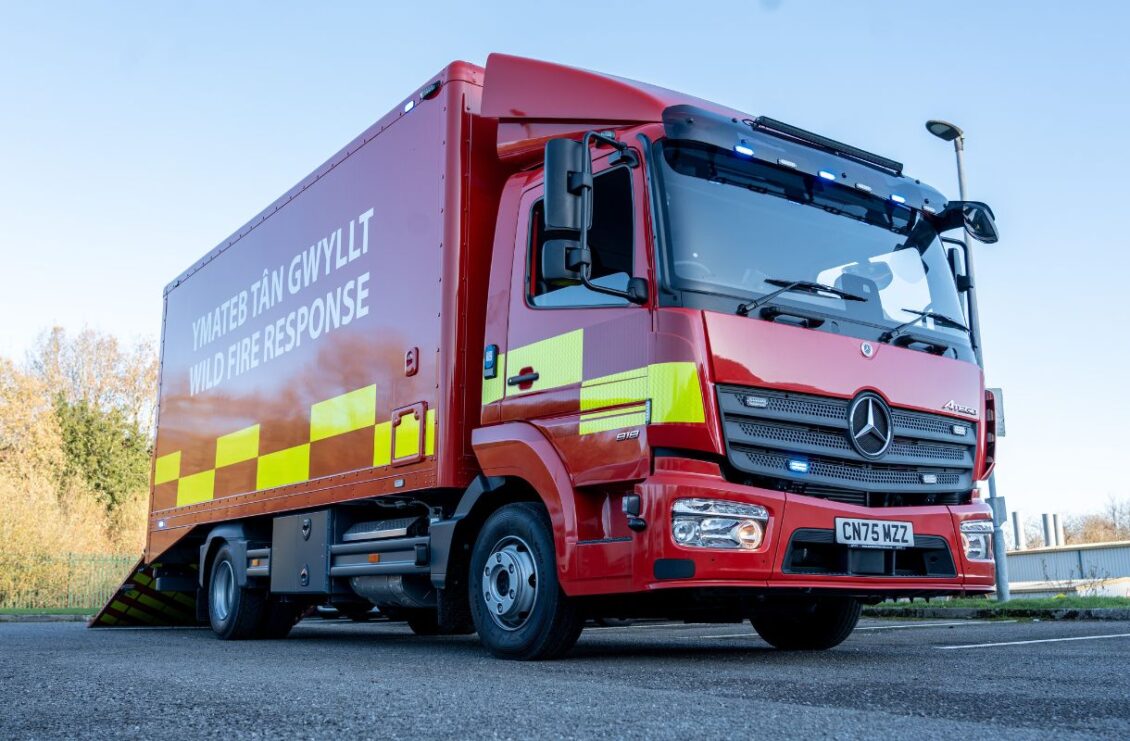
South Wales Fire and Rescue Service (SWFRS) has unveiled a pioneering new welfare and wildfire vehicle – the first of its kind in the UK.
Built and designed in Wales utilising a Mercedes lorry supplied by Euro commercials Cardiff, the vehicles have been custom-built by local body company Neath Coach Builders (and emergency warning systems installed by Elite of Bridgend) to meet the unique demands of prolonged emergency operations.
Designed to transport the Service’s wildfire response – Can-Am 6×6 all-terrain vehicles – the fleet of four are the result of a collaboration between Fleet, the Wildfire Group and Operational Risk Management (ORM) based at SWFRS Headquarters. The new units will replace the existing land rover and trailers, providing a safer response vehicle for the crews.
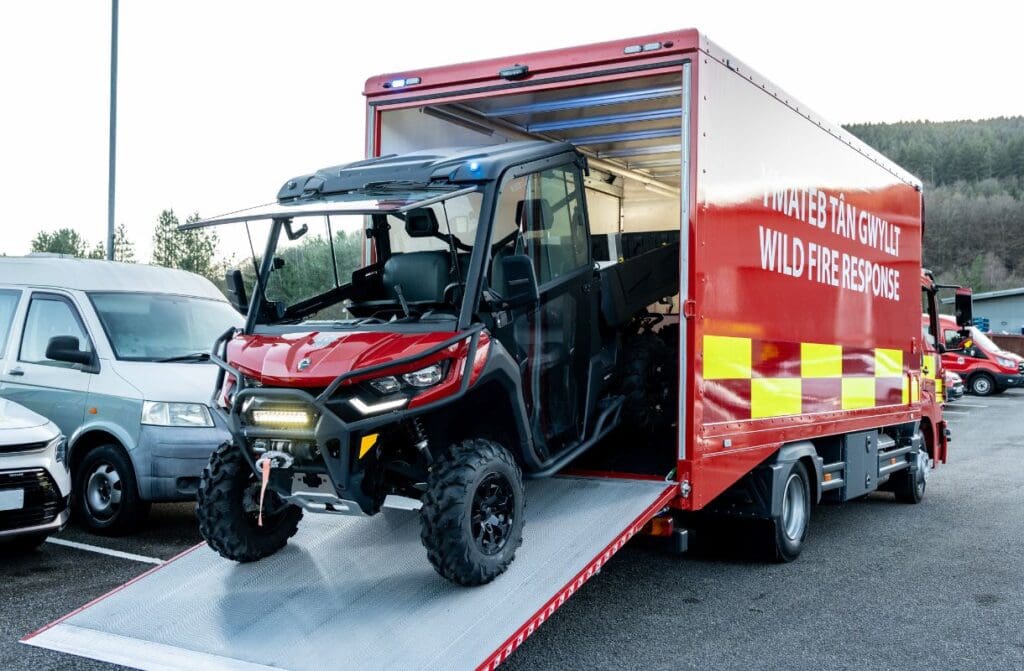
The new design supports firefighters working long hours on the ground and is equipped with essential welfare facilities including a toilet, microwave and fridge, ensuring that crews can rest and recover while remaining close to the incident scene.
The introduction of the new welfare and wildfire vehicle not only enhances operational capability, but also reinforces the Service’s dedication to firefighter well being. By ensuring crews have access to vital support facilities and specialised equipment at incident grounds, SWFRS is strengthening its ability to respond effectively while prioritising the health, safety, and resilience of its staff.
The project highlights the crucial and often unseen work of the Service’s highly skilled fleet and engineering department – specialists responsible for maintaining a fleet of over 480 emergency vehicles, each undergoing four services a year, ensuring they are operationally ready at all times.
The department’s role is far more than fixing engines; it’s about saving lives through readiness. Every second counts in an emergency, and the reliability of each appliance directly affects response times, effectiveness, and ultimately, public safety.
SWFRS mechanics work in a high-stakes, fast-paced environment, ensuring that critical equipment – from water bowsers and aerial ladder platforms to specialised rescue vehicles – is always ready to respond.
These are not ordinary vehicles. Modern fire appliances are complex, high-tech machines featuring intricate electrical systems, advanced pumps, and digital diagnostics. Mechanics combine traditional hands-on expertise with cutting-edge technology, diagnosing and solving problems quickly under pressure.
With over 450 vehicles in operation across the Service, the engineering team provides 24/7 support, 365 days a year, to keep front-line crews mobile and mission ready.
Their work is a balance of mechanical precision, technical knowledge, and quick decision-making – ensuring that every firefighter who answers a call can rely on their equipment without hesitation.
“This project is a perfect example of how innovation and teamwork can deliver real benefits for our crews,” says Chris Temby, Head of Fleet & Engineering Services.
“Our mechanics play a vital role in ensuring that every vehicle in our fleet is ready for any situation – from wildfires and floods to large-scale rescues. They are the silent backbone of our operational response.”
