

With moving costs climbing and buyer expectations shifting, more Welsh homeowners are investing in the property they already own. The kitchen remains the room most likely to move a home’s value, but not every upgrade delivers the same return.
The stay-and-improve calculation
Across Cardiff, Caerphilly, Newport, Bridgend, the Vale of Glamorgan, the Valleys and the rest of Wales, homeowners are quietly running the same numbers. Moving home has become expensive. Land Transaction Tax (Wales’s stamp duty equivalent), legal fees, estate agent costs, removal bills and the disruption of relocating all add up.
Many are choosing to stay put and invest in the home they have. The kitchen is consistently the room that drives the biggest return. The right upgrades add genuinely meaningful value. The wrong ones add cost without return. In 2026, with materials, finishes and design expectations all shifting, knowing what actually moves a Welsh home’s value matters more than ever.
Why the kitchen leads the conversation
Research from Nationwide, Halifax, Houzz UK, Rightmove and Zoopla has consistently placed the kitchen as the most influential room in UK home valuation. A well-considered renovation can return between 5% and 10% in value uplift, depending on property type and location, with extensions capable of adding more.
Welsh property values across Cardiff, Penarth, Cowbridge, the Vale of Glamorgan, Newport and Monmouthshire have supported strong returns on quality kitchen investment over the past decade, while moving costs, particularly Land Transaction Tax, have made staying and improving more attractive than upsizing for many families. Buyer expectations have shifted decisively: those viewing Welsh family homes in 2026 expect considered, modern kitchen specifications. Hybrid working has reshaped kitchen use too, with families now using kitchens for working, schooling, hosting and entertaining as much as cooking.
Underneath the visible trends sits a clear pattern: certain kitchen upgrades deliver consistent value uplift, while others deliver enjoyment without matching resale return.
For Welsh stone worktop specialists, the kitchen upgrade conversation has been clear for some time. Stonerite Ltd, a Caerphilly-based stone kitchen worktops fabricator and installer established in 2007, operating from a 12,000 sq ft warehouse and supplying retail homeowners and trade customers across Wales and the UK, has watched demand for quality worktops shift meaningfully. According to a company spokesperson, worktops are one of the most consistently cited single upgrades by Welsh homeowners looking to improve daily living or support long-term home value.
Five upgrades that consistently add value
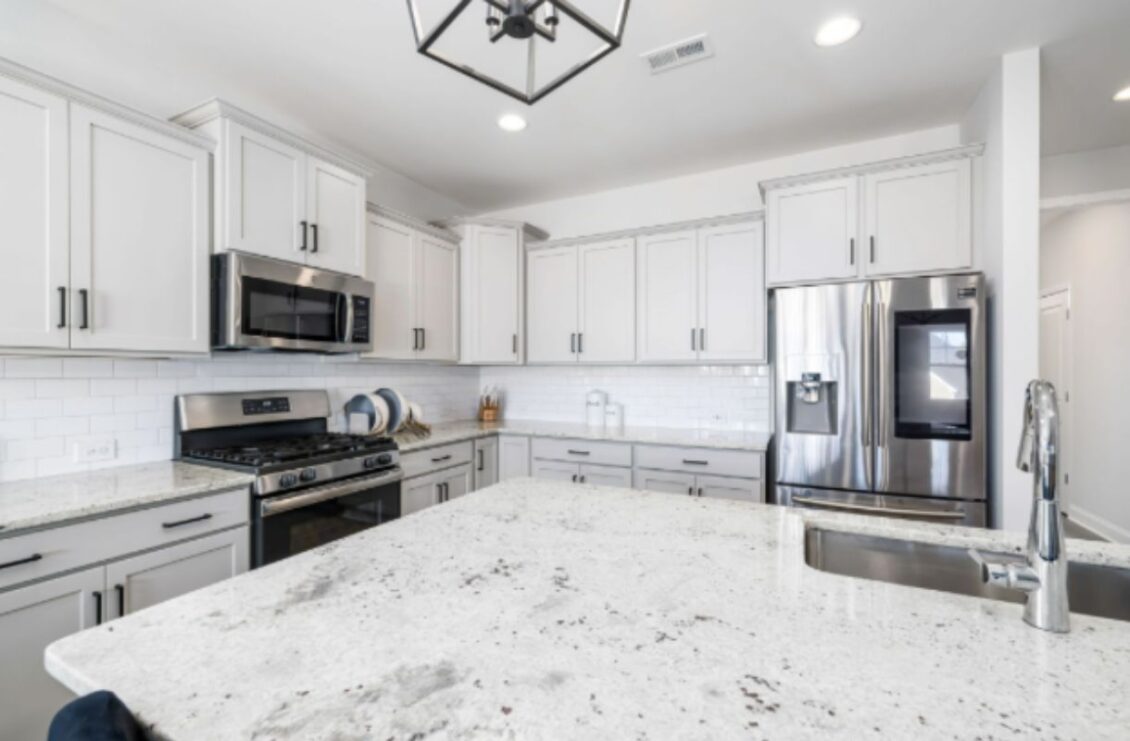
Stone worktops appear across Houzz, Nationwide, Halifax and estate agent surveys as a top specification buyers actively seek. Quartz, granite and engineered stone, including Silestone, Caesarstone, Sensa Granite, Compac and own-brand alternatives, have replaced laminate as the expected mid-to-upper market standard. Heat resistance, scratch resistance, hygiene and the visual continuity of an unbroken surface all support daily enjoyment and resale value. Typical investment: £1,500 to £6,000 depending on size, stone selection and complexity.
Quality cabinetry and considered storage make an immediate difference. Soft-close hardware, pull-out larders, deep drawers, corner solutions and integrated bins affect usability and buyer perception in equal measure. Door style and finish matter too: shaker, slab and finishes from matte and soft-touch to painted timber and real wood veneer all read differently in property photography. Typical investment: £4,000 to £15,000.
A considered layout with integrated appliances remains one of the most sought-after features in Welsh family homes. Knocked-through kitchen-dining spaces, island or peninsula additions and built-in appliances provide the open-plan living hybrid working has reinforced, while a properly considered work triangle between hob, sink and fridge still affects daily usability significantly. Typical investment: £6,000 to £25,000 for layout changes, £3,000 to £8,000 for appliance packages.
Quality flooring bears the wear of the highest-traffic room in the house. Engineered wood, quality LVT and large-format porcelain have replaced laminate, lino and lower-grade vinyl as expected standards. Continuous flooring between the kitchen and living spaces supports open-plan logic, and underfloor heating integration has become increasingly common in Welsh renovations, particularly valuable given the climate. Typical investment: £1,500 to £5,000.
Modern lighting is often the most under-invested area and one of the most rewarding. Under-cabinet LEDs, pendant lighting over islands and breakfast bars, and layered schemes combining ambient, task and accent all affect how a kitchen looks and lives. Dimmer and smart lighting integration is now standard in considered kitchens. Typical investment: £500 to £3,000, making it one of the cheapest interventions with disproportionate impact.
Where the return falls short
Bold colour schemes that suit current owners can narrow buyer appeal, while neutral palettes consistently perform better. Over-specification is a common misstep: a £40,000 kitchen in a £180,000 property rarely recovers its cost. Premium appliance brands lose impact when surrounded by lower-grade cabinetry and worktops. Removing features buyers expect, like dining space or storage, to pursue minimalism can work against family-home appeal. Trend-driven choices date quickly. And cheap shortcuts on worktops, hinges, drawer runners and lighting reveal themselves fast, undermining the perceived standard of the whole room.
A specialist perspective
According to a spokesperson for Stonerite Ltd, Welsh demand for quality kitchen specifications has grown materially over the past five years, particularly for stone worktops, integrated lighting, considered cabinetry and proper kitchen-dining layouts.
“What’s changed isn’t just the volume of renovations, it’s the conversations. Welsh homeowners arrive better informed, more specific about what they want, and increasingly thinking about daily living quality alongside long-term resale value.
“The single biggest specification mistake we see is mismatching kitchen investment to property value, over-specifying in modest properties, under-specifying in higher-value family homes. What works consistently is matching quality across the full specification. Worktops, cabinetry, appliances, flooring and lighting all need to sit at a comparable level for the whole kitchen to read properly.
“My advice to any Welsh homeowner thinking about a kitchen upgrade is to plan the full project before starting, and invest in the elements, cabinetry, worktops, and layout that you’ll see and use every day for the next 15 to 20 years.”
Getting the practicalities right
Match the upgrade to the property: a £25,000 kitchen suits a £450,000 home, but the same specification in a £200,000 property is unlikely to recover its cost. Plan the full project in one go rather than staging over the years. Get three or more quotes to clarify the market. Welsh-based fabricators and installers typically offer better aftercare and faster response than distant national suppliers.
Keep all warranties, certificates and specification documents for conveyancing. Kitchen renovations do not require planning permission in Wales, and refitting does not generally need building regulations approval, although drainage or electrical works may require sign-off. Realistic full kitchen budgets in Wales sit between £15,000 and £50,000, with most projects taking four to eight weeks.
The upgrade that counts
The Welsh homeowner weighing up moving against improving has more options than ever in 2026. A considered kitchen renovation, focused on upgrades that consistently add value, remains one of the most reliable ways to invest in a Welsh family home. The most valuable upgrade is not the most expensive. It is the one that matches the property, suits the family living in it, and reads as a coherent, considered investment when the time comes to sell.
