

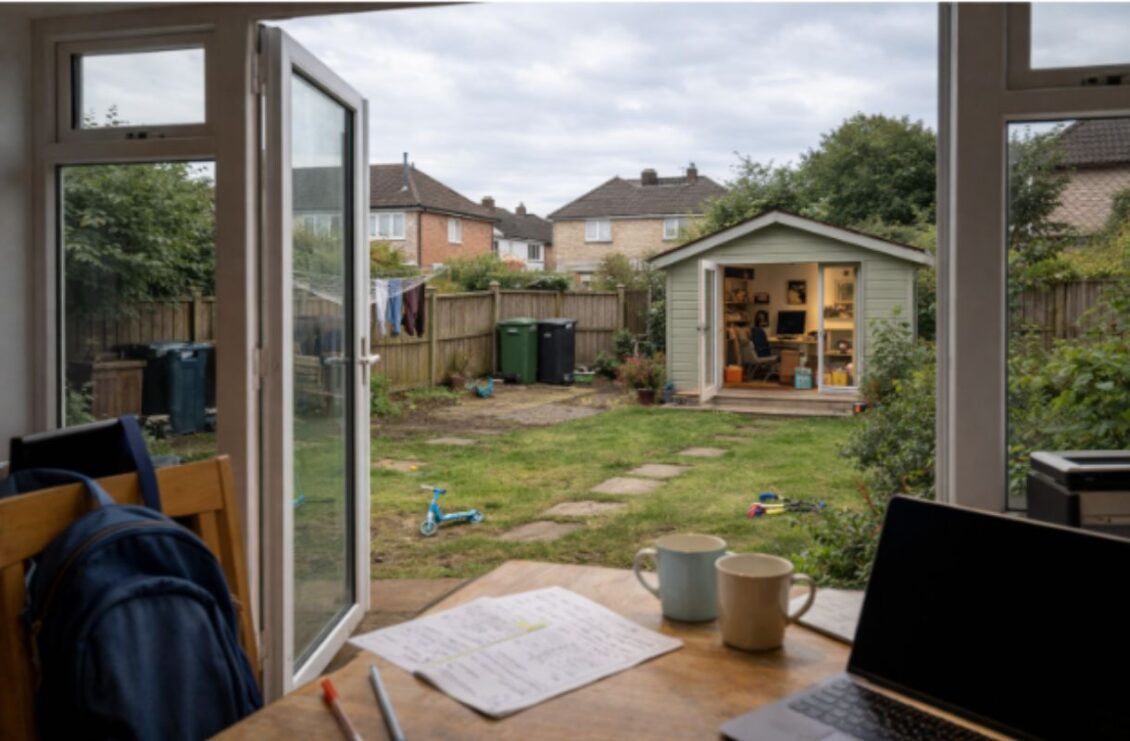
More Welsh homeowners are looking for ways to make their properties work harder as changing routines, remote working and family life put added pressure on existing space.
More households across Wales are looking for extra room
Around 3 in 5 Welsh homeowners now want more living space, highlighting a wider shift in how homes are being used across the country. For many households, space that once felt adequate is now under pressure from work, family life and changing daily routines.
That is making the issue increasingly relevant for homeowners across Wales. It is no longer only about the size of a property, but whether it can support the way people now live.
Changing lifestyles are reshaping expectations at home
Remote and hybrid working have played a major part in that shift. Spare bedrooms, dining areas and living rooms are now often expected to support work as well as everyday home life.
At the same time, families are spending more time at home overall. That has increased demand for spaces that can handle different activities without forcing everything into the same few rooms. Whether it is work, exercise, study or simply a quieter place to sit, flexibility has become more important.
Many homes were not designed for modern living patterns
The difficulty is that many homes were not built with these demands in mind. Internal layouts can feel limited once rooms are expected to serve several functions at once.
For some homeowners, an extension may appear to be the obvious answer. In practice, that option is not always realistic. Extensions can be expensive, disruptive and not always feasible depending on the property and available space.
That has left many households looking for another way to create more usable space.
More homeowners are considering alternatives
As a result, attention is shifting towards options that can provide extra space without major building work. Homeowners are increasingly looking for practical ways to adapt their properties to modern life without significantly altering the main structure of the house.
That change in approach is helping alternative solutions gain more attention.
Garden rooms are becoming more common across Wales
One of the clearest examples is the rise in garden rooms. Across Wales, they are becoming a more popular option for homeowners who want flexible space that sits separately from the main house.
They are being used in a range of ways, including as home offices, gyms, studios and additional living areas. Their appeal lies in the fact that they create dedicated extra space while helping to reduce pressure on the rest of the home.
For households trying to balance work and family routines more effectively, that separate area can make a noticeable difference.
What local specialists are seeing
Eden Landscapes is a Cardiff-based specialist in garden room design and installation, with more than 20 years of experience delivering bespoke garden buildings and landscaping projects across South Wales.
The company says it has seen a significant rise in enquiries in recent years, particularly from homeowners looking for flexible, multi-use space. According to Eden Landscapes, garden rooms are increasingly being viewed as a practical long-term solution that can adapt to work, family life and changing routines.
Demand is strong in Cardiff and the surrounding areas
The trend is particularly visible in Cardiff and nearby areas, where outdoor space often makes garden rooms a realistic option. For many homeowners, they offer a way to create additional living space without the scale of a full extension.
That local picture also reflects broader housing trends across Wales. Gardens are increasingly being viewed as part of the usable living environment rather than simply as outdoor background space.
A growing option for homeowners who need more space
For homeowners looking to create additional living space without extending, garden rooms are becoming an increasingly popular option, with more information available from specialists such as Eden Landscapes.
Their growing appeal reflects a simple need: more flexible space that works with modern home life.
Flexible living is likely to remain a priority
Demand for extra space is unlikely to ease in the near term. Homes are continuing to evolve in response to new routines, and flexibility is becoming a more important part of how properties are used.
As the way people live continues to change, so too does the way they use the space around them.
