

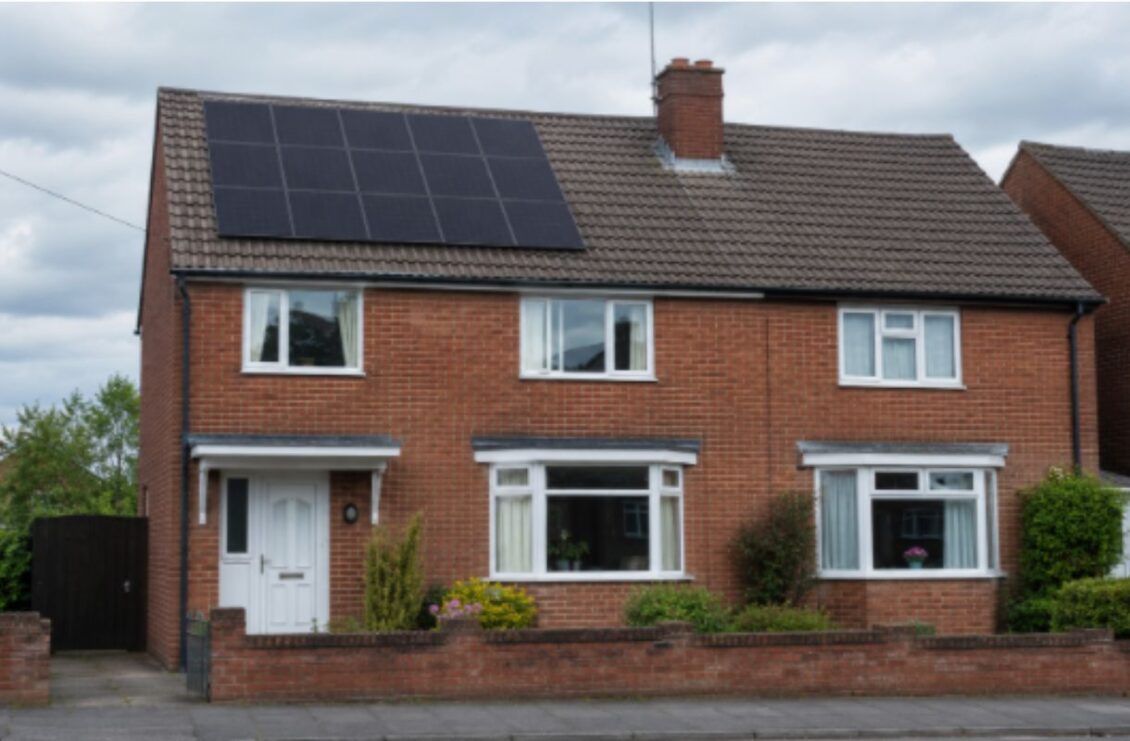
A tax break worth between £300 and £850 on a typical installation ends on 31 March 2027. With Welsh Government interest-free loans available and installer books filling, the window is narrower than most households realise.
A deadline quietly approaching
On 31 March 2027, the 0% VAT rate on solar panels and battery storage installations is scheduled to end. Without further extension, VAT on residential installations would revert to 5% from April 2027, adding between £300 and £850 to a typical Welsh household installation. Alongside Welsh Government interest-free loans, ECO4 Flex funding for lower-income households and continued energy bill volatility, Welsh homeowners are paying closer attention to a window that will not stay open. For some, the question is no longer whether to consider solar. It is whether to act before the deadline closes.
The landscape shifting across Wales
The 0% VAT relief on energy-saving materials was introduced in April 2022 and confirmed through to 31 March 2027. The Welsh Government’s Green Homes Wales scheme, managed by the Development Bank of Wales, offers eligible owner-occupiers interest-free loans of up to £25,000 repayable over ten years with a six-month repayment holiday, with more than £5 million in new funding committed for 2026-27. ECO4 Flex continues to support qualifying lower-income households. Welsh solar installations have grown year on year according to MCS and Solar Energy UK, and battery storage adoption has accelerated alongside smart tariffs that pay households for exporting stored electricity at peak times.
Welsh installers have had a front-row seat to the shift. Quantum Renewables, a Bridgend-based MCS-accredited installer working across Cardiff, Swansea, Newport, the Vale of Glamorgan and wider South Wales, has seen demand rise sharply through 2025 as homeowners have grown more aware of the 2027 deadline and the support currently available.
What the 2027 deadline actually means
The 0% rate covers solar panels, battery storage, heat pumps and other qualifying energy-saving materials in residential properties, per HMRC VAT Notice 708/6. Without an extension, VAT reverts to 5% from April 2027. For a typical three-bedroom Welsh home, the installation costs £6,000 to £10,000, which adds £300 to £500. For larger systems with battery storage at £10,000 to £17,000, the post-2027 increase could reach £500 to £850. No extension has been confirmed, and Welsh installer books fill earlier as deadlines approach.
Why Welsh households are looking now
Welsh household energy bills remain materially higher than pre-2022 levels, with Wales recording some of the highest fuel poverty rates in the UK, according to National Energy Action Cymru. Lower median incomes relative to England mean energy costs take a higher share of household budgets. Much of Wales’ older terraced and semi-detached stock is well-suited to solar. South Wales receives well over 1,200 sunshine hours annually, and modern panels generate effectively across Welsh roof types. Smart tariffs, including Octopus Flux, have made combined solar and storage attractive even for households with average daytime usage, and Swansea University research has shown UK homes with solar gain 6 to 7% in property value.
What Welsh homeowners should actually know
MCS accreditation is the minimum standard that matters, required for the Smart Export Guarantee, through which Ofgem-regulated suppliers pay households for surplus electricity exported to the grid, and for conveyancing documentation when a solar property is sold. Most Welsh homes need no planning permission under Permitted Development Rights, though listed buildings and conservation areas, including parts of Pontcanna, Roath and central Cardiff, require council consent. The 0% VAT relief, Green Homes Wales loans, ECO4 Flex and Smart Export Guarantee can be used in combination depending on eligibility. Battery storage has become the bigger story in many enquiries, and South Wales’ mix of Victorian terraces, post-war semis, new-builds and hillside streets means local knowledge of roof orientation and shading matters.
What South Wales installers are seeing on the ground
“Welsh households are far more aware of the 2027 VAT deadline than they were 12 months ago, and that has translated directly into stronger enquiry volumes,” says John Collett, founder of Quantum Renewables. “Battery storage has become the single biggest shift. It is no longer just about generating power; it is about storing it for evening use and selling surplus through smart tariffs. Welsh weather is not the limitation people often assume. Roof orientation, shading and panel specification matter far more. The most common mistake Welsh households make is leaving the conversation late. Installer lead times stretch sharply as deadlines approach, and 2027 will be no different.”
Questions worth putting to any installer
Is the installer MCS-accredited through a recognised scheme such as NICEIC? Do deposit protection and an insurance-backed workmanship warranty come with the contract? Will the installer register you for the Smart Export Guarantee? Has battery storage been considered, given current tariff options? Has the quote used local CF, SA or NP postcode irradiation data rather than a UK average? Is the work carried out by an in-house team or subcontractors, and what is the realistic completion lead time before March 2027? Have you checked eligibility for Green Homes Wales loans or ECO4 Flex?
The window is open, but not indefinitely
The 2027 solar VAT deadline is a date in HMRC legislation, not a sales pitch. The financial case for Welsh households today is stronger than it is likely to be after March 2027. Whether to act now or later depends on individual circumstances, but the window is narrowing. The most useful thing Welsh homeowners can do in 2026 is find out what their roof, their bills and their household need while the financial windows are still wide open.
