

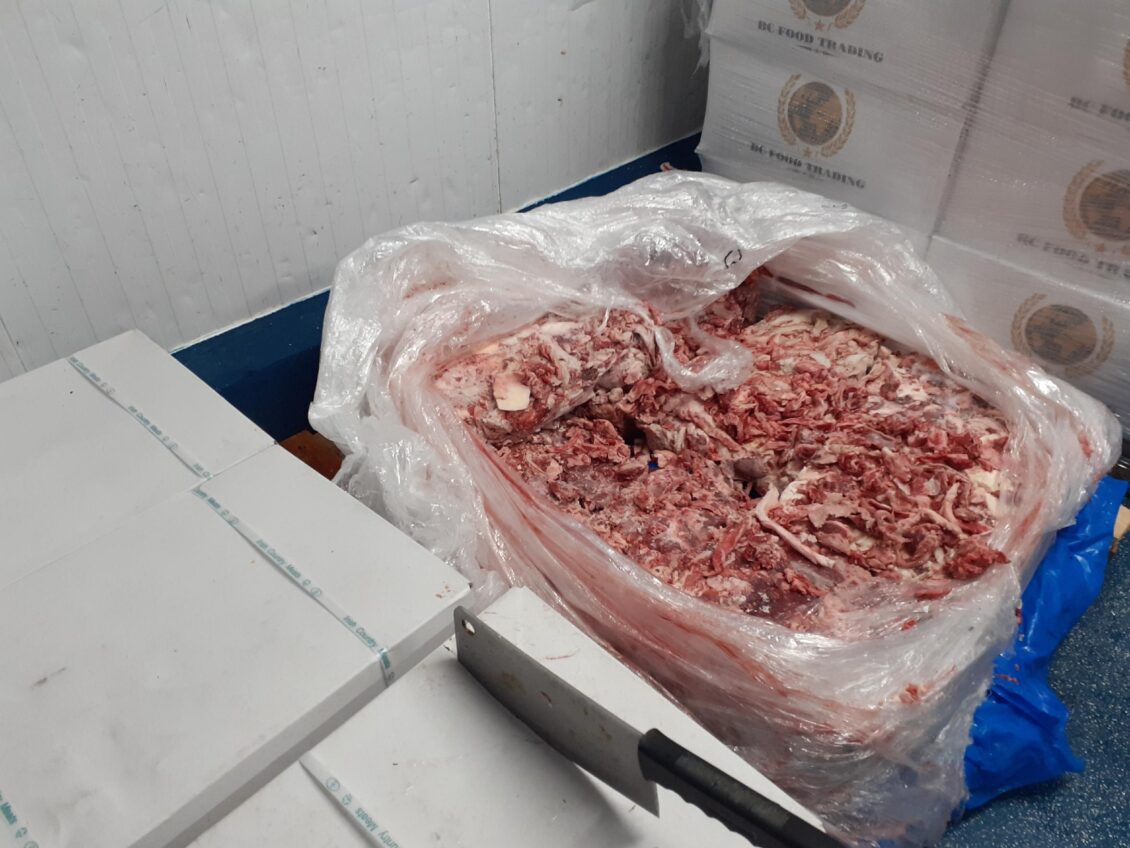
Kismet Kebabs Limited has been fined £500,000, along with £259,000 costs at Swansea Crown Court following a major investigation by Swansea Council into fraudulent food mislabelling.
On Friday 5 June, the company, based in Chelmsford, Essex, was sentenced, after pleading guilty to one offence of fraud by false representation.
Swansea Council’s Trading Standards team launched the investigation in 2020/21 after samples taken during a regional exercise raised concerns that products labelled as lamb kebabs did not match their declared contents.
Further enquiries and formal analysis found significant discrepancies between labels and the actual composition of the products.
The investigation found that over a sustained period the company had been manufacturing and supplying kebab products to food outlets across in the UK, including Swansea, with labels that falsely described the meat content.
Products marketed and sold as lamb were found in many cases to contain little or no lamb, with other lower-grade ingredients, including skin, fat and other meats, used instead.
Evidence gathered by Swansea Council included product samples, production records, recipes, invoices and material recovered during a multi-agency visit to the company’s premises. Analytical results showed that the company’s products were misdescribed and incorrectly labelled in relation to their meat content and composition.
The court heard that the fraudulent activity misled wholesalers, retailers and consumers, who believed they were purchasing higher-quality products than those actually supplied.
Swansea Council said the case demonstrates the authority’s determination to protect consumers and legitimate businesses from serious food fraud.
Rhys Harries, Swansea Council’s Trading Standards Team Leader, said: “We became aware of the actions of Kismet Kebabs when we carried out some city-wide analysis of food being offered to consumers in Swansea.
“Our investigations highlighted serious discrepancies with the food labelling of the product compared to the results of our analysis and prompted our follow-up actions against the food manufacturer.
“Consumers deserve to know that what’s going into the food they buy is what the label says it is.
“The £500,000 fine imposed by Swansea Crown Court, along costs of £259,298.67 reflects the seriousness of the offending and follows the company’s guilty plea to the offences.
“We hope that the fine and costs serve as a deterrent to other businesses who might consider selling falsely-labelled food in this way.”
