

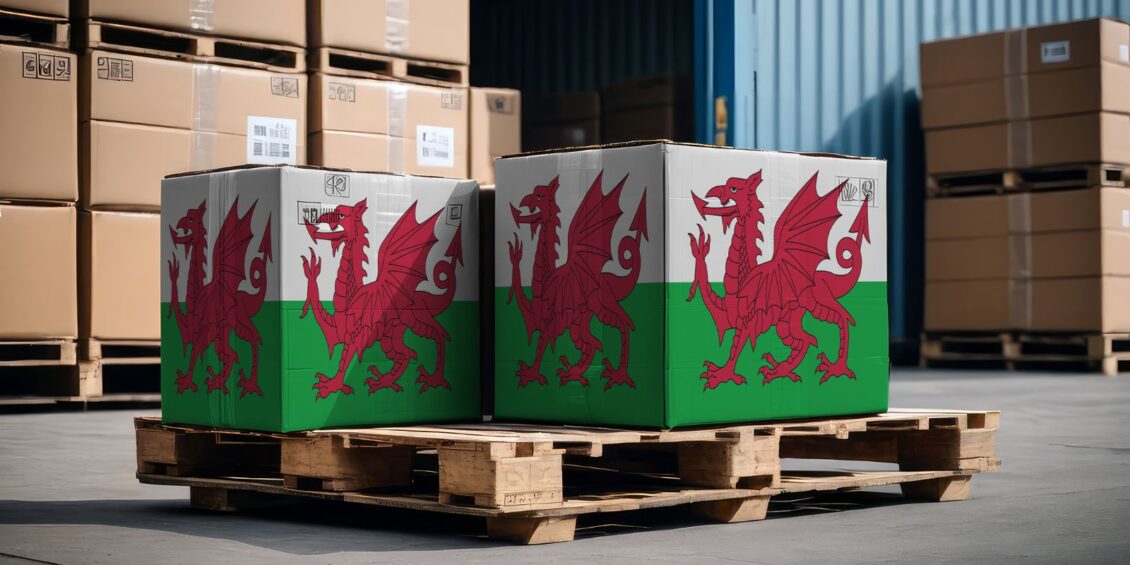
A Cardiff homeware exporter pays a supplier in Guangdong. A Swansea software firm invoices a client in Munich. Every single time, a slice disappears before the money even lands — swallowed by exchange rate markups, wire fees, charges nobody bothered to explain. Multi-currency accounts, fintech tools and newer payment rails are now giving smaller firms a way to claw that margin back.
Where the money actually goes
Ask any small exporter in Wales what keeps them up at night, and currency conversion comes up before tax returns do. Not dramatic. Not one bad decision. Just dozens of tiny deductions, month after month, quietly reshaping the bottom line.
Here’s the bit that catches most owners off guard. The fee on the invoice is rarely the real cost. Banks love to advertise “no commission” transfers while burying their margin in the exchange rate itself.
Send £10,000. The recipient gets what looks suspiciously like £9,850 after conversion. Nobody’s statement ever says where the other £150 went.
Crypto enters the toolkit
Some firms have stopped waiting for the banks to fix this and started sidestepping the system altogether. A growing number of SMEs (especially those trading with partners in Eastern Europe, Asia and parts of Latin America) are exploring digital assets as a settlement option.
Understanding how to accept crypto payments has stopped being a niche curiosity. For firms tired of correspondent-bank delays eating into cash flow, it’s now a genuine line on the payments strategy.
A system that was never built for small firms
Cross-border payments were designed decades ago around large institutions moving large sums on predictable schedules. A Welsh manufacturer paying a components supplier in Poland doesn’t fit that mould. Doesn’t matter — it still gets routed through the same correspondent banking chain, the same layers of checks, the same conversion rate the bank happens to be offering that particular morning.
This isn’t an isolated gripe. According to the Bank of England, cross-border payments lag domestic ones on cost, speed, access and transparency and in some instances, a cross-border payment can cost up to 10 times more than a domestic one.
Ten times. Sit with that for a second. Would you pay ten times more for a domestic invoice just because the bank felt like charging it? No. Yet that’s roughly what happens every time a payment crosses a border through the old rails.
Add the FCA’s own findings to the pile — regulators have flagged poor practice in how clearly firms disclose the real cost of sending money abroad. Plenty of business owners genuinely don’t know what they’ve been charged until the statement lands. Not a footnote. That’s the whole problem, really, in one sentence.
What firms are doing differently
Right, so what’s changed? Three things, mainly:
- Multi-currency accounts. Hold balances in dollars, euros, whatever currency your suppliers and customers actually use, instead of converting everything into sterling the moment it arrives. Pay a German supplier in euros you already hold, and the conversion never happens at all.
- Faster, more transparent fintech rails. Providers built specifically for SME cross-border trade — rather than repurposed retail banking plumbing — tend to show the real exchange rate and a flat fee, upfront, no guessing.
- Alternative settlement methods, digital assets among them, for corridors where traditional banking is slow, expensive, or both. Not a replacement for the bank. One more tool on the shelf.
None of this is complicated once you strip away the jargon. It comes down to picking the right tool for the specific payment corridor, rather than accepting whatever the default banking setup hands you.
Why regulators are watching too
None of this is happening in a vacuum, either. The G20’s cross-border payments roadmap (the Bank of England is part of it) has set targets to bring average retail payment costs down toward 1%, with no corridor exceeding 3%, plus a push for full upfront cost disclosure by 2027.
Whether that timeline actually holds is anyone’s guess. Still, it signals something: regulators know the current setup penalises smaller players disproportionately, and the pressure on providers to be transparent isn’t going away.
Why this matters more here than elsewhere
For Welsh exporters and importers specifically, this hits differently. Wales’s economy leans heavily on manufacturing, food and drink, and a growing services sector trading across the EU and beyond and Welsh exports to the EU have kept growing even as global trade slows down, with goods shipped to European buyers reaching £11 billion last year. A firm in Newport shipping to Rotterdam faces the exact same friction as one in London — except with a smaller margin cushion to absorb it.
Worth saying plainly
This isn’t a nudge to abandon your bank or leap into unfamiliar payment tools without proper advice. Every option here carries its own risk profile. What works for a Cardiff SaaS company won’t necessarily suit a Newport manufacturer settling invoices in bulk.
This article is general information on the tools available, not financial, investment or legal advice. Speak to an accountant or a regulated payments adviser before changing how your business settles international invoices.
Still, the direction of travel is clear enough. The businesses protecting their margins best aren’t the ones with the biggest budgets. They’re the ones asking one simple question before they hit send on a payment: is there a cheaper, faster way to get this money where it needs to go?
Increasingly, for UK businesses, there is.
