

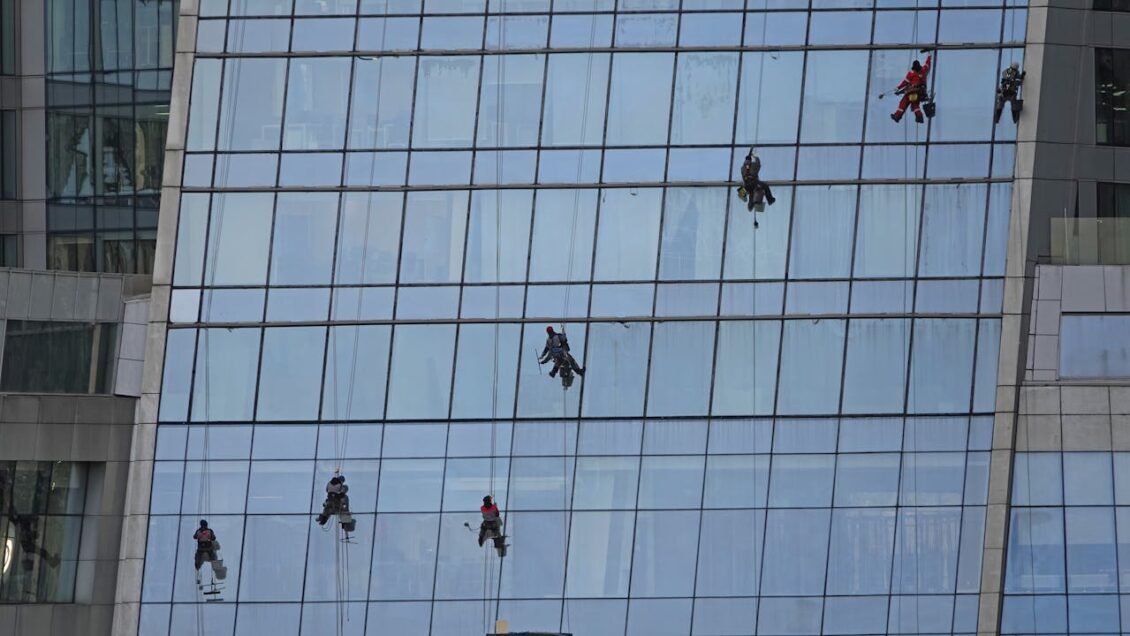
A loose board on a scaffold does not look dramatic at first glance. Neither does a ladder set on soft ground, or a worker reaching too far during a quick repair.
Yet those small details sit behind many serious incidents on sites, in warehouses, and around commercial buildings. In Great Britain, falls from height remained the leading cause of worker fatal injuries in 2024/25, with 35 deaths recorded by HSE.
Start With The Job, Not The Equipment
Too many height related jobs begin with a rush to fetch a ladder or tower. A safer approach starts earlier, with the task itself. Teams need to ask what work is being done, how long it will take, who will carry it out, and what can go wrong once someone leaves the ground.
That early planning stage is where a proper working at height risk assessment earns its place. It helps managers identify hazards, choose sensible controls, and match the right access method to the task rather than relying on habit or guesswork.
Under the Work at Height Regulations 2005, employers and those in control of the work must plan the job properly, supervise it, use competent people, and assess the risks before the task begins. HSE also sets out a clear order for control measures, starting with avoiding work at height where possible, then preventing falls, and then reducing the distance and impact if a fall still happens.
That order sounds simple, but it changes decisions on site. If a light fitting can be lowered for maintenance, there may be no reason to send someone up. If fixed edge protection can be used, that often beats relying on personal kit alone. Good planning saves time later because fewer last minute fixes are needed.
The same thinking applies well beyond major construction jobs. Property maintenance teams, sign installers, cleaners, and facilities staff across Wales all face moments where a short task can feel harmless. Many incidents begin in those ordinary jobs, especially when the pressure to finish quickly wins out over a proper check.
Build Competence Into Daily Work
Safe access equipment depends on the person using it just as much as the equipment itself. A tower scaffold, podium step, or mobile platform may look familiar, but familiarity does not always mean competence. People can repeat poor habits for years without anyone stopping to correct them.
That is why training still deserves real attention across Welsh businesses, especially in sectors where height work forms part of routine operations. Recent reporting on working at height safety across Welsh industries points to the same pattern seen on many jobs, where access equipment is common, but safe assembly, inspection, and use still rely on workers understanding the method behind the task.
Competence is easier to spot when supervisors look for clear behaviours rather than paper records alone. A worker who pauses to inspect components, checks the ground, and questions an unsafe setup usually shows stronger awareness than someone who moves fast but skips the basics.
A practical competence check often includes these points
- Can the worker explain why this access method suits the task
- Can they spot surface, weather, or loading issues before use
- Do they know inspection steps and reporting lines
- Can they say when the equipment should not be used
Those checks do not need to be complicated. They just need to happen before routine slips into complacency.
There is also a wider business case for regular safety training. Wales247 recently highlighted how workplace safety skills help firms cut incidents, support compliance, and give workers more confidence in daily tasks. That kind of benefit is felt on busy sites where several trades overlap and timing pressures can push people towards shortcuts.
Control The Common Risks People Tend To Miss
Many falls do not begin with dramatic equipment failure. They start with ordinary oversights that build up across the day. Ground conditions change. Materials get stored in the wrong place. Weather shifts. Someone moves a ladder slightly to save time, then overreaches instead of climbing down and resetting.
HSE guidance treats work at height broadly, which is useful because injuries can happen from relatively low levels as well as obvious high ones. The guidance also highlights common trouble spots such as fragile roofs, poor machine access, unprotected mezzanine edges, and bad choices around storage racking.
For many teams, the best gains come from tightening up a few repeated weak points
- Pre use inspections
Checks need to happen before each shift and after any change in conditions. Loose fittings, missing guardrails, damaged feet, or worn components should stop the job until fixed. - Surface and stability checks
Access equipment must sit on firm, level ground. Soft verges, wet flooring, and hidden slopes create risk long before anyone climbs. - Clear work zones
Tools, waste, and stored materials should not crowd the base area. A tidy exclusion zone reduces trips, knocks, and unexpected movement around the structure. - Weather awareness
Wind, rain, and poor visibility can change the safety picture very quickly. Outdoor work plans need a firm stop point when conditions shift.
These steps are not expensive, but they do depend on discipline. Teams need permission to stop and reassess without feeling they are slowing everyone else down.
Keep Safety Visible After The First Briefing
The first conversation of the morning should not be the last one about height work. Sites change through the day, and so do people. New contractors arrive, deliveries alter access routes, and urgent jobs get squeezed into spaces that were not part of the original plan.
That is where short reviews help. A supervisor does not need a long meeting every hour, but they do need to ask whether the setup still suits the task. The answer may change once lighting drops, the ground becomes wet, or another trade starts work nearby.
HSE’s latest fatal injury figures are a reminder that fall prevention still needs steady attention rather than one off paperwork. Falls from height accounted for over a quarter of worker deaths in 2024/25, which shows how often this risk remains present across British workplaces.
A healthier safety culture also gives workers a clear route to speak up. They need to know who to tell, what to report, and what will happen next. When people believe concerns will be heard without blame, small problems are more likely to surface before they become serious ones.
Good work at height rarely depends on one product or one policy. It comes from planning the job well, choosing the right method, training people properly, and reviewing the setup as conditions change. This steady approach keeps workers safer and helps Welsh businesses carry out tasks with fewer assumptions and fewer avoidable risks.
