

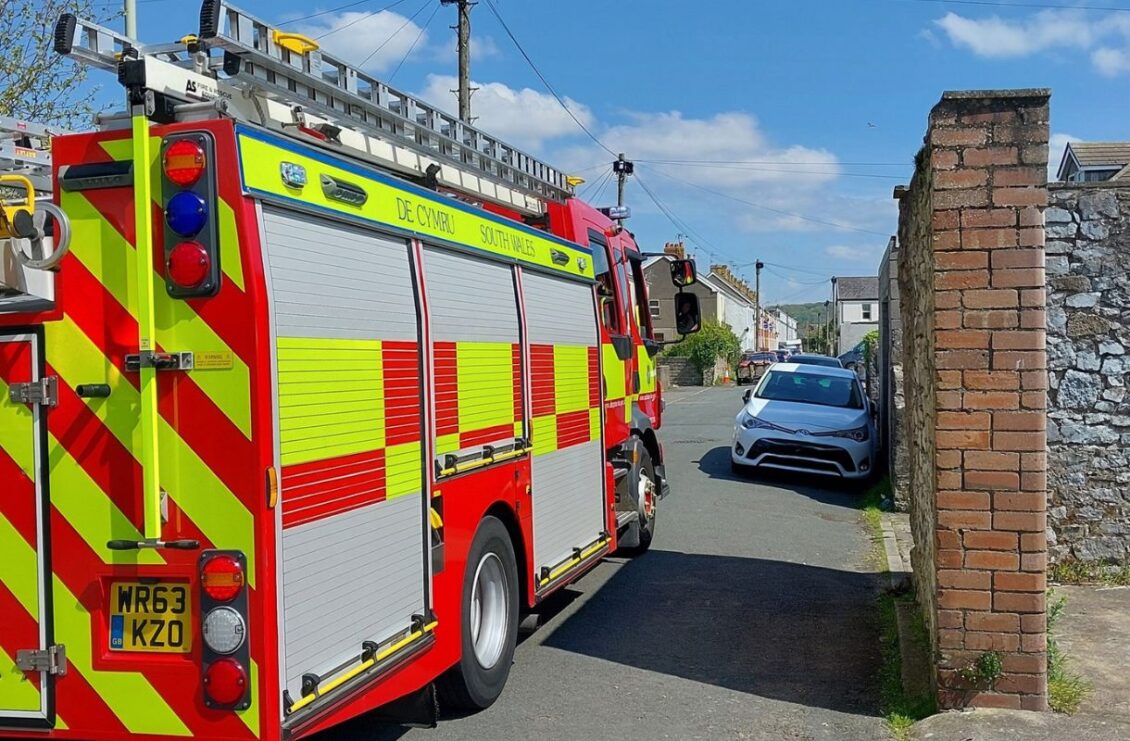
Emergency services in Bridgend have issued a warning to motorists after a joint operation in Porthcawl highlighted the dangers of inconsiderate parking.
The operation, carried out earlier this week by the neighbourhood policing team alongside the fire service, ambulance service, parking enforcement and the Bridgend Community Safety Partnership, focused on vehicles blocking access for emergency responders.
A fire engine was taken to key locations across Porthcawl to demonstrate the real challenges crews face when trying to navigate streets obstructed by poorly parked cars. Officers and partner agencies also spoke with residents and drivers, offering advice and handing out information on safe and responsible parking.
Despite a common misconception, authorities stressed that vehicles do not need to be parked on double yellow lines to be committing an offence. Any vehicle that blocks or hinders access for emergency services can be subject to action.
South Wales Fire and Rescue Service has warned that incidents of obstructive parking are increasing, potentially delaying crews from reaching life-threatening emergencies.
The reminder comes as part of wider efforts to improve road safety and ensure emergency vehicles can respond quickly when needed.
The Highway Code clearly states that drivers should not stop or park anywhere that would prevent access for emergency services. It also advises against parking opposite or within 10 metres of a junction, unless in a designated space.
Motorists are being urged to follow simple steps to avoid putting lives at risk:
- Avoid parking in front of emergency access points or fire stations
- Do not park over or too close to fire hydrants
- Follow road markings, including yellow lines and box junctions
- Park close to the kerb, with wheels straight and mirrors folded in where possible
- In narrow streets, park on one side only unless marked spaces are provided
- Keep clear of corners, junctions and traffic calming measures
Emergency services are reminding the public that every second counts when responding to an incident, and even a small obstruction could make a critical difference.
