

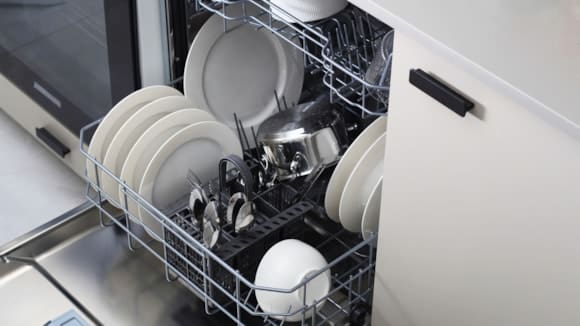
The frustration of opening the dishwasher to find dirty plates and spot-covered glasses is a common household headache. High Speed Training, a leading provider of online training, gives expert guidance demonstrating that often, the issue isn’t the appliance itself, but a simple loading error.
Dr. Richard Anderson, Head of Learning & Development at High Speed Training, said: “Following a few simple steps can dramatically improve the hygiene and efficiency of your dishwasher. Proper loading also helps your appliance run more effectively, saving energy and prolonging its lifespan.”
Common dishwasher mistakes
- Overcrowding: Packing racks too tightly prevents water and detergent from circulating properly.
- Blocking the spray arms: Large items must be positioned carefully to ensure the spray arms can spin freely and distribute water effectively. All items should be positioned facing the spray arms to ensure they are properly cleaned.
- The pre-rinse debate: Over-rinsing dishes before loading actually makes modern detergents less effective. A quick scrape of large food debris is all that is required.
- Ignoring the filter: A clogged filter is a major culprit for poor results and unpleasant odours, making regular cleaning essential for optimal performance.
The right way to load your dishwasher
The bottom rack: Dr Anderson says, “The bottom rack is the heavy-duty area, built for robust items needing stronger pressure. Ensure plates and large bowls always face the centre spray arm for even coverage, and position heavy items such as pots and pans at the sides, placed at a slight angle to aid water drainage. Grouping similar-sized items together is a simple step that avoids smaller dishes being overshadowed.”
The top rack: Dr Anderson continues: “The top rack is the delicate zone, designed for gentler pressure. Here, glasses and mugs should be placed upside down and slightly angled—a key trick to prevent water pooling on the base after the cycle. Importantly, all plastics must be labelled ‘dishwasher safe’ and kept exclusively on this top rack, far away from the bottom heating element to stop them from warping.”
Cutlery and silverware: Finally, Dr Anderson states, “Cutlery placement is crucial for both hygiene and safety. We advise people to avoid ‘nesting’ in baskets by mixing items and alternating the direction of the handles. Always load knives with the handles pointing up to prevent injury during unloading. For a truly sparkling finish, remember to separate silver cutlery from stainless steel to avoid chemical reactions that can cause marks.”
