

You step out of the shower, reach for a towel, and notice the bath mat is wet again.
There is a thin line of water by the shower door. A few drops are clinging to the bottom of the glass. Maybe it is just splashback. Maybe the door is leaking. Or maybe one small part has simply stopped doing its job.
In many bathrooms, water escaping around a shower screen does not always mean there is a serious plumbing problem. It can be something as simple as a worn, loose, or poorly matched seal.
The difficult part is choosing the right shower door seal strip.
Most shower seals look very similar online. They are usually clear, slim, and easy to mistake for one another. But small differences matter. Glass thickness, fitting position, gap size, fin length, and water-deflecting shape can all affect whether the seal works properly once fitted.
Choose the wrong one, and the door may scrape. The seal may bend. Water may still find its way out.
Start by Finding the Source of the Water
Before ordering a new seal, take a moment to check where the water is actually coming from.
Water on the floor does not automatically mean the bottom seal has failed. It may have escaped from the side of the door first, then run down the glass, along the frame, and onto the floor.
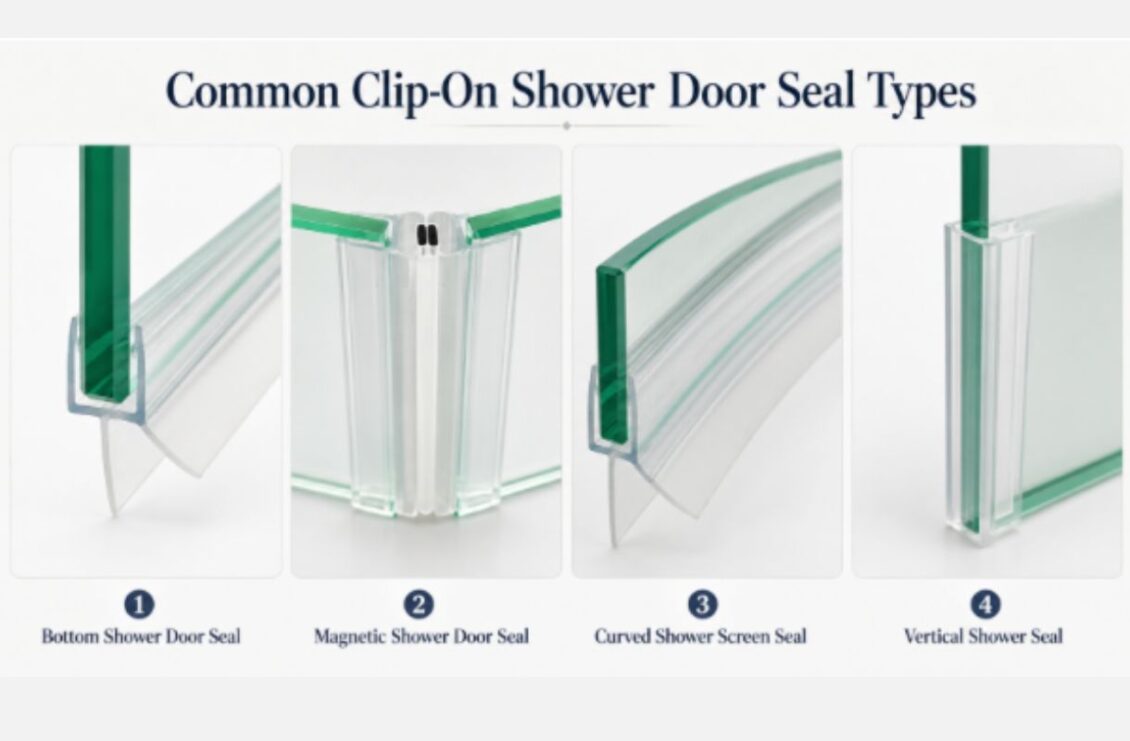
If the water is clearly coming from beneath the glass, the bottom shower door seal is the obvious place to inspect.
If it appears along the side of the door, between a moving panel and a fixed screen, a vertical shower seal may be the better match.
If two glass doors meet in the middle but no longer close neatly, the magnetic shower door seal could be the weak point.
For a curved or quadrant enclosure, a straight strip may not sit correctly. In that case, a curved shower screen seal is usually worth checking.
A simple test helps. Dry the floor and the edges of the glass before using the shower, then watch where the first signs of water appear.
Look at the Shape, Not Just the Strip
A bottom seal is not just a piece of clear plastic clipped under the glass. Its shape is part of how it controls water.
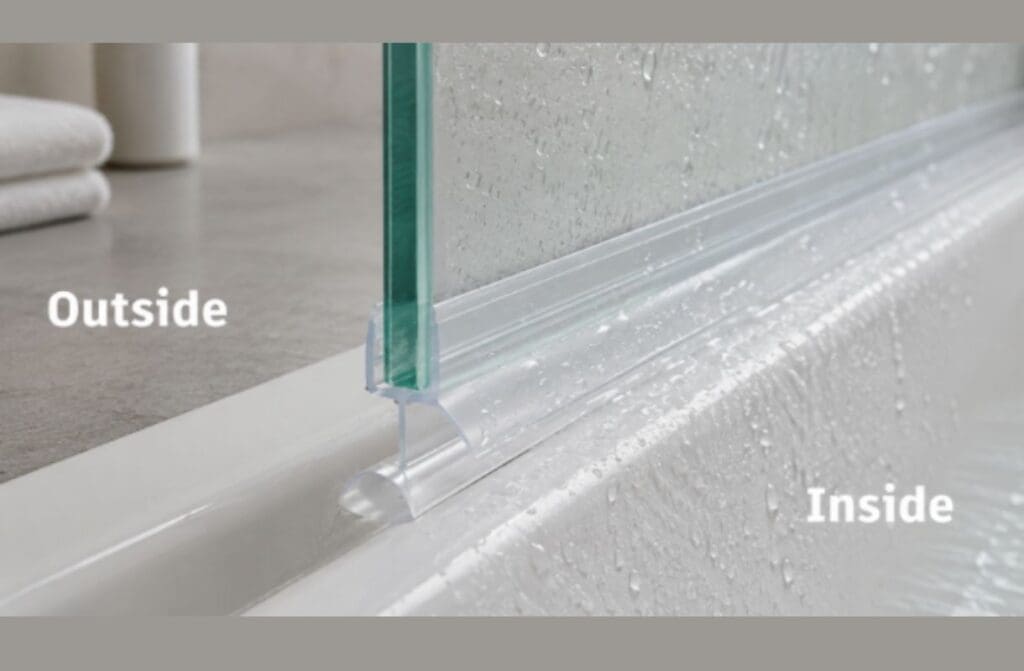
Many bottom seals have a side deflector. This small raised section helps guide water back into the shower area instead of letting it run outwards. A wider deflector can often direct water more reliably.
The soft fin underneath adds another layer of protection. It helps cover the gap between the glass and the shower tray or floor.
Direction matters here. The side deflector normally needs to face the inside of the shower. If it is fitted the wrong way round, it may do very little to keep water in.
Glass Thickness Is Only Part of the Choice
Many people stop at one question: does this fit 6mm or 8mm glass?
That is important, but it is not enough.
Glass thickness tells you whether the seal can grip the glass. The fin length and the gap it is designed to cover tell you whether it can actually help keep water inside the shower.
If the fin is too short, water may still escape. If it is too long, it may drag across the tray or floor every time the door opens. Over time, that can lead to noise, distortion, or early wear.
A useful product page should make the key details easy to check: glass thickness, fin length, suitable gap, and seal profile. Those details are not there to make the choice complicated. They help you avoid buying a seal that looks right but behaves badly once fitted.
Compare the Old Seal Before You Buy
Colour is rarely helpful. Most shower door seals are clear or slightly translucent, so two very different seals can look almost identical in a product photo.
The end shape is far more useful.
If you still have the old seal, remove a small section and look at it from the end. Is it a simple clip-on channel? Does it have a soft fin? Is there a wider water deflector? Does it include a magnetic strip?
That profile tells you much more than the front view.
Length is another practical detail. Shower seals are often supplied in fixed lengths such as 1000mm, 2000mm, and sometimes 3000mm. In many cases, you will need to cut the strip to fit your own shower door.
Cut it too short, and you leave a gap. Cut it too long, and it may press against the frame or stop the door closing smoothly.
If the details are hard to match from photos alone, a specialist guide can help narrow the choice. Simba Seal provides a shower door seal buying guide at showerdoorseal.uk, helping users compare seals by fitting position, glass thickness, gap size, and seal structure before buying.
Test the Seal Once It Is Fitted
After fitting the new seal, do not assume the job is finished straight away.
Dry the floor and the glass edges first. Then run the shower briefly and watch the area that used to leak.
If the problem was at the bottom, check whether water is being guided back into the shower. If it was along the side, look for any remaining gap. If the issue was between two doors, make sure the magnetic seal closes cleanly.
Also pay attention to how the door feels. It should open and close without scraping, dragging, or forcing the soft fin into an awkward bend.
If water still escapes, the seal may not be the main cause. Old silicone, cracked grout, poor door alignment, the edge of the shower tray, or a missing water barrier at the base can all create similar symptoms.
A shower door seal can help with common leaks around the glass, but it cannot fix every bathroom water problem.
A Small Part, but Worth Choosing Carefully
The right shower door seal is not always the one that looks closest in a photo.
It is the one that matches the position, grips the glass properly, covers the real gap, and sits in the correct direction.
A well-matched seal will not solve every bathroom leak, but it can make everyday shower use neater, drier, and less frustrating. Sometimes the most useful bathroom fix is not a major repair at all. It is simply choosing the small part that actually fits.
