

Wales is undergoing a quiet but significant shift in business investment behaviour, emerging as a UK leader in high-value intangible investments, according to a major new study produced by the Enterprise Research Centre (ERC).
Commissioned by Economic Intelligence Wales (EIW), the ‘Productive Investment Decisions in Welsh Firms’ report, shows that Welsh businesses are investing more consistently – and more heavily – in people, skills, branding and digital capabilities than firms elsewhere in the UK.
The findings show that 87% of Welsh firms invested in staff training or education between 2019 and 2024, compared to 72% across the UK. This makes it the single largest investment category in Wales, rising even higher (93%) for strategically significant investments. Wales also outperforms the UK in investment in branding (51%), business structure or organisation (41%), and software or databases (63%), positioning Welsh firms at the forefront of the shift toward high-value, productivity-enhancing assets.
Economists increasingly view intangible investment – including training, brand development, organisational capability and digital systems – as central to long-term productivity growth. The ERC’s findings place Wales ahead of the UK average in these areas, suggesting a growing skills-driven economy centred on innovation, people and continuous learning.
The findings of this report echo the theme of a briefing hosted by the Federation of Small Businesses (FSB), Development Bank of Wales, and Economic Intelligence Wales in June this year. Designed to address the critical challenges facing business, the event focused on how closing skills gaps can unlock higher productivity levels and drive growth.
The report also shows that Welsh firms are investing in intangible assets more regularly over time. Firms invested in intangibles in three out of the last six years, compared with two years for tangible investment, reflecting a sustained focus on developing capability rather than one-off purchases.
Alongside this, Welsh businesses expect investment returns to be quick and predictable, something that is attractive to investors. The report revealed that 69% anticipate achieving returns within five years, while 94% are ‘somewhat’ or ‘very certain’ those returns will materialise.
Economic Intelligence Wales is a unique research collaboration between the Development Bank of Wales, Cardiff Business School, Bangor Business School, the Enterprise Research Centre, and the Office for National Statistics (ONS). The research body collates and analyses data to create independent, robust and reliable insight to help better understand and improve the Welsh economy.
Cabinet Secretary for Economy, Energy and Planning, Rebecca Evans, said: “By investing in skills and training at levels above the UK average, Welsh businesses are building a workforce that is adaptable, innovative and ready for the future.
“This commitment to upskilling and emerging technologies is the foundation of a stronger, more productive economy, and it’s encouraging to see Welsh firms taking such a forward-thinking approach.”
Professor Stephen Roper, report author and Director of the Enterprise Research Centre, said: “Wales stands out across the UK for its strong emphasis on investment in skills, digital capability, branding and organisational development. This is significant because these intangible assets are increasingly linked to productivity growth, and the fact that Welsh firms are investing more heavily in them than the UK average is an extremely positive sign for the future competitiveness of the Welsh economy.
“This confidence, coupled with the appetite for investment in skills and digital capability, suggests that Welsh firms are positioning themselves for future growth despite economic pressures.”
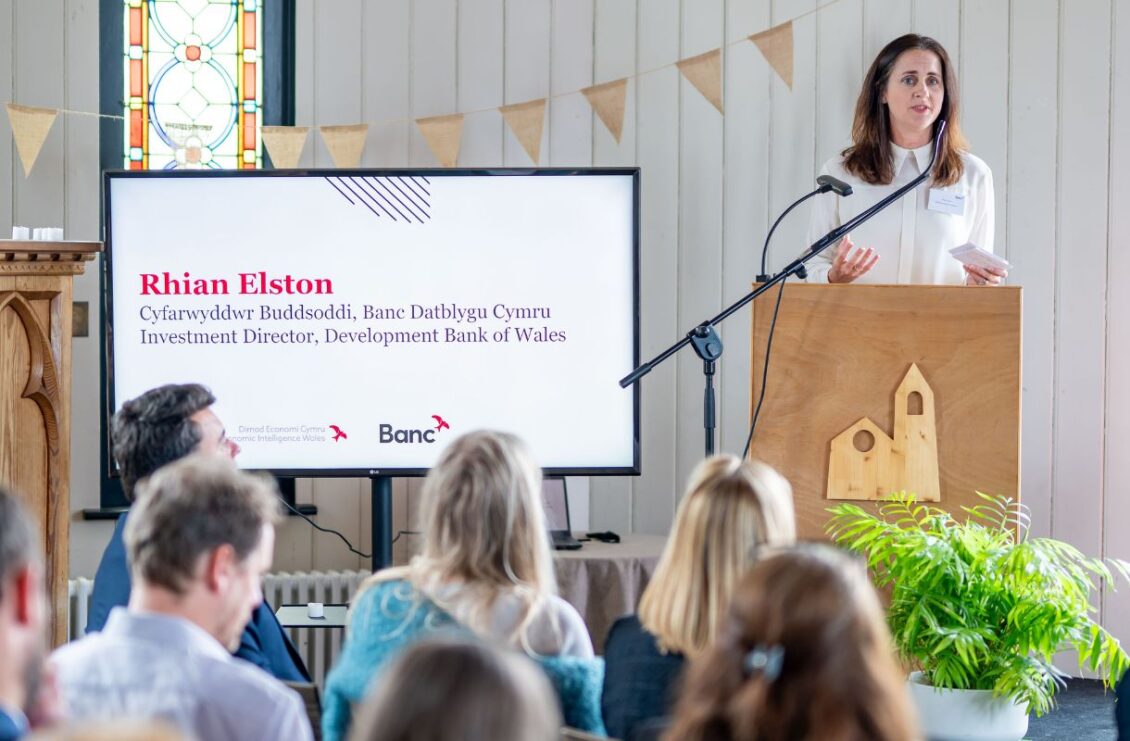
The Development Bank of Wales has welcomed the findings of the report. Rhian Elston, Wales Investment Director at the Development Bank of Wales, said: “This report shows that Welsh businesses are strongly committed to developing their people and strengthening their capabilities, which is ultimately what will improve productivity and strengthen Wales’ competitive position.
“Intangible investment is one of the most important drivers of long-term productivity, yet it can be one of the hardest areas for firms to finance. That’s where our funding solutions can really help by lowering barriers to investment. We’re here to provide the capital that Welsh businesses need to take advantage of new opportunities and capitalise on emerging sectors including the recently announced AI growth zones as this is what will drive innovation and long-term growth.”
Professor Melanie Jones, Professor of Economics at Cardiff Business School and Academic Lead for the Wales Productivity Forum, said: “This research provides important new evidence on Welsh firm’s investment in training, organisational capability and digital improvement. This type of investment is likely to support long-term productivity improvement which is essential to improving future living standards in Wales.”
