

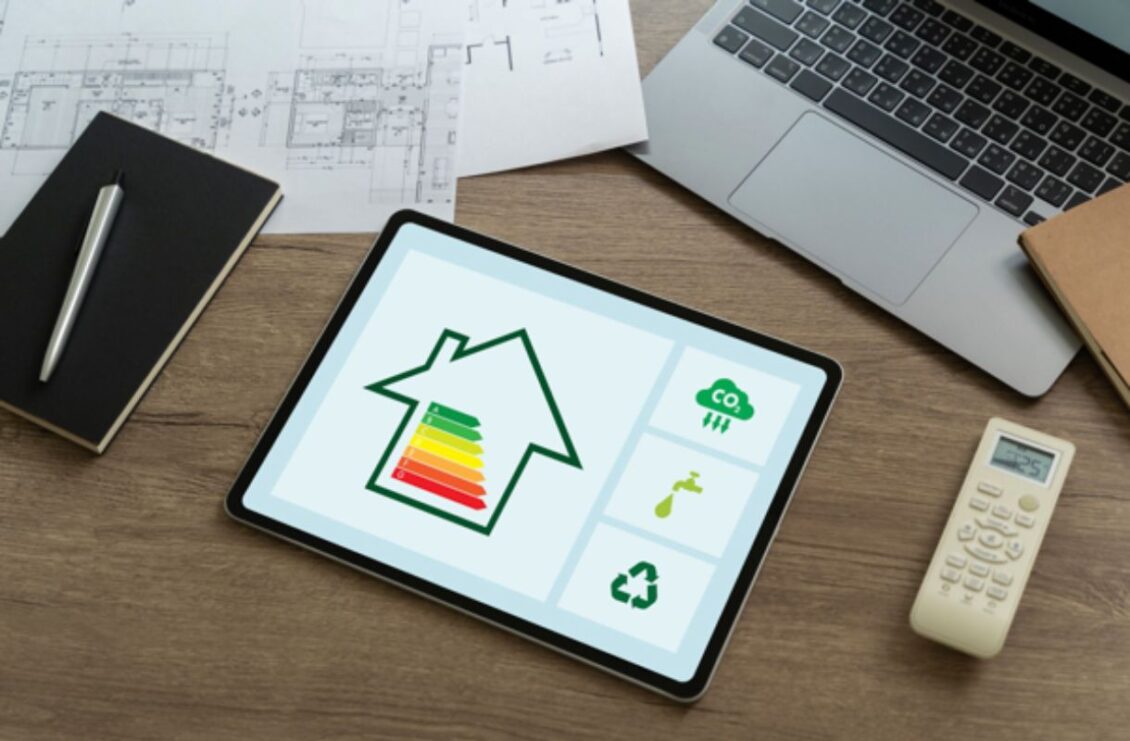
For most people in Wales, an Energy Performance Certificate has been something you only think about when buying, selling or letting a home. It arrives with the paperwork, gets glanced at, and is forgotten. That is changing, and 2026 is the year the detail finally landed. Anyone who owns a home in Wales, and Welsh landlords in particular, now has good reason to understand what an EPC says and where the rules are heading.
The rules are tightening
The headline is straightforward. Under the UK government’s Warm Homes Plan, published in January 2026, privately rented homes in England and Wales will need to reach the equivalent of an EPC C by 1 October 2030, up from the current minimum of band E. For Welsh landlords, that is a meaningful shift, and the standard applies to all tenancies rather than just new ones. For owner-occupiers, it is a clear signal of where the whole market is moving. Energy performance is turning from a number on a chart into something that affects what a home is worth and how easily it changes hands.
The challenge should not be underestimated. A large share of Welsh housing is older, solid-walled and harder to keep warm, the kind of property that often sits a band or two below where it will need to be. Bringing those homes up to standard takes planning, and the homeowners who start early will have the easiest time of it.
A new style of EPC is coming
The certificate itself is being redesigned as well. Instead of a single A to G score based mainly on running costs, reformed EPCs will show four separate measures: how well the building holds heat, the heating system, how ready the home is for smart technology, and an estimated annual energy bill. The new Home Energy Model behind the change is expected in the second half of 2027.
The shift matters because the new approach rewards homes that are genuinely well insulated, rather than ones that simply happen to use a cheaper fuel. In a country with as much older stock as Wales, that puts the focus squarely on the fabric of the building, the walls, roof and windows that decide how much heat escapes.
Where Wales does things differently
Here is where Wales parts company with England, and where a lot of confusion creeps in. Home energy policy is partly devolved, so the support available to Welsh households is not the same as the schemes you may read about over the border. It is easy to assume an English headline applies to you when it does not.
The Welsh Government’s Warm Homes Nest programme is the main route for many households, offering free, impartial advice and, for those who are eligible, improvements such as insulation, heating and solar panels. Green Homes Wales supports larger renewable upgrades for a broader range of homeowners. And the Boiler Upgrade Scheme, which runs UK-wide and now extends to 2030, offers £7,500 towards a heat pump for any homeowner regardless of income. Working out which of these your home qualifies for is often half the battle, and the schemes can sometimes be combined.
Why local expertise matters
That local knowledge is exactly why it pays to take advice from assessors who actually work in Wales rather than a national call centre. Vibrant Energy Matters, which has Welsh roots and a long history of assessing homes across the country, now goes beyond the certificate itself. It gives homeowners a clear read on how their property performs, a personalised plan to improve it, and a steer on the Welsh schemes that could help pay for the work.
For a homeowner in Cardiff, the valleys or anywhere else in Wales, trying to make sense of the 2026 changes, that kind of practical, local guidance is worth far more than a bare rating on a page. It turns a compliance document into a roadmap you can actually act on.
What to do now
If you own a home in Wales, the sensible step is not to wait for a deadline to force your hand. An up-to-date assessment now tells you where you stand, what the new rules will mean for your particular property, and which improvements give the best return for the money. For landlords, the case is stronger still, because acting early avoids the rush and the inflated contractor costs that always arrive as a deadline approaches. Spreading the work over a couple of years is far easier than scrambling to do it all at once in 2029.
Beyond compliance
The bigger prize sits well beyond ticking a regulatory box. As Welsh homes get better insulated and cleaner to heat, the idea of a home that costs almost nothing to run stops being a slogan and starts to look achievable. Lower bills, a warmer house and a property that holds its value are all part of the same journey. The EPC is simply where that journey begins, and 2026 is a good year to take the first step.
