

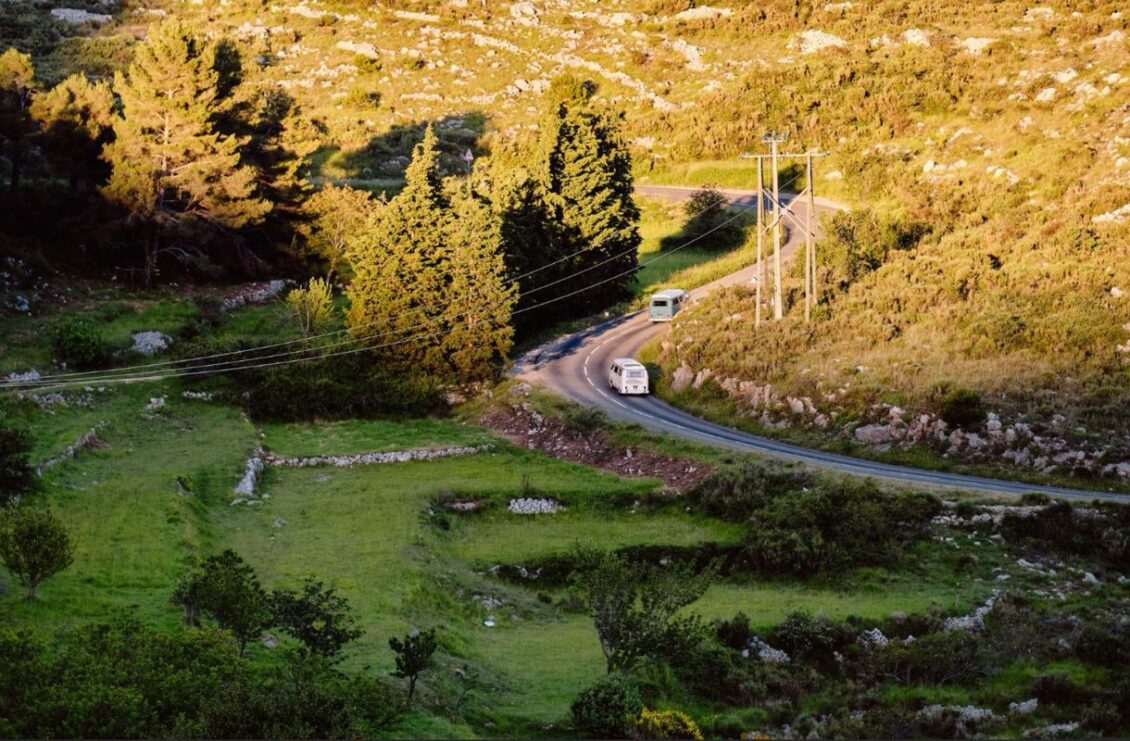
Wales has an unusual road network for a country of its size. A small number of fast trunk routes, a great many mountain passes and valley roads, some of the steepest public highways in Britain, weather that changes over a few miles of altitude, and since 2023 a default 20mph limit on restricted roads that has changed the rhythm of driving in every town and village. A car used mainly in Wales does a genuinely different job from one used mainly in the flat English midlands.
Matching the Car to the Conditions
Drivers here benefit from thinking about specification more deliberately than most. Wet grip matters disproportionately in a country with this much rainfall, and the ability to shed standing water is worth more than a marginal efficiency gain. Searching for tyres by manufacturer rather than by size alone is a reasonable starting point for anyone unsure what their vehicle was designed around, since the original specification reflects choices the carmaker made about the balance between grip, longevity and efficiency. Whether those choices suit Welsh conditions is a fair question, and for many drivers the answer favours prioritising wet performance over the economy figures a manufacturer was optimising for.
Gradients Change How a Car Wears
The passes that make driving here memorable also work the vehicle harder than mileage suggests. Sustained climbs load the engine and cooling system; sustained descents load the brakes, and drivers who ride the pedal rather than using engine braking discover brake fade on roads where there is nowhere to recover. Weight transfer under repeated braking concentrates wear on the front axle, which is why cars used mainly on hilly routes frequently show uneven wear front to rear. Rotating tyres according to the handbook evens that out and costs almost nothing. It is worth asking for it at the same time as any other work rather than making a separate trip, since the wheels are coming off anyway.
The 20mph Change and What It Actually Does
The default limit on restricted roads changed to 20mph across Wales in September 2023, and the debate about it has been noisy enough to obscure some straightforward effects. The Welsh Government sets out the policy and its rationale, including the evidence on collision severity at lower speeds. From a purely mechanical perspective, lower urban speeds reduce brake and tyre wear and improve fuel consumption in stop-start conditions, which is a modest running-cost benefit that has been largely absent from the public argument. From a safety perspective the relevant point is that stopping distance falls sharply as speed drops, which is the mechanism the policy is built on.
Rural Roads Have Their Own Hazards
Beyond the towns, the character changes again. Single-track lanes with passing places, high hedgebanks limiting visibility, mud and slurry from farm traffic, and livestock on unfenced upland roads all ask for a different kind of driving. Sheep on the road are a fact of life across large parts of the country and behave unpredictably, particularly lambs, which will cross to reach a ewe regardless of what is approaching. On these roads the practical requirement is being able to stop within the distance you can see, which is frequently much shorter than drivers accustomed to open roads assume. Farm traffic adds its own consideration, since mud carried onto a road by tractor tyres is considerably more slippery than it appears and tends to sit on exactly the bends where a vehicle turns out of a field gateway.
Winter Comes Earlier at Altitude
Welsh weather is defined by altitude more than latitude. Roads over the Brecon Beacons, the Cambrian Mountains and Snowdonia hold ice and snow when the coast is merely wet, and conditions can differ dramatically over a few miles of climb. Rubber compounds harden below roughly seven degrees regardless of tread depth, which in upland Wales covers a long season, and all-season tyres represent a sensible compromise for drivers who regularly cross high ground but do not want to run two sets. Checking the forecast for the route rather than the destination is a habit worth developing, particularly for anyone whose journey crosses a pass on the way to somewhere at sea level, where the conditions at either end say nothing useful about the middle.
Salt, Rain and What They Do Underneath
Persistent wet weather and winter salting combine to accelerate corrosion, particularly on coastal routes where salt arrives from both the gritter and the air. Brake lines, suspension components and wheel rims all suffer, and corrosion around a rim is a common and puzzling cause of slow punctures. Washing the underside of the car through the winter rather than only cleaning the paintwork addresses a problem most drivers never connect to the tyre that keeps losing pressure.
A Reasonable Maintenance Rhythm
Pulling this together, a car used mainly on Welsh roads is fair to treat on a shorter interval than the handbook’s average-use assumption. Check pressures monthly and tread properly every couple of months rather than annually. Expect front tyres and brakes to need attention sooner if your routes involve real gradients. Take winter preparation seriously if you cross high ground, and treat any change in steering feel or noise as worth investigating. The roads that make driving here worthwhile are the same ones asking more of the vehicle, which is a trade most people who live here would make again.
