

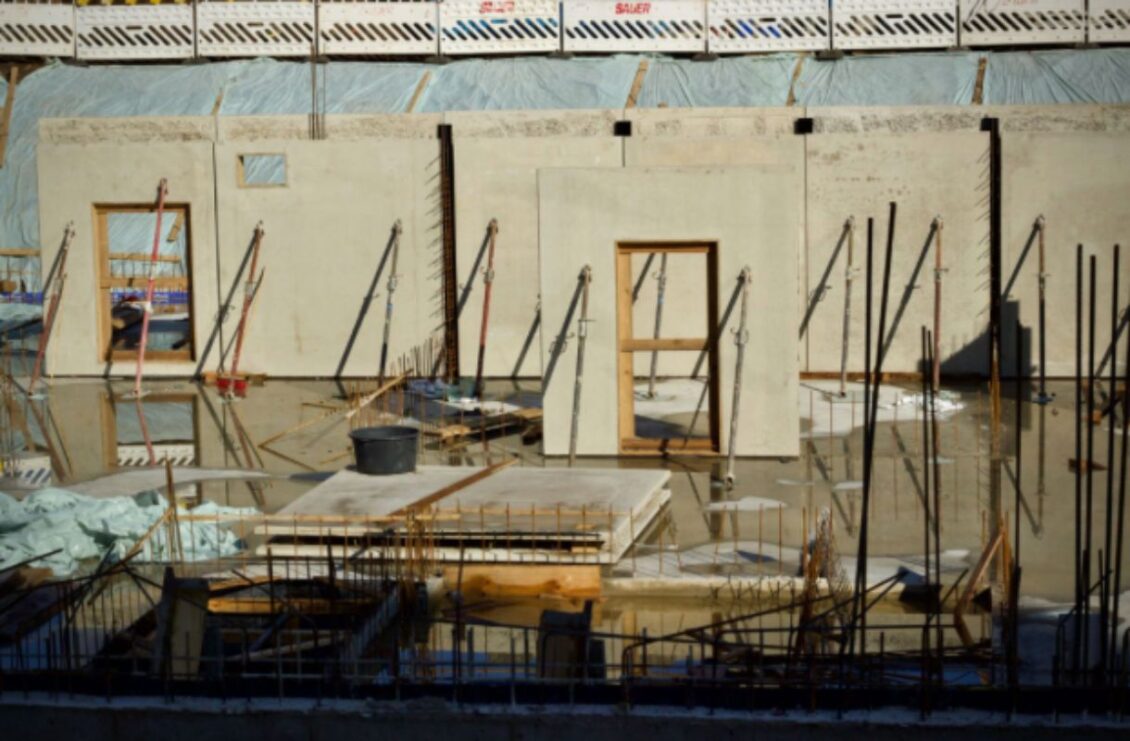
As Welsh homes face tighter energy and performance expectations, Insulating Concrete Formwork is moving from specialist self-build territory into a practical option for homeowners, self-builders and small developers.
A quieter shift in how Welsh homes are being built
Welsh housebuilding is changing.
For anyone planning a new build, extension or major refurbishment in 2026, the wall system now matters beyond appearance. It affects heat loss, airtightness, comfort, running costs, heating design, and building compliance.
Insulating Concrete Formwork, better known as ICF, has been used internationally for decades. In Wales, it is increasingly being discussed by homeowners and small developers who want a stronger fabric-first approach.
Why the timing matters in Wales
Welsh homes are being asked to perform better than ever. The Future Homes Standard, expected to be in force during 2026, will require new UK homes to produce 75 to 80 per cent lower carbon emissions than the 2013 baseline. In practice, this removes gas boilers from new residential construction, with air source heat pumps expected to become the default low-carbon heating source. Approved Document Part L 2021 has already raised performance expectations by around 30 per cent compared with the 2013 baseline, tightening U-values, airtightness targets and overall thermal performance requirements.
From March 2027, new dwellings in Wales will also need on-site renewable electricity generation under the Building etc. (Amendment) (Wales) Regulations 2026, making Wales the first UK nation to mandate this approach. The Welsh Housing Quality Standard 2023 has further raised expectations around affordable warmth and decarbonisation, while rising household energy costs over the past four years have shifted how homeowners think about long-term running costs. The performance requirements have effectively converged. Welsh homes now need low U-values, high airtightness, minimal thermal bridging and construction methods that support low-carbon heating consistently. While traditional cavity wall construction can meet these standards with careful design and detailing, many are exploring alternatives that deliver this performance more consistently.
For Welsh property owners exploring what insulated concrete formwork actually involves, the practical supply and technical support side of the material has become more accessible in recent years. Insubloc, a Swansea-based supplier of insulated concrete formwork operating as an authorised Nudura distributor, supplies ICF systems for new builds, extensions and commercial construction across Wales and the wider UK. According to a spokesperson at Insubloc, the Welsh ICF conversation has moved from a specialist self-build option to a more mainstream consideration over the past three years, driven by the combination of regulatory change and rising household running costs.
What ICF actually means
ICF stands for Insulating Concrete Formwork. In plain English, it is a wall-building method using hollow, interlocking blocks made from expanded polystyrene insulation.
The blocks are stacked to form the walls. Steel reinforcement is placed inside the hollow sections where required. Window and door openings are formed as the walls go up.
Concrete is then poured into the hollow centre of the blocks. Once cured, it forms a solid reinforced concrete core, with insulation permanently in place on both sides.
The finished wall system combines structure, insulation, and airtightness. Render, brick slip, timber cladding or stone can be applied outside, while plasterboard is fixed internally.
What ICF can offer a finished home
ICF supports a fabric-first approach. Its continuous insulation helps reduce heat loss and limits thermal bridges, which can occur where insulation is interrupted.
Airtightness is also central. Because the concrete core is continuous, ICF walls have fewer joints and gaps than many-layered wall systems. Detailing is still needed around roofs, floors, openings, and services.
The reinforced concrete core gives ICF its structural character. It can support open-plan layouts, larger openings and multi-storey homes when properly engineered.
The mass of the concrete core can help with sound reduction. A well-insulated, airtight home can also reduce heat demand, helping an appropriately specified heat pump work efficiently.
What the supplier side is seeing
A spokesperson at Insubloc said the Welsh conversation around ICF has become more practical.
“More homeowners and self-builders are asking about ICF much earlier in the design process,” the spokesperson said. “The questions are less about whether it is unusual and more about how it affects foundations, airtightness, heating design and the build programme.”
They added that ICF is being considered across custom homes, extensions, basement structures, and exposed sites.
“The important thing is early coordination. ICF works best when the supplier, structural engineer, designer and installer are involved before major decisions have been made.”
Where ICF particularly makes sense
ICF is often considered for custom self-build homes, where owners look closely at long-term comfort, structure, and running costs. It can also suit low-energy and passive house projects, provided the whole design is developed to that standard.
For extensions, ICF can be used alongside existing buildings to create a well-insulated new space, such as a kitchen extension, additional living area or new storey. It can be useful where the new part of the home needs to outperform the original structure.
Basements and retaining walls are another natural fit because ICF combines reinforced concrete with continuous insulation. In coastal Wales, the robust wall build-up may appeal on exposed plots.
For rural homes without mains gas, better fabric performance can support lower heating demand and a more manageable low-carbon heating strategy.
What homeowners should check before choosing ICF
ICF should be considered early, not bolted onto a finished design. Foundations, wall thicknesses, reinforcement, and service routes all need coordination from the start.
A structural engineer should design the reinforcement, openings, and load paths. The installer should have suitable ICF experience and training. Where a Nudura system is specified, homeowners should check whether the installer has completed relevant Nudura training or can demonstrate experience with that system.
Services also need planning. Electrical and plumbing routes are typically formed through the insulation layer, with careful detailing at penetrations. This differs from traditional cavity construction.
Cost should be viewed over the full life of the home. ICF may carry a similar or slightly higher upfront cost than some conventional wall systems, but the wider case includes build speed, performance consistency, comfort, and running-cost reductions.
Why ICF belongs in the 2026 Welsh homes debate
Welsh homeowners are making construction choices in a different context from ten years ago. Regulations are moving, energy costs remain serious, and new homes are expected to work harder from day one.
ICF is not the only way to build a strong, efficient home. Traditional masonry, timber frame, and other modern methods can all perform well when properly designed and delivered. ICF deserves attention because it brings structure, insulation, and airtightness into one integrated wall system.
For Welsh homeowners, self-builders and small developers, that makes it worth understanding before the design is fixed and costs are locked in.
The Welsh homes being built in 2026 are being asked to do more. ICF construction is one way property owners are choosing to meet that challenge.
This article is for general information only and does not constitute technical, structural, regulatory or construction advice. Specifications should be developed with architects, structural engineers, experienced ICF installers and appropriate specialists, with reference to current UK and Welsh Building Regulations, the Future Homes and Buildings Standards, and applicable Welsh regulations. Insubloc is a Swansea-based UK supplier of Insulating Concrete Formwork and an authorised Nudura distributor.
