

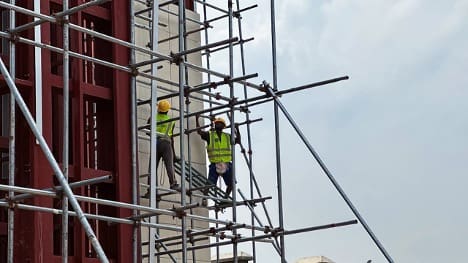
From construction and maintenance to property services and facilities work, businesses across Wales continue to rely on safe access equipment. But when mobile tower scaffolds are involved, proper training is not a formality. It is a practical safeguard that helps workers understand assembly, inspection and safe use before they leave the ground.
Workplace safety remains a live issue across Wales
Across Wales, working at height is part of everyday operations in sectors such as construction, facilities maintenance, property repairs and building services. External works, inspections, decorating, signage, electrical jobs and routine maintenance all regularly involve access equipment and elevated tasks. In these settings, the danger is not theoretical. A mistake made a few metres above ground can have serious consequences for workers, employers and the wider project.
That is why height safety remains such an important issue for Welsh businesses. Safe practice depends not only on having suitable equipment available, but on making sure the people using it understand how that equipment should be assembled, checked and operated. Mobile tower scaffolds are often chosen because they are practical and adaptable, but they also require a clear understanding of safe procedures. PASMA training standards are specifically designed to build that competence around tower assembly, dismantling, alteration, movement, inspection and hazard awareness.
Why tower scaffold competence matters in real jobs
Harris Safety Training Services, established in 2010 and accredited for PASMA training, provides courses focused on safe mobile access tower use, including assembly, dismantling and inspection. The company’s wider messaging places strong emphasis on practical instruction, flexible delivery and improving safety outcomes through properly trained teams.
That matters because a mobile tower may look straightforward, but it is not equipment that should be treated casually. Workers need to understand more than the basic idea of getting from ground level to the work area. They need to know how the structure should be built, what checks must take place before use, how stability is affected by site conditions, and when the tower may no longer be suitable for the job in front of them.
In practice, this is where experience alone can fall short. Someone may have worked around access equipment for years and still miss an issue if they have never been properly trained in tower-specific procedures. Good training replaces assumption with method. It helps create a safer and more consistent standard across teams, especially where workers move between sites or carry out varied maintenance and property-related tasks.
Common risks when working at height with access equipment
Many of the risks linked to mobile tower scaffolds come from lapses that can seem small at first. A tower may be erected on uneven ground, fitted with the wrong components, used without proper inspection, or placed in conditions that affect its stability. Workers may also overlook environmental factors, platform limits or the need to follow a correct build sequence.
There is also the human side of the issue. On busy jobs, time pressure can encourage shortcuts. Familiarity can create complacency. Unsafe habits can spread simply because they have been seen elsewhere and gone unchallenged. That is often how avoidable incidents begin, not with one dramatic failure, but with a series of assumptions that should have been stopped earlier.
This is why working at height should never be reduced to a basic equipment question. It is a competence question as well. If workers do not understand the hazards around mobile towers, they are far more likely to misuse them, even with the best intentions.
How PASMA training supports safer tower use
Working safely at height requires proper training and an understanding of how access equipment should be assembled and used. Industry professionals often recommend completing PASMA training before working with mobile tower scaffolds to ensure workers understand the correct safety procedures.
According to Harris Safety Training’s course information, PASMA training covers the safe use of mobile access towers, with a focus on assembly, dismantling and inspection. That aligns with PASMA’s wider training approach, which is built around helping tower users understand safe build methods, correct use and the need to identify hazards before work begins.
For employers, the value is practical. Properly trained staff are better placed to recognise unsafe conditions, use the equipment correctly and apply the same standards from one site to the next. That can help support compliance, reduce avoidable disruption and strengthen safety culture across the business. It also shows that height-related work is being treated with the seriousness it deserves, rather than being left to guesswork or informal instruction.
Why businesses should not leave training to chance
For Welsh businesses, the message is simple. If workers are expected to use mobile tower scaffolds, they should be properly trained and certified before the task begins. Height-related work carries too much risk to rely on assumptions, habits, or rushed on-site explanations.
Across construction, maintenance and property services, projects often move quickly, and teams are expected to work efficiently. Even so, speed should never come at the expense of competence. Proper training gives workers the knowledge to use towers safely and gives employers greater confidence that the job is being approached responsibly. In industries where working at height remains a routine part of the day, that is not just good practice. It is essential.
