

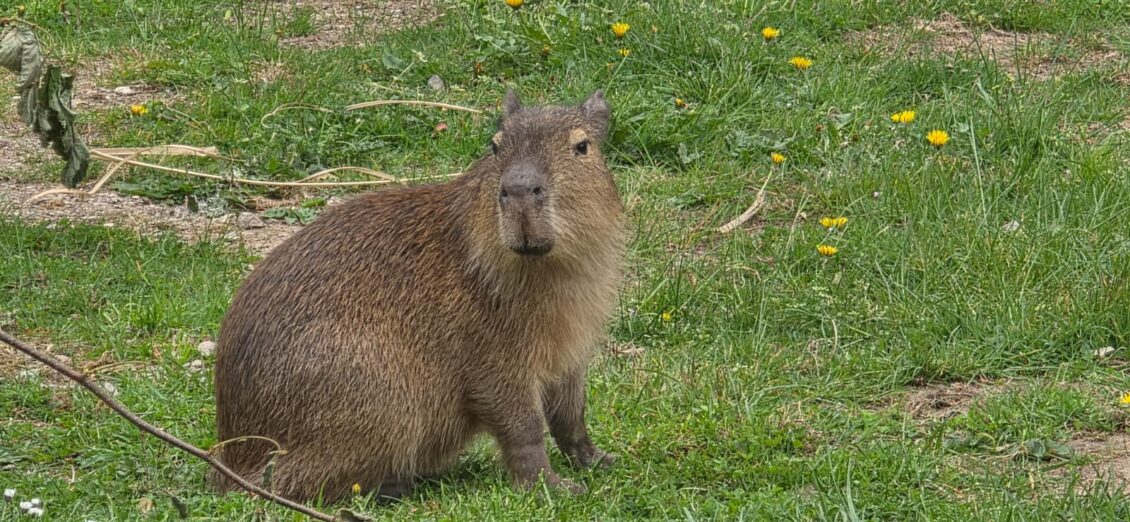
The Welsh Mountain Zoo has welcomed a capybara, the world’s largest rodent and the public is being invited to help name him as part of a special fundraising campaign.
The campaign is now live with all naming suggestions welcomed for the seven month old male, who is settling comfortably into his new home. The Zoo has also revealed that there are plans in place to grow the capybara family further in the future.
Nick Roden, Marketing Manager at the Welsh Mountain Zoo commented: “We’re so excited to welcome our new capybara resident, a much loved species that will represent a brilliant addition to our animal family! We want to make sure our visitors and supporters are able to be part of this exciting new development by inviting suggestions for a special name!”
The arrival marks the opening of a brand-new capybara habitat, a striking transformation of two historic areas of the zoo – the former camel habitat and the old seal rescue house and pools. Following the relocation of Jochi the Bactrian camel, the Zoo took the opportunity to reimagine the space, creating a water-rich environment designed around the needs of this semi-aquatic species. Existing pools, paddocks and planting have been enhanced to create a dynamic habitat with easy water access, varied terrain, shaded areas and open grazing space, while sensitively retaining and adapting elements of the original structure.
Delivered by the Zoo’s in-house team, sustainability has been central throughout. On-site materials have been reused, timber has been sourced locally, and existing features have been repurposed to give the habitat a new life. This thoughtful approach to upcycling has allowed the zoo to balance the character of the legacy space with the needs of the animals, with retained areas such as hardstanding also providing beneficial warm resting surfaces for the capybara. Positioned near the zoo entrance, the habitat has been designed for impact. Large glass panels offer eye-level views of the capybara, set against greenery and heritage buildings, creating an immediate connection between visitors and wildlife.
Laura-Anne Innes, Head of Capital Projects at the Welsh Mountain Zoo, said: “Rejuvenating such an important legacy space presented both unique opportunities and constraints. Bringing these areas together has allowed us to transform a key part of the Zoo into a cohesive, enriching habitat, designed specifically around the needs of our capybara. In these early days, the capybara already appears to be settling in well under the careful supervision of our animal care team, and I’m really looking forward to seeing how visitors connect with the space too.”
