

By Jarrad Morris, CEO of Plug Charging
The UK’s transition to electric vehicles is accelerating, but the infrastructure needed to support it is struggling to keep pace. Without a reliable, accessible charging network, the shift to zero-emission transport risks stalling before it truly takes hold, explains Jarrad.

Jarrad says it should go without saying that the transition to zero-emission vehicles won’t happen overnight, it needs careful planning. Electrification is not just about vehicles, it requires a completely new infrastructure ecosystem to support businesses, public sector organisations and communities to be a part of the change.
The charging network needs to be dependable and serve communities across the UK for decades to come as more people make the switch to electric vehicles (EVs) and learn about their vehicles’ range and energy consumption requirements. Access to charging points, vital for fuelling journeys and overcoming range anxiety, will be increasingly important but the current picture across the UK is one of disparity.
The good news is that the network is expanding. As of April 2026, figures from the Department for Transport show that the number of public EV chargers in the UK has increased by 13% to 119,080. But it remains some way off the government’s minimum target of 300,000 chargers by 2030 and for the nations of the UK, this overall figure breaks down to 1,145 chargers in Northern Ireland, 5,712 in Wales, 12,672 in Scotland and 99,551 in England, with further divides in provision evident between English regions.
This must change. We need to move away from a postcode lottery for charging access to a truly national network that enables progress, not slows it down. Funding plays a role in this change, and the Autumn Budget provided welcome news on this front, announcing an additional £200m, on top of the £400m provided in the Spending Review, to support local authorities to improve EV charging infrastructure in their areas.
To make the most of this funding regionally and create a more connected and consistent network nationally, it’s important to identify, replicate and build upon successful existing solutions. These are the blueprints for what good infrastructure actually looks like for real EV drivers.
In our own experience at Plug Charging, where our services currently extend across the entire nation with 1,500 chargers, we work to remove complexity from EV charging infrastructure.
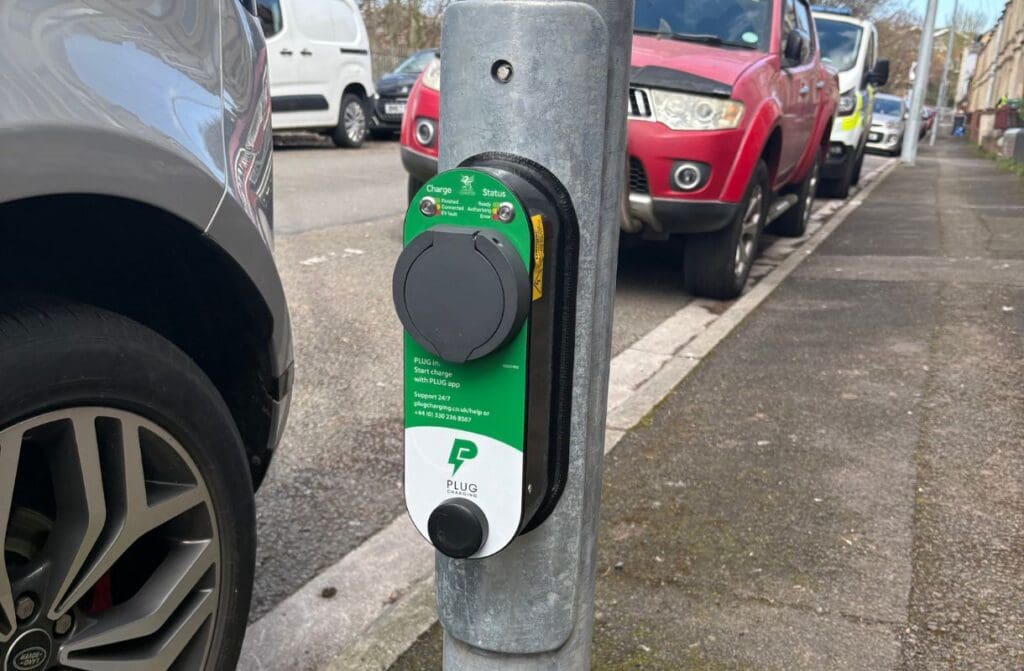
On-street charging remains one of the most significant barriers to EV adoption, especially for those in busy city centres and towns who don’t have a driveway or other off-street parking to charge a vehicle. This is why we have partnered with Cardiff Council to launch our lamp column EV charging pilot to deliver accessible, on-street charging for residents while reinvesting directly into local communities.
This solution uses existing infrastructure to accelerate the deployment without major construction works, upgrading existing street lighting infrastructure with units positioned at the front of pavements to ensure safe, practical access with no trailing cables and minimal impact on pedestrians and street layouts. It’s about making EV charging work for real people in real communities, designed to support residential charging patterns such as longer dwell times and overnight charging.
This pilot is about more than just charging points; it’s about making the transition to electric vehicles accessible and fair to everyone. This can be a turning point in delivering infrastructure that genuinely serves the communities we are part of, supporting sustainable transport today and in the future across the UK.
By 2030 the network needs to not only grow alongside evolving vehicle technology but also the demand for EVs and the needs of drivers. A connected network that people can plug into with confidence.
